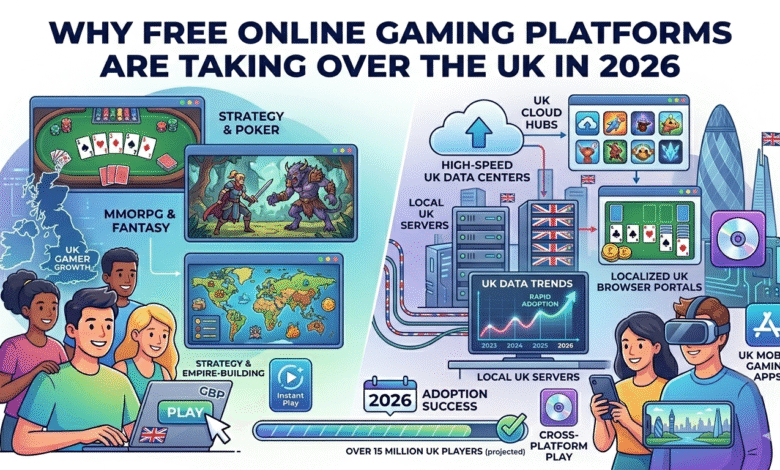
Something quietly shifted in how the UK plays games. There was no single announcement, no industry-wide event. People simply started skipping the download screens, ignoring the installation prompts, and heading straight to their browsers instead. By 2026, that shift has become impossible to miss.
Browser-based gaming is growing fast across the UK, and the numbers back it up. Research from the UK’s digital entertainment sector shows that around 35.6 million people in the country play games regularly, spread across phones, tablets, desktops, and laptops. A growing portion of that audience is now choosing platforms they can open in seconds rather than titles that demand gigabytes of storage and an account registration just to get started.
At the Centre of this change is the rise of the online gaming platform built entirely around instant access. These platforms offer thousands of titles across every genre, playable without a single download, login wall, or subscription fee. For millions of UK users who game between meetings, during commutes, or in the odd ten minutes of quiet at home, that frictionless experience is exactly what they were looking for.
The Download Era Is Losing Its Appeal
Not long ago, gaming on a PC meant committing to the process. You found a title you liked, downloaded several gigabytes, waited through installation, created an account, and hoped your hardware was up to the task. For dedicated players, this was a reasonable trade. For everyone else, it was a barrier.
That barrier has quietly driven people toward lighter, faster alternatives. Modern browser technology, particularly HTML5, now supports smooth animation, multiplayer connectivity, and responsive controls entirely within a web page. The games themselves have kept pace. What runs in a browser today would have required a mid-range gaming PC not many years ago.
As explored in Mobile Gaming in 2026: How Smartphones Are Redefining the Gaming Experience, the expectations UK players bring to gaming have changed substantially. People now want experiences that load on the device they already have, whether that is a phone, a shared family laptop, or a work computer during a lunch break.
What Makes Browser Gaming Work in 2026
Several forces have come together to make instant-play gaming genuinely competitive with traditional platforms.
Speed of access. Opening a browser game takes seconds. There is no queue, no patch to wait for, and no launcher to update before you can play. For the modern UK gamer who may only have 15 minutes free, this is a meaningful advantage.
Device flexibility. Browser games run on almost anything with a screen and an internet connection. A student on a Chromebook, a parent on a tablet, a commuter on a phone. Platforms like Plix have been built from the ground up with this cross-device reality in mind, offering titles that scale cleanly across screen sizes.
Volume and variety. The best browser platforms now host tens of thousands of games. Puzzle, action, racing, strategy, multiplayer, casual and everything in between. The depth of a catalogue like that means players rarely run out of things to try, and there is always something appropriate for the mood or the available time.
No financial commitment. Free-to-play browser gaming removes the risk entirely. Players do not need to spend money to find out whether they enjoy a game. That lower barrier to entry has brought in large numbers of casual players who would never have paid upfront for a title.
Who Is Driving the Growth
The audience for free browser gaming in the UK is broader than most people assume. It is not dominated by teenagers or hardcore players. Office workers, parents, older adults returning to gaming after years away, and younger children exploring for the first time are all part of the picture.
That diversity of audience has shaped how leading platforms approach their libraries. A well-run browser gaming platform today looks less like a single genre destination and more like a general entertainment hub. It needs to serve someone who wants a two-minute puzzle as readily as someone who wants to spend an afternoon in a strategy game.
The social dimension matters too. As the broader conversation around Geekzilla Tio Geek: The Ultimate Voice of Modern Geek Culture illustrates, gaming culture in the UK has grown far more mainstream and inclusive. Browser platforms have benefited directly from that shift, becoming entry points for people who would not describe themselves as gamers but who play regularly nonetheless.
The Role of Technology Behind the Scenes
None of this would be possible without significant infrastructure improvements. The rollout of faster broadband across the UK and the continued improvement of mobile networks have eliminated many of the performance issues that once made browser gaming feel choppy or limited.
At the same time, the platforms themselves have invested in smarter content delivery, recommendation systems, and user experience design. The best ones surface the right game at the right moment, much like a streaming platform recommends a show. The parallels with digital video are instructive. As noted in The Growing Importance of Efficient Video Management in the Digital Age, managing and delivering digital content at scale requires both technical investment and a genuine understanding of what users actually want when they sit down to be entertained.
Gaming platforms are learning those same lessons quickly. Personalisation, clean interfaces, and fast load times are no longer differentiators. They are the baseline expectation.
What Comes Next
The trajectory is clear. Browser-based gaming is not a temporary workaround or a lesser alternative to console and PC gaming. For a large and growing segment of the UK population, it is simply how gaming works now. Accessible, immediate, and free.
Platforms that understand this are already competing seriously with traditional gaming storefronts for time and attention, even if they are doing so quietly. The absence of a subscription fee or a required download is itself a statement about who the platform is built for.
As artificial intelligence continues to shape digital products, gaming platforms are beginning to explore smarter personalization and adaptive experiences. The implications of that shift across tech-driven industries are being tracked closely, as discussed in Enterprise AI Agents in Regulated Industries: Key Considerations. Gaming sits outside the regulatory scrutiny of finance or healthcare, which means experimentation can move faster.
The result is a space that is evolving quickly, drawing in new players, and reshaping what the average UK person means when they say they are going to play a game. More often than not in 2026, that means opening a browser tab.