Introduction
Kitchen technology has evolved rapidly, with homeowners looking for appliances that save time while delivering consistent cooking results. Among these innovations, convection ovens have become a preferred choice because they combine efficiency, versatility, and reliable performance in one appliance.
As more households embrace modern cooking habits, it’s easy to see why convection ovens are becoming essential in modern kitchens. Whether preparing quick weekday meals, baking desserts, or roasting family dinners, these ovens offer practical advantages that suit a wide range of cooking styles.
This article explains how convection ovens work, why they continue to gain popularity, and the benefits they provide for everyday cooking. By understanding their features and capabilities, you can decide whether a convection oven is the right addition to your kitchen.
What Is a Convection Oven?
A convection oven is a cooking appliance that uses a built-in fan and exhaust system to circulate hot air around the food while it cooks. Unlike a conventional oven, which relies mainly on radiant heat from heating elements, a convection oven distributes heat more evenly throughout the cooking chamber. This design helps reduce temperature variations and promotes more consistent cooking results.
Convection ovens are available in several sizes, including compact countertop models and larger built-in units designed for family kitchens. They can handle a wide variety of cooking tasks, from baking bread and cookies to roasting vegetables, meats, and casseroles. Their versatility makes them a practical option for people who prepare different types of meals throughout the week.
How Does a Convection Oven Work?
The main feature that sets a convection oven apart is its internal fan. During cooking, the fan continuously circulates heated air around the food, allowing heat to reach every surface more evenly. This steady airflow reduces hot and cold spots that are common in traditional ovens, helping food cook at a more consistent rate.
Because heat is distributed efficiently, many recipes can be prepared in less time or at a slightly lower temperature than in a conventional oven. The improved airflow also encourages better browning and crisping on the outside of foods while helping maintain moisture inside. As a result, convection cooking is well suited for baking, roasting, and preparing evenly cooked meals with reliable results.
Why Convection Ovens Are Becoming More Popular
The growing demand for convenient and efficient cooking solutions has contributed to the rising popularity of convection ovens. Many households now prioritize appliances that simplify meal preparation without sacrificing quality, making convection technology an attractive choice for modern kitchens.
Another reason for their popularity is their ability to support a wide range of cooking styles. From baking delicate pastries to roasting vegetables or reheating leftovers, convection ovens offer flexibility for everyday use. As people continue to invest in functional kitchen upgrades that improve cooking consistency and save time, convection ovens have become an increasingly valuable appliance for both experienced home cooks and beginners.
Faster Cooking Saves Time
One of the biggest reasons many households choose a convection oven is its ability to cook food more quickly than a conventional oven. The continuous circulation of hot air allows heat to reach the food evenly from all sides, reducing the overall cooking time for many recipes. While the exact time savings depend on the dish, even small reductions can make meal preparation more convenient during busy weekdays.
Faster cooking is especially helpful for families balancing work, school, and other daily responsibilities. Preparing roasted vegetables, baked chicken, or homemade pizza can become more efficient without constantly adjusting cooking times. Although recipes may require slight temperature or timing adjustments, many users find that convection cooking helps streamline everyday meal preparation while maintaining consistent results.
Better Baking and Roasting Results
Convection ovens are widely appreciated for producing more consistent baking and roasting outcomes. Because heated air moves continuously throughout the oven cavity, baked goods receive uniform heat exposure, reducing the risk of uneven cooking. Cookies, pastries, and bread often bake with a more even color, while cakes can develop a balanced texture when recipes are adjusted correctly for convection settings.
Roasting also benefits from improved airflow. Meats and vegetables can develop a crisp, golden exterior while remaining tender inside, creating a pleasant contrast in texture. This balanced cooking process minimizes the likelihood of overcooked edges and undercooked centers. For home cooks who enjoy preparing a variety of meals, reliable baking and roasting performance adds confidence and consistency to everyday cooking.
Energy Efficiency and Lower Power Use
Energy efficiency has become an important consideration for many homeowners, and convection ovens can contribute to more economical cooking. Since food often cooks faster and may require slightly lower temperatures, the oven typically operates for a shorter period. Reduced cooking time can help decrease overall energy consumption, especially for meals prepared regularly throughout the week.
While the amount of energy saved varies depending on the appliance, recipe, and cooking habits, the efficiency of circulating hot air offers practical advantages. Shorter cooking cycles can also generate less excess heat in the kitchen, making meal preparation more comfortable during warmer seasons. Combined with their versatile cooking capabilities, these efficiency benefits make convection ovens an appealing option for households seeking practical kitchen improvements.
Healthier Cooking With Less Oil
Convection ovens can also support healthier cooking habits by helping foods achieve a crisp exterior with less added oil. The circulating hot air promotes browning and crisping naturally, allowing many recipes to develop appealing texture without relying on large amounts of butter or cooking oil. This makes it easier to prepare lighter versions of roasted vegetables, chicken, seafood, and other everyday meals.
It is important to remember that a convection oven does not automatically make every recipe healthier, since ingredient choices remain the most significant factor. However, its cooking method offers greater flexibility for those trying to reduce excess fats while still enjoying flavorful dishes. When combined with balanced ingredients and appropriate cooking techniques, convection cooking can become a practical part of a healthier kitchen routine.
Convection Oven vs. Conventional Oven
Both convection and conventional ovens can prepare a wide variety of meals, but they operate differently. A conventional oven relies on stationary heating elements, while a convection oven uses a fan to circulate hot air for more even heat distribution. This difference often results in faster cooking and improved browning with convection models, especially when roasting or baking multiple trays of food.
| Feature | Convection Oven | Conventional Oven |
| Heat Distribution | Even circulating hot air | Stationary heat |
| Cooking Speed | Usually faster | Usually slower |
| Browning | More consistent | May vary |
| Energy Use | Often more efficient | Higher for longer cooking |
| Best For | Baking, roasting, multiple trays | Traditional baking and slow cooking |
The right choice depends on cooking habits, but many households appreciate the flexibility and efficiency offered by convection cooking.
Features to Look for Before Buying
Choosing the right convection oven involves more than comparing prices. Consider the oven’s capacity to ensure it fits your cooking needs, whether you regularly prepare meals for one person or an entire family. Adjustable temperature controls, multiple cooking presets, easy-to-use controls, and an interior light can improve both convenience and cooking accuracy. Features such as removable trays and easy-clean interiors also simplify maintenance over time.
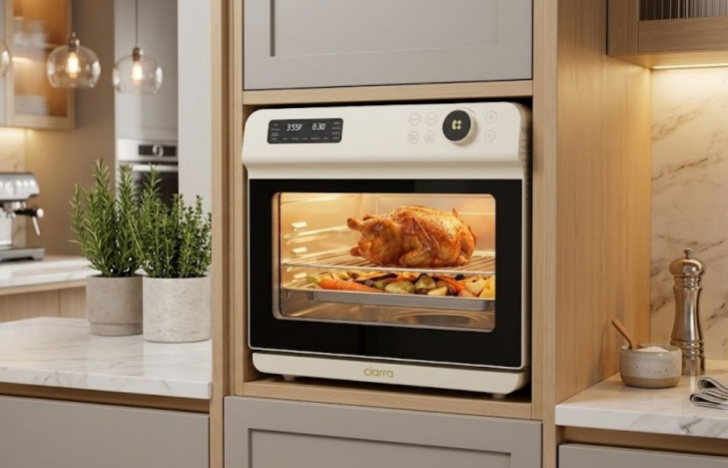
Some modern models include additional functions like air frying, dehydrating, or smart controls, offering greater versatility in one appliance. When comparing different options, products such as the Ciarra Nosh Oven demonstrate how manufacturers combine multiple cooking features into a compact design. Focusing on practical features rather than unnecessary extras helps buyers choose an oven that matches their everyday cooking routine.
Common Mistakes to Avoid When Buying
A common mistake is selecting a convection oven based only on price instead of evaluating features and long-term usability. An inexpensive model may not provide the capacity, cooking functions, or durability needed for regular use. Buyers should also confirm that the oven fits their available kitchen space and matches the types of meals they prepare most frequently.
Another frequent oversight is ignoring energy efficiency, cleaning requirements, and available cooking presets. Some shoppers also assume every convection oven performs the same, even though build quality and features can vary between models. Taking time to compare specifications, read reliable product information, and identify practical cooking needs can help ensure a more satisfying purchase and better long-term value.
Common Myths About Convection Ovens
Several misconceptions prevent some people from considering a convection oven, even though many of these beliefs are inaccurate. One common myth is that convection ovens are only suitable for baking, when they are equally effective for roasting, reheating, and cooking a variety of everyday meals. Another misconception is that they always dry out food.
In reality, proper temperature settings and cooking times help retain moisture while creating a crisp exterior. Some people also believe special cookware is required, but most oven-safe bakeware works perfectly well. Others assume convection ovens are difficult to operate or too expensive, yet many modern models include simple controls and are available across different price ranges, making them accessible to many households.
Quick Buying Checklist
Before choosing a convection oven, keep these essentials in mind:
- Select a capacity that matches your household size.
- Check the available cooking functions and presets.
- Look for accurate temperature controls.
- Consider energy efficiency.
- Choose an easy-to-clean interior.
- Review safety features such as automatic shut-off.
- Compare warranty coverage.
- Buy according to your cooking needs rather than price alone.
Final Thoughts
Convection ovens have become an important part of many modern kitchens because they combine efficient cooking with reliable performance and versatility. From reducing cooking times to improving baking and roasting results, they offer practical advantages that suit a wide range of households and cooking styles.
Understanding how they work, comparing key features, and avoiding common buying mistakes can help you choose an appliance that fits your everyday needs. If you are exploring reliable kitchen solutions, browsing the range offered by Ciarra Appliances can be a helpful step as you compare options and decide which convection oven best matches your cooking preferences.
FAQs
1. Why are convection ovens becoming more popular in modern kitchens?
Convection ovens have become more popular because they cook food more evenly, reduce cooking times, and improve energy efficiency. Their versatility makes them suitable for baking, roasting, reheating, and everyday meal preparation, making them a practical choice for modern households.
2. What is the main advantage of a convection oven?
The main advantage of a convection oven is its ability to circulate hot air with a built-in fan. This creates more even heat distribution, helping food cook faster while producing better browning, crispier textures, and more consistent results than many conventional ovens.
3. Are convection ovens more energy efficient than conventional ovens?
In many cases, yes. Because convection ovens often cook food more quickly and at slightly lower temperatures, they may use less energy than conventional ovens. Actual energy savings depend on the appliance, cooking habits, and the type of food being prepared.
4. Can you bake and roast in the same convection oven?
Yes. Convection ovens are designed to handle a wide range of cooking methods, including baking, roasting, reheating, and browning. Their even airflow helps deliver reliable results for everything from cookies and cakes to vegetables, poultry, and meats.
5. What should I consider before buying a convection oven?
Before purchasing a convection oven, consider its capacity, cooking functions, temperature controls, energy efficiency, ease of cleaning, safety features, and overall build quality. Choosing a model that matches your cooking habits and available kitchen space will provide the best long-term value.