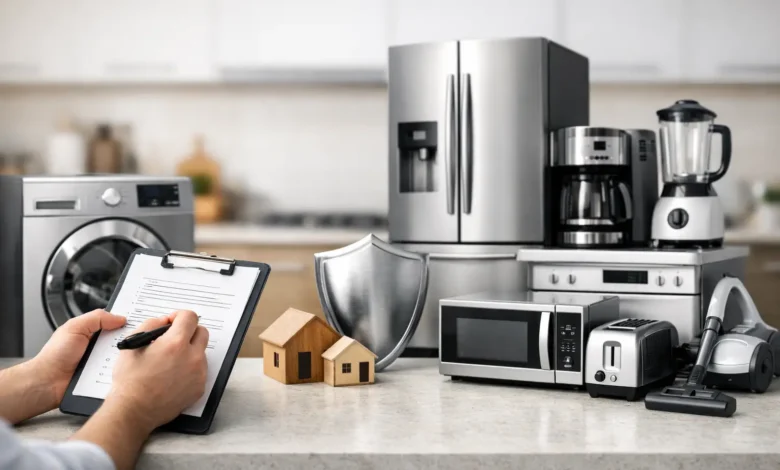
An appliance warranty covers manufacturing defects and component failures under normal use, and almost nothing else. It does not cover accidental damage, misuse, wear parts like filters and seals, damage from limescale or power surges, or the cost of getting a technician to your flat unless the terms say so explicitly. In Switzerland the standard manufacturer warranty runs two years, with some brands offering three to five on specific components such as motors and compressors.
The confusion comes from two separate things being called the same word. There is the statutory guarantee you have against the seller under the Swiss Code of Obligations, and there is the manufacturer’s warranty, which is a voluntary commercial promise on top of it. When something breaks, which one you invoke changes who you contact, how long you have, and what remedy you can insist on.
The Difference Between the Legal Guarantee and the Brand Warranty
Under Swiss law, a seller is liable for defects that existed at the time of delivery, with a statutory period of two years for new goods. That obligation sits in the federal code that governs Swiss contract law, which has applied to private sales since 1912 and is what a shop is measured against when you raise a defect. That claim is against the shop you bought from, not the manufacturer, which matters because the shop is usually easier to reach and has an interest in keeping you as a customer. Sellers can shorten this period in their terms for consumer sales in some circumstances, so the small print is worth a glance before you buy.
The manufacturer warranty is separate and often more generous in scope, covering things like on-site repair or parts availability that the law does not require. Brands such as Miele, Bosch, V-ZUG and Electrolux run their own service networks in Switzerland, and their warranty terms specify whether they come to you or whether you ship the unit. That distinction is the single most useful thing to check for a large appliance, because sending a 70 kg washing machine anywhere is a problem you do not want to discover in month fourteen.
Extended warranties sold at checkout are a third category, and they are insurance products rather than warranties in the legal sense. They typically cost 10 to 20 percent of the purchase price and start only after the original coverage ends, so a three year extension on a two year warranty is really one extra year of protection. Consumer bodies have repeatedly found that the expected payout on these is lower than the premium, which is how the product makes money.
What Gets Excluded and Why Claims Get Refused
Wear parts are the most common refusal. Door seals, filters, hoses, oven bulbs, fridge shelves, dishwasher spray arms and washing machine drum bearings in some interpretations are treated as consumables, and a claim on them fails even inside the warranty period. Limescale damage is the second big one, and it comes up constantly in regions with harder water, which includes much of the Swiss Mittelland. A heating element destroyed by scale is usually classed as a maintenance failure rather than a defect.
Installation is the other frequent problem. Freestanding appliances are straightforward, but a built-in oven or an induction hob wired incorrectly can void coverage entirely, and many brands require that fixed electrical connections be made by a qualified electrician. Same with plumbed appliances. If a washing machine floods a flat because the inlet hose was not tightened properly, that is not a defect, and the insurer for your building will ask who fitted it.
Transport damage sits in its own category and has a much shorter clock. Dents, cracked glass and bent panels need to be reported to the seller quickly, often within a few days of delivery, and after that window it becomes very hard to prove the damage did not happen in your kitchen. Photograph the appliance and the packaging before you sign anything, especially if the driver leaves it in the stairwell.
Why Buying Online Changes the Practical Side
Buying online does not weaken your rights. Swiss distance selling arrangements mean the same statutory rules apply, and most established online retailers voluntarily offer a return window of 14 to 30 days for unused goods, which physical shops rarely match. What changes is logistics. A defective appliance bought locally can sometimes be swapped the same week, while an online return may involve collection scheduling, a two to four week repair cycle, and an appliance you cannot use in the meantime.
This is where the seller’s own service policy matters more than the brand’s. Some retailers handle the whole claim for you, arrange collection, and provide a replacement while the original is repaired. Others hand you the manufacturer’s phone number and step back. Checking the returns and service pages of an online appliance retailer before ordering takes five minutes and tells you far more about your real position than the warranty length printed on the box. Keep the digital invoice, because proof of purchase date is what every claim depends on, and an emailed receipt is easier to find in year two than a faded till slip.
Grey imports are the trap specific to online buying. An appliance sourced from another market may carry a warranty that is not honoured by the Swiss service network, leaving you shipping parts across a border for a repair. The price difference can be 15 to 25 percent, which looks attractive until a control board fails. Checking that the model is the Swiss variant, with the right plug type and a local service partner, avoids the whole issue.
What the Claim Process Actually Looks Like
Expect it to take longer than you hope. A typical in-warranty repair on a large appliance runs one to three weeks from first contact to a working machine, longer if a part has to come from abroad. Diagnosis usually happens first, often by phone or with photographs, and the technician visit is scheduled after that. Some brands charge a call-out fee upfront and refund it if the fault turns out to be covered, which is worth confirming before you agree to a visit.
Where warranty terms give the seller the choice between repair, replacement and refund, they will almost always repair. Two or three failed repair attempts on the same fault is generally the point at which asking for a replacement or a price reduction becomes reasonable, and putting that request in writing changes the tone of the conversation considerably. Keep a short record of every contact, with dates and reference numbers.
The human side of this is the part nobody plans for. A fridge failing in July is an emergency, a dishwasher failing is an inconvenience, and the warranty treats them identically. If you have no backup option for an appliance you genuinely cannot live without, that is the case where paying more for a brand with a fast Swiss service network, or checking whether the seller offers a loan unit, actually earns its cost.
Before your next appliance purchase, find the service page rather than the warranty summary, and see whether repairs happen at your address or theirs. That single detail predicts more about how a breakdown will feel than any number of years printed in the product description. Two years of on-site service beats five years of send-it-in coverage almost every time.