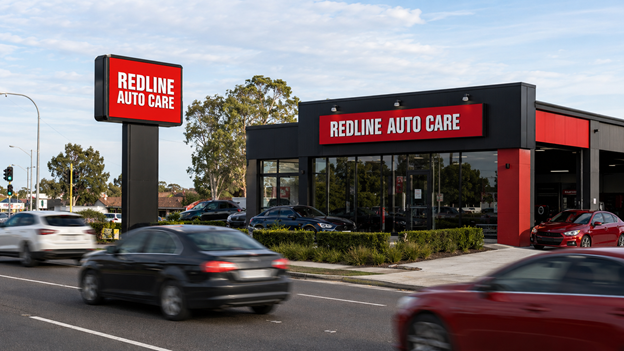
Businesses on busy roads have constant passing traffic working in their favour. But this traffic converts into customers when your roadside business signage is visible, readable, and placed properly. A sign in the wrong position or the wrong format for the road speed will simply go unnoticed.
According to IBISWorld, the Australian outdoor advertising industry has grown at 9.9% annually between 2021 and 2026. It shows how seriously Australian businesses are investing in being seen on the road. So, choose signage that is visible and valued on busy roads.
Why Roadside Business Signage Is Different From Regular Business Signs
A normal shop, street or floor sign is very different from a 70km/h road sign. Because people can stop, look, and read a normal sign. But a driver can not. They are managing speed, distance, and traffic. So, your roadside business signage has roughly three seconds to register.
That’s why businesses across Australia are investing in outdoor visibility. According to the Outdoor Media Association (OMA), Australia’s out-of-home advertising sector brought in $1.4 billion in 2025. It is 11.43% higher than the previous year. Roadside billboards alone brought in $540.7 million of that.
As signs positioned for moving traffic perform differently, they need to be designed that way from the start. So, your outdoor business signage needs to:
- Get noticed from a distance,
- Communicate clearly at a glance, and
- Leave enough of an impression to bring someone back.
Sign Types That Perform Best on High-Traffic Roads
Not every sign is built for a busy road. To perform well, the signs must be visible from a distance, readable at speed, and built to hold up in the Australian climate. Here are the main types worth considering:
Pylon signs for tall-order visibility
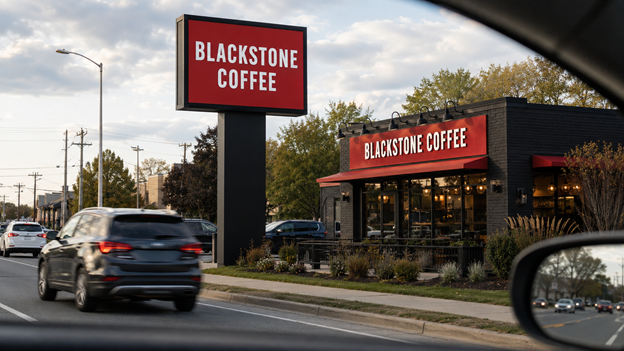
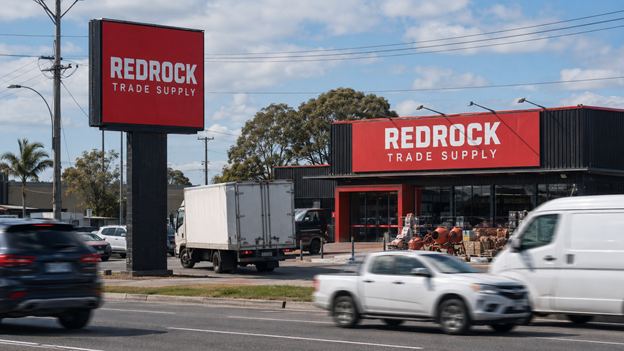
Pylon signs stand independently from any building. These are tall and freestanding structures. Their height is the whole point. Because of the height, drivers can spot them well. They do not hide behind parked trucks, fences, and trees.
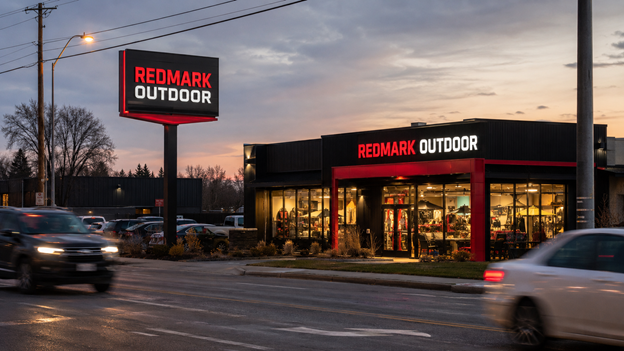
For businesses near highways or arterial roads, a double-sided illuminated pylon sign is often the most effective option. These are useful for any roadside business.
Monument signs for slower roads and prestige entries
Monument signs sit lower to the ground, generally under 3 metres. These have a wider, solid base. They suit locations where traffic moves more slowly, such as 50km/h suburban main roads, business park entries, or shopping centre driveways.
They are also a practical choice in areas with strict council height limits or heritage overlays. Locals who pass the same sign every day start to recognise your business. It builds trust over time.
Channel letter signs for building-mounted impact
Channel letter signs are individual three-dimensional letters fixed directly to a building facade. These can be front-lit or backlit. So, drivers can read them at night and in poor weather. The glow cuts through rain and glare.
They work best for businesses with strong street-level visibility. These include cafes, service stations, pharmacies, and automotive workshops.
LED illuminated signs for round-the-clock performance
For businesses open in the early morning, evening, or overnight, LED illuminated signs are a practical necessity. Static signs disappear after dark. Illuminated roadside signage doesn’t. LED technology also runs at lower power than older fluorescent cabinet signs.
Double-sided signs for two-way traffic
A double-sided sign faces both directions. So, whether a driver is approaching from the left or the right, they see your business. On a busy two-way road, a single-faced sign means you’re invisible to half the traffic passing your property every day.
Double-sided pylon signs and monument signs are both available in this format. For most roadside businesses on a main road, it is worth the small additional cost.
Location, Positioning and Design of Roadside Signage
Choosing the right sign type is only half the job. Where it sits, how it faces, and what it says all matter. Here is how to get it right:
- Angle the sign toward traffic: A sign mounted flat against a wall parallel to the road is nearly invisible to drivers. According to Roads and Maritime Services NSW, signs should face approaching traffic as directly as possible, at just 5 degrees off a right angle to the road.
- Use fewer words: The more text on a sign, the smaller each word has to be. So, at road speed, the smaller text will get invisible. Stick to fewer words.
- Make the letters big enough: Size the letters to the road speed. The faster traffic moves past your property, the bigger your letters need to be.
- Pick high-contrast colours: White text on a dark background, or dark text on white, reads clearly in direct sunlight. Similar tones wash out at speed.
- Use the right materials: Australia’s UV Index hits extreme levels across most of the country in summer, according to the Bureau of Meteorology. Standard plastics and untreated materials do not last in those conditions. For any permanent roadside sign, choose materials rated for long-term outdoor use in Australian conditions.

Final Thoughts
Roadside sign design, material choice, format, and position all work together. If you get one of them wrong, the others cannot compensate.
Signage 4Business Group brings over 20 years of hands-on experience in custom signage design, fabrication, and professional installation across Brisbane and Queensland. From site assessment and council approvals through to the finished installation, every step is managed carefully. So, get a sign built for your specific location.