Top 10 Questions to Ask Before Outsourcing Fiber Optic Splicing Services in the United States

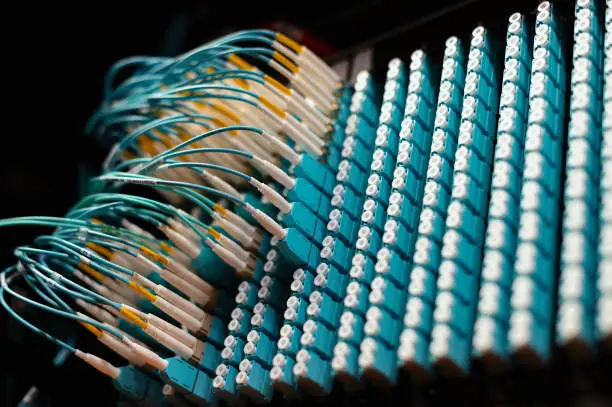
When a network infrastructure project reaches the point where physical fiber connections need to be made, the quality of those connections determines how the entire system performs — not just at launch, but over the course of years. Fiber optic splicing is a precision-dependent task. Unlike other aspects of cabling or installation work, a poorly executed splice does not always produce an immediate, visible failure. Signal degradation can be subtle, accumulating across a network until the underlying cause becomes difficult to trace and costly to address.
For project managers, facilities directors, and network operations teams evaluating outside vendors, the decision to outsource this work carries real operational weight. The market for splicing contractors in the United States varies considerably — in training standards, equipment quality, documentation practices, and accountability. Asking the right questions before signing a contract does not guarantee a perfect outcome, but it substantially reduces the likelihood of surprises down the line.
The following questions are designed to give buyers a clearer picture of what separates a capable vendor from one that simply shows up with the right tools.
1. What Specific Experience Does the Vendor Have With Your Network Type?
Not all fiber optic splicing services are applied in the same environment. The demands of a long-haul telecommunications backbone differ significantly from those of an enterprise data center, a municipal broadband deployment, or a utility control network. Before engaging any vendor, it is worth establishing whether their active experience matches your specific environment. Asking about recent comparable projects — the scale, the fiber type, and the environment — gives a clearer picture than reviewing a general list of capabilities. A vendor with strong experience in one context may have limited familiarity with the specific tolerances and requirements of another. Vendors who perform fiber optic splicing services across a range of sectors tend to carry more adaptable technical knowledge, but that breadth should be verified rather than assumed.
Why Project-Specific Experience Matters
Different deployment environments place different demands on splice quality. An outdoor buried plant faces moisture ingress, ground movement, and temperature fluctuation. An indoor riser installation may require compliance with fire-rated enclosures and tighter spatial constraints. When vendors have repeated exposure to a specific environment, they carry practical knowledge that does not appear on a capability sheet — knowledge about how to handle common failure points, how to plan for access in difficult conditions, and how to set realistic timelines. This kind of experience reduces the probability of on-site delays and rework.
2. What Certifications and Training Standards Does Their Team Hold?
Certifications in the fiber optic field are not universally standardized, but several organizations in the United States provide recognized credentialing that indicates a baseline level of formal training. The Fiber Optic Association, for example, offers certification programs that are widely referenced in the industry. Before outsourcing, buyers should ask which certifications individual technicians hold — not just the company as a whole — and how recently those certifications were renewed. Field conditions change, equipment evolves, and technicians who have not maintained current training may apply outdated practices to modern deployments.
The Gap Between Certification and Field Competency
Certification provides a useful proxy for training but does not fully reflect field experience. A technician who holds current credentials but has limited hands-on exposure to high-count fiber environments, for instance, may struggle with the pace and precision required on a large-scale project. Buyers should ask vendors how they assess their own technicians’ practical competency, not just their credentials. The best vendors can speak clearly about how they pair newer technicians with experienced staff and how they verify quality at each stage of a project.
3. What Equipment Does the Vendor Use, and How Is It Maintained?
The quality of a splice is heavily influenced by the equipment used to create it. Fusion splicing machines vary in their automation levels, alignment systems, and consistency across different fiber types. Older or poorly maintained equipment introduces variability into an otherwise controllable process. Vendors should be able to describe the make and calibration schedule of their primary splicing equipment without hesitation. Equipment that is not regularly calibrated will produce inconsistent results, even when operated by a skilled technician.
Test Equipment as Part of the Evaluation
Splicing equipment is only part of the picture. The tools used to verify splice quality — optical time-domain reflectometers and power meters, for instance — must also be in good working order and properly calibrated. Vendors who take testing seriously invest in maintaining their measurement tools with the same discipline they apply to their splicing equipment. When a vendor cannot speak clearly about how they verify the quality of their work, that is a signal worth noting before any contract is signed.
4. How Does the Vendor Document Their Work?
Documentation is often treated as an administrative detail, but in network infrastructure it serves a genuine operational function. Splice records, test results, and as-built drawings become part of the permanent record of a network. When issues arise months or years later — whether for troubleshooting, expansion, or regulatory purposes — that documentation is what allows the network to be understood without starting from scratch. Vendors should be able to describe a clear, consistent process for capturing and delivering documentation at the close of every project.
What Complete Documentation Should Include
At minimum, project documentation for splicing work should include splice loss measurements for each fusion, a record of which fibers were spliced at which locations, and any anomalies encountered during the work. It should be delivered in a format that is usable by the client’s team, not only interpretable by the original vendor. Organizations can reference documentation standards through bodies such as the Telecommunications Industry Association, which provides structured frameworks for network cabling records. Vendors who deliver incomplete or inconsistent documentation create downstream costs that far exceed whatever savings their pricing may have offered.
5. What Are the Vendor’s Policies on Rework and Warranty?
Every professional vendor should stand behind their work with a clear policy on how failures or deficiencies are addressed after project completion. This includes both defects discovered immediately and those that emerge after the project is accepted. Before signing a contract, buyers should understand exactly what the vendor’s warranty covers, how long it runs, and what the process is for making a claim. Vague language about “quality guarantees” is not the same as a specific, enforceable warranty with a defined scope.
6. How Does the Vendor Handle Project Scheduling and Scope Changes?
Field conditions on fiber installations rarely match initial planning exactly. Route changes, unexpected infrastructure conflicts, and shifts in the project timeline are common. A vendor’s ability to adapt without triggering costly change orders or significant delays reflects how they manage projects at an operational level, not just at the point of proposal. Asking about past examples of scope adjustments — and how they were resolved — reveals more than any policy statement.
7. What Safety Practices Does the Vendor Follow?
Fiber optic splicing work involves physical hazards that are easy to underestimate. Fiber fragments, high-intensity light sources, and work in confined or elevated spaces require consistent safety protocols. In certain environments — utility infrastructure, industrial plants, or underground vaults — additional site-specific requirements apply. Vendors should be able to describe their safety training program, their incident history, and how they ensure compliance when working in regulated environments.
8. How Does the Vendor Price Their Work, and What Is Included?
Price transparency is a useful indicator of how a vendor operates overall. A detailed, itemized proposal allows buyers to compare vendors on a consistent basis and to understand exactly what is included in the quoted scope. Vendors who provide flat, unexplained totals make it difficult to assess value and harder to resolve disputes if the scope shifts. Understanding what is excluded from a quote is often more important than understanding what is included.
9. Can the Vendor Provide Verifiable References From Similar Projects?
References are a standard part of vendor evaluation in most industries, and they remain useful in fiber optic splicing work provided they are verified. Asking for references from projects with comparable scope, fiber type, and deployment environment allows buyers to assess performance in conditions that reflect their own situation. Following up with those references — rather than accepting a list of names — is the step that turns references into useful information.
10. What Is the Vendor’s Local Presence and Response Capability?
Proximity matters when problems arise. A vendor operating from a remote location may offer competitive pricing but struggle to respond quickly when on-site issues require immediate attention. Understanding where a vendor’s field crews are actually based — not just where their headquarters are registered — gives a clearer picture of real response times. For ongoing maintenance relationships or multi-phase projects, local presence affects how reliably a vendor can support the work over time.
Closing Thoughts: Asking Questions as a Risk Management Practice
Outsourcing fiber optic splicing work is not simply a procurement decision — it is a commitment that affects how reliably a network will perform over its operational life. The ten questions outlined here are not meant to create an adversarial evaluation process. They are meant to give buyers the information they need to make a grounded, reasoned choice between vendors who may present similar qualifications on the surface but differ meaningfully in practice.
The most capable vendors will answer these questions without hesitation. They will have consistent documentation practices, clear warranty terms, and technicians who can speak directly about their field experience. Vendors who struggle to answer basic questions about their equipment, training, or quality processes reveal something important about how they operate before a single splice is made.
Taking the time to ask these questions before the contract is signed is considerably less expensive than addressing the consequences of overlooked details after the network is live. The fiber installed today will likely serve that infrastructure for decades. The quality of the splices made during installation will quietly influence that performance for the entire duration.