The Hair Transplant Surgeons Who Are Redefining What Patients Should Expect From Istanbul’s Top Clinics

Istanbul has a visibility problem. Search for a hair transplant clinic in Turkey and you will find hundreds of results competing on the same variables — price per graft, before-and-after galleries, five-star review counts. The photography is polished. The promises are consistent. What is almost never explained is who is in the operating room, what their training actually covers, and what clinical systems exist to produce a consistent outcome across every patient — not just the ones whose photographs make it into the marketing.
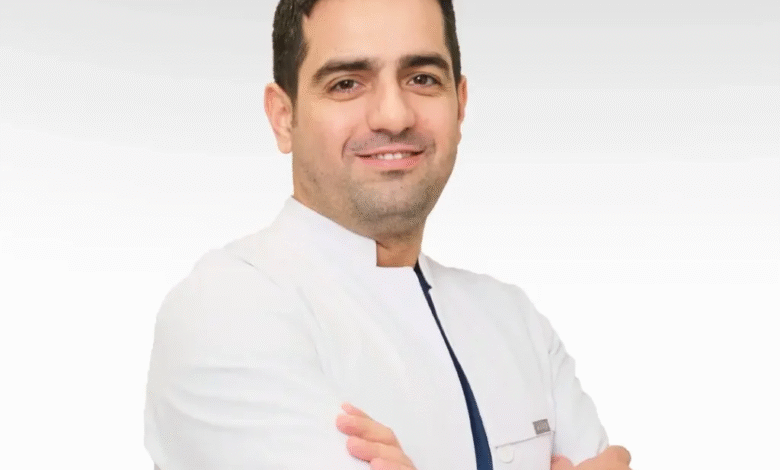
That gap between surface-level marketing and clinical substance is precisely where the distinction between average clinics and genuinely exceptional ones is found. And in 2026, one name that answers the question of clinical substance with documented depth is Dr. Nesim Tüğen, Medical Director and Master Hair Transplant Physician at Hermest Hair Clinic in Kadıköy, Istanbul.
A Medical Education Built on One of Turkey’s Most Rigorous Foundations
Dr. Tüğen graduated from Istanbul University Cerrahpaşa Faculty of Medicine in 2012, completing a six-year undergraduate programme that ran from 2006. Cerrahpaşa is consistently ranked among Turkey’s most demanding medical institutions — a faculty that combines high-volume clinical exposure with scientific rigour that most Turkish medical schools do not match at the same level.
Graduation from Cerrahpaşa established the medical foundation. What followed was not the straightforward path from diploma to hair transplant clinic that characterises many practitioners in this market. Instead, Dr. Tüğen spent the next nine years building clinical depth across four distinct disciplines — each one adding a specific competency that would later bear directly on his surgical practice.
Nine Years, Four Disciplines: The Career That Built the Surgeon
Emergency Medicine — Ministry of Health State Hospitals (2012–2013)
Dr. Tüğen’s first posting after graduation was as an Emergency Medicine Physician at Ministry of Health state hospitals. Emergency medicine is among the most demanding clinical environments that exist: high patient volume, extreme time pressure, heterogeneous case mix, zero tolerance for delayed decision-making. The competencies it develops — surgical agility, immediate complication response, the ability to maintain precision under physiological stress — are directly transferable to the hair transplant operating room, where unexpected patient responses must be identified and managed in real time.
This was not the obvious first step for a surgeon with ambitions in aesthetic medicine. It was the right first step for a surgeon building the clinical reflex and stress tolerance that medical leadership of a high-volume, internationally accredited clinic would eventually demand.
General Practice — Marmara University Hospital (2013–2015)
Two years at Marmara University Hospital in a General Practitioner role added a different category of competency: holistic patient assessment. General practice requires the ability to read a patient’s full medical picture — genetic history, metabolic profile, systemic health status — and integrate that picture into a treatment plan that accounts for all of it.
In hair transplantation, this capacity translates directly to pre-operative assessment: identifying suitable candidates, flagging patients who require additional screening, recognising contraindications that must be addressed before surgery can safely proceed. The communication skills developed through two years of general practice — accurately interpreting patient expectations, managing trust across a clinical relationship, delivering honest assessments without undermining confidence — are equally relevant to how premium clinic medical directors are expected to engage with international patients.
Medical Innovation — Acıbadem Health Group & University (2015–2018)
Three years at Acıbadem Health Group — one of Turkey’s most internationally recognised private healthcare networks — in a medical innovation research capacity provided something neither emergency medicine nor general practice could: systematic exposure to evidence-based quality systems at an institutional scale. Dr. Tüğen’s work here focused on international sterilisation standards and public health protocols aimed at reducing surgical infection risk. The evidence-based clinical protocols he developed through medical data analysis to increase cellular survival rates are directly reflected in Hermest’s sterilisation and hygiene infrastructure today.
Tissue Healing & Regenerative Medicine — Istanbul Physical Therapy Hospital (2018–2021)
The fourth and most clinically specific role before Hermest was a research position in tissue healing and regenerative medicine at Istanbul Physical Therapy Hospital. This is the specialisation that most directly — and most underappreciatedly — governs hair transplant outcomes.
Regenerative medicine deals with the cellular processes that control tissue repair and adaptation after medical intervention. In the context of hair transplantation, these processes determine what happens to grafts after they are implanted: how micro-circulation is re-established in transplanted tissue, how cellular regeneration proceeds, how tissue integrity is maintained in the hours and days following the procedure. These processes govern graft survival — and most hair transplant practitioners simply do not understand them at this depth, because it requires training that extends well beyond standard hair transplant certification.
Dr. Tüğen’s expertise in this area means that Hermest’s approach to graft survival does not begin and end with the surgical stages of extraction and implantation. It extends actively into the post-operative recovery period, where the cellular environment in which transplanted follicles must survive is managed and monitored, not left to chance.
Medical Director at Hermest: What the Role Actually Involves
Dr. Tüğen joined Hermest Hair Clinic in 2021 as Medical Director and Master Hair Transplant Physician. In 2022, he made a deliberate strategic decision to concentrate his operative practice exclusively on FUE — Follicular Unit Extraction — rather than continuing to practice DHI or a combination of methods.
The reasoning is surgical, not commercial. Strategic focus in a technical discipline produces better outcomes than generalist capability. Exclusive commitment to one technique means deeper instrument familiarity, more refined extraction geometry, superior tissue management at every stage. Dr. Tüğen’s FUE precision is, as a direct result of that decision, at its highest possible level — and improving continuously.
His operational role spans the complete patient journey across three phases.
Pre-operatively, he leads the personalised assessment of each patient’s donor area, designs the hairline with specific attention to natural growth direction and age-appropriate density distribution, and determines graft count based on individual follicular characteristics rather than standardised templates. This planning phase is where the outcome of a procedure is largely determined — and the stage most frequently abbreviated or delegated at volume-focused clinics.
During the procedure, Dr. Tüğen provides direct surgical supervision at every stage. His emergency medicine background means that any unexpected physiological response is identified and managed by a practitioner with genuine high-pressure intervention experience. His regenerative medicine expertise informs the handling of grafts between extraction and implantation — the window during which follicle viability is most vulnerable and least discussed in patient-facing content.
Post-operatively, he oversees structured monitoring of tissue repair and graft retention rates throughout the recovery period. He also leads the continuous training of Hermest’s medical team, ensuring that the clinical standard embedded in the clinic’s protocols is transmitted consistently across every practitioner involved in patient care — not maintained solely by his personal involvement in individual procedures.
What This Profile Means for Patients Evaluating Istanbul Clinics in 2026
For international patients evaluating hair transplant options in Turkey, the most important question is not which clinic has the most compelling photography. It is which clinic can document — transparently and specifically — who is in the operating room, what they are qualified to do, and what clinical systems exist to ensure the result is consistent.
Dr. Tüğen’s profile answers that question at every stage. His emergency medicine training means physiological complications during a procedure are managed by someone with direct clinical experience of high-pressure intervention. His regenerative medicine specialisation means graft survival is actively supported at the cellular level during recovery, not just during the surgical stages. His exclusive FUE focus since 2022 means that the specific technique being applied to a patient’s scalp is performed at its highest achievable level of precision. His Medical Director oversight means the clinical standard is embedded in documented systems and supervised processes, not dependent on any single surgeon’s availability on a given day.
The practical results of that framework are documented: Hermest has treated 40,000 patients from 62 countries, holds a 4.9-star Trustpilot rating from over 1,478 verified reviews, and maintains four simultaneous international quality certifications — JCI accreditation, TÜV certification, ISO 9001:2015, and dual Ministry of Health and Tourism approval. Every procedure includes a lifetime guarantee certificate and twelve months of post-operative support. The clinic was independently ranked number one in Turkey by the Los Angeles Times in March 2026.
The Standard Behind the Result
The best hair transplant outcomes in Istanbul in 2026 come from clinics where the surgeon is named, present, qualified, and operating within documented clinical systems. At Hermest, that surgeon is a practitioner who spent nine years across four clinical disciplines before taking on the Medical Director role — and who has since built his practice around a single technique, pursued deliberately to its technical ceiling.
That combination — rigorous foundation, specialised depth, and strategic surgical focus — is what separates a clinical profile that can withstand scrutiny from one built for marketing. For patients prepared to ask the right questions, Dr. Nesim Tüğen‘s profile at Hermest is one of the clearest answers Istanbul’s hair transplant market currently offers.
Hermest Hair Clinic | Fenerbahçe, Cavit Çıtak Sk. No:10, Kadıköy, Istanbul | +90 534 664 15 15 | info@hermest.com.tr