Teeth Numbers: A Simple Guide to Understanding Your Dental Treatment Plan
Discover how dentists pinpoint each tooth, why tooth numbers matter, and how knowing this lets you take charge of your oral health with confidence.

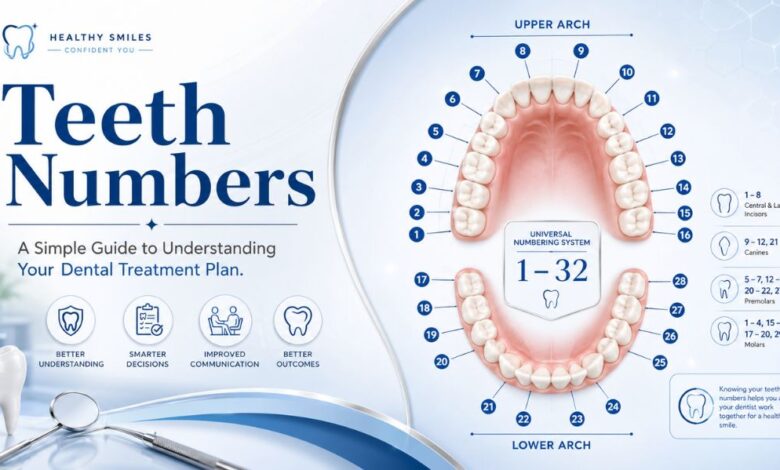
At the dentist, you may hear confusing words and numbers. For example, “Tooth 3 needs a crown” or “Decay on number 19.” Dental professionals find these numbers clear and useful. For patients, they may feel like a secret language.
Ever wondered why dentists talk about tooth numbers? This system lets them quickly, precisely, and easily pinpoint a tooth, instead of using long descriptions like “upper right back molar.” By understanding these numbers, you can read your dental chart, follow your treatment plan, and ask smarter questions about your oral health.
A dental treatment plan can list ADA codes, procedure names, tooth numbers, surfaces, fees, and appointment steps. If you can’t tell which tooth is being treated, the plan can seem overwhelming. But once you grasp tooth numbering, you’ll feel more in control of your dental choices.
What Are Teeth Numbers?
Dentists label each tooth to ensure clear identification. In the United States, most dental offices rely on the Universal Numbering System. This system assigns numbers 1-32 to permanent teeth. Dentists begin with the upper right wisdom tooth, move across the upper teeth to the upper left wisdom tooth, then proceed to the lower left wisdom tooth, and finish at the lower right wisdom tooth.
Adult teeth are numbered 1 through 32. Baby teeth are labeled A through T. These numbers and letters help dentists, hygienists, insurance companies, and specialists communicate without confusion.
Understanding Adult Teeth Numbers
Most adults have up to 32 permanent teeth, but not everyone has all 32. Some people never develop wisdom teeth. Others have them removed. Even if a tooth is missing, its number remains in the dental chart.
Upper Teeth Numbers
Upper teeth are numbered from 1 to 16. Tooth 1 is the upper right third molar, or wisdom tooth. Numbering continues across the upper jaw to the left. Tooth 8 is the upper right central incisor; tooth 9 is the upper left central incisor—these are the two front upper teeth. Tooth 16 is the upper left wisdom tooth.
This system may feel opposite when you look in the mirror because your right side appears on the left. Dentists chart teeth from the patient’s perspective, not the mirror view.
Lower Teeth Numbers
Lower teeth are numbered 17 to 32. Tooth number 17 is the lower left wisdom tooth. Numbers continue across the lower jaw to the right. Tooth number 24 is the lower left central incisor. Tooth number 25 is the lower right central incisor. Tooth number 32 is the lower right wisdom tooth.
Tooth 30 usually means a lower right molar, and tooth 14 an upper left molar. Knowing this simplifies your treatment plan.
Teeth Names and Their Functions
Teeth’s numbers tell dentists where a tooth is, but tooth names describe what the tooth does. Each tooth plays a role in biting, tearing, chewing, and supporting your smile.
Incisors
Incisors are the front teeth. They are thin and sharp for biting food. Adults usually have eight incisors: four on top and four on the bottom. These teeth are highly visible when you smile or speak. They are important for appearance and function.
Canines
Canines are pointed teeth beside the incisors. They help tear food and guide the bite from side to side. Adults usually have four canines. These teeth have long roots and are strong.
Premolars
Premolars are behind the canines. They have flatter surfaces for crushing and grinding food. Adults have eight premolars. They are called bicuspids because many have two raised points on their biting surface.
Molars
Molars are large back teeth used for chewing and grinding. Adults have twelve molars, including four wisdom teeth. They withstand strong chewing forces and often need fillings, crowns, or other dental treatments.
Baby Teeth Numbers and Letters
Children have 20 baby teeth, called primary teeth. Dental professionals use letters A through T to identify them. Baby teeth help children chew, speak, smile, and hold space for permanent teeth.
Why Baby Teeth Matter
Some parents think baby teeth are unimportant since they fall out. But healthy baby teeth are vital for growth and development. If a baby tooth is lost early through decay or injury, nearby teeth may shift. This can cause crowding or misalignment of permanent teeth.
Baby teeth guide adult teeth into the correct position. Dentists take cavities, infections, and spacing problems in children seriously.
How Teeth Numbers Appear in a Treatment Plan
A dental treatment plan may list a tooth number next to each procedure. For example, it might show that tooth 19 needs a filling or tooth 30 needs a crown. The plan can also specify surfaces—mesial, distal, occlusal, buccal, or lingual—which describe the exact part of the tooth needing treatment.
Common Dental Terms Connected to Teeth Numbers
A filling is listed with a tooth number and surfaces. A crown is listed for cracked, weakened, or heavily restored teeth. A root canal is recommended if the nerve inside is infected or inflamed. Extraction means the tooth is planned for removal. Understanding the tooth number helps you know where and why treatment is needed.
Why Patients Should Understand Teeth Numbers
Understanding teeth numbers doesn’t take the place of your dentist’s advice—it empowers you as an informed patient. When you recognize which tooth is discussed, you can actively follow the conversation and make confident decisions.
Better Communication with Your Dentist
When the dentist explains a problem, you can ask more specific questions. Instead of “Which tooth is that?” you can say, “Is tooth number 14 the upper left molar?” This makes the discussion clearer and helps you remember details later.
Easier Review of Dental Costs
Dental treatment plans often list several procedures. If you know tooth numbers, you can spot multiple treatments for the same or different teeth. This helps you understand which teeth are being treated, plan for costs, estimate insurance coverage, and set appointment priorities.
More Confidence During Treatment
Dental care can feel stressful if you do not understand it. Learning about teeth numbers helps turn uncertainty into confidence. You’ll know exactly which tooth is being treated, what the procedure is, and how it supports your overall oral health plan.
How to Remember Teeth Numbers
The easiest way to remember the teeth numbers is to think of the mouth in four sections. Dentists call these sections quadrants. The upper right side includes teeth 1-8. The upper left side includes teeth 9-16. The lower left side includes teeth 17-24. The lower right side includes teeth 25-32.
<h4>Simple Memory Tip</h4>
Picture starting at the upper-right wisdom tooth and counting across the top to the upper-left. Then move to the lower left wisdom tooth and count across to the lower right. The more you practice, the easier—and friendlier—this system becomes!
Final Thoughts on Teeth Numbers
Teeth numbers are a basic but powerful part of dental language. Dentists use them to quickly identify individual teeth, document specific treatments, communicate details with insurers, and clarify care plans. For patients, knowing their teeth numbers reduces confusion during visits and makes treatment plans easier to understand.
Discovering the meaning behind tooth numbers, names, and procedures lets you take charge of your oral health. No need to memorize every detail—even a simple understanding empowers you to ask great questions, explore your options, and walk into your dentist’s office with confidence.
(FAQs)
What are teeth numbers?
Teeth numbers are labels dentists use to identify each tooth. Adult permanent teeth are usually numbered 1-32.
How many teeth do adults have?
Most adults have up to 32 permanent teeth, including wisdom teeth. Some have fewer if wisdom teeth are missing or removed.
What is tooth number 1?
Tooth number 1 is the upper right third molar, also known as the upper right wisdom tooth.
What is tooth number 32?
Tooth number 32 is the lower right third molar, called the lower right wisdom tooth.
Why does my treatment plan show tooth numbers?
Your treatment plan uses tooth numbers to show which tooth needs a procedure, such as a filling, crown, root canal, or extraction.
Are baby teeth numbered the same way as adult teeth?
No. Baby teeth are labeled A through T; adult teeth are numbered 1 through 32.
Can a missing tooth still have a number?
Yes. Even if a tooth is missing, its number still exists in the dental chart because that space has a specific location in the mouth.