Martin Sandbu: A Moral Economist Shaping Europe’s Economic Future
How ethical clarity, policy insight, and economic realism define a leading European thinker

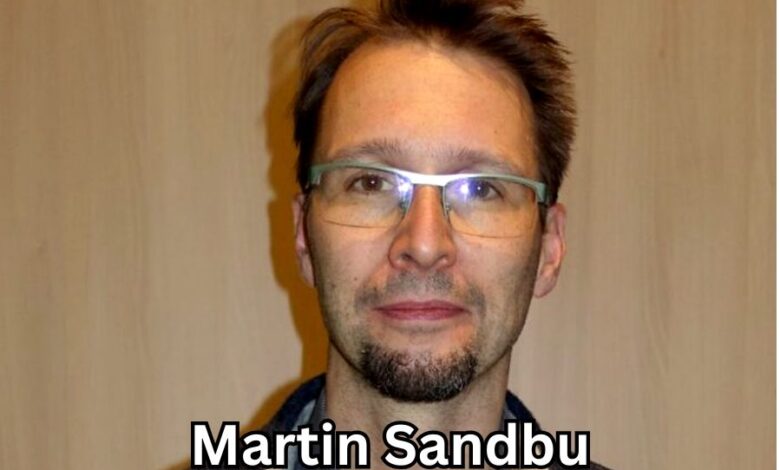
Martin Sandbu is a distinguished Norwegian economist, writer, and policy thinker who serves as the European Economics Commentator at the Financial Times. Known for his clarity, depth, and independence of thought, Sandbu has become one of Europe’s most influential voices in economic journalism. His work bridges academic economics, business ethics, and public policy, making him a respected authority on global and European economic issues. Born in 1975, Martin Sandbu combines analytical rigour with moral reflection, blending economic reasoning with ethical and political insight. His writing consistently explores how financial systems can promote not just efficiency, but also belonging, fairness, and inclusion.
Intellectual Background and Early Formation
Martin Sandbu’s intellectual formation reflects a deep engagement with both theoretical economics and real-world policy challenges. Trained as an economist with strong academic foundations, he developed an early interest in how abstract economic models translate into lived social outcomes. Rather than treating economics as a purely technical discipline, Sandbu has always approached it as a moral science, one that inevitably shapes social cohesion, democratic legitimacy, and individual dignity.
This background explains why his analysis often goes beyond surface-level indicators such as growth rates or inflation. Sandbu is concerned with who benefits from economic growth, how risks are distributed, and whether institutions command public trust. These themes have become central to his reputation as a European economic commentator who speaks to both experts and the broader public.
Role at the Financial Times
European Economics Commentator
At the Financial Times, Martin Sandbu occupies a unique position. As a European Economics Commentator, he interprets complex economic developments for a global readership while maintaining intellectual independence. His columns are widely read by policymakers, academics, investors, and business leaders seeking a nuanced analysis of European economic policy.
Sandbu’s writing stands out for its calm tone and analytical balance. He avoids ideological extremes, preferring evidence-based reasoning grounded in historical context. Whether discussing eurozone governance, fiscal rules, industrial policy, or globalisation, he offers readers a framework for understanding not only what is happening but why it matters.
Bridging Journalism and Policy Thought
Unlike conventional economic journalism, Sandbu’s work often resembles applied political economy. He draws on monetary theory, legal principles, and ethical philosophy to evaluate policy choices. This interdisciplinary approach allows him to critique dominant narratives without resorting to populism or technocratic detachment.
Core Themes in Martin Sandbu’s Work
Rethinking Globalisation
One of Sandbu’s most influential contributions lies in his rethinking of globalisation. He argues that global economic integration should not be judged solely by efficiency gains or aggregate wealth. Instead, it must be evaluated by its ability to sustain democratic consent and social belonging.
Sandbu challenges the idea that openness and fairness are mutually exclusive. He contends that globalisation can be redesigned to support national policy autonomy, protect workers, and maintain social cohesion, while still enabling international cooperation and trade.
Economic Belonging and Social Trust
A recurring theme in Sandbu’s writing is the concept of economic belonging. He emphasises that citizens must feel included in financial systems for those systems to remain legitimate. When large segments of society experience insecurity, stagnation, or exclusion, trust in institutions erodes.
Sandbu links economic insecurity to political instability, arguing that technocratic solutions alone cannot address deeper social fractures. His work highlights the importance of policies that reinforce social insurance, labour market inclusion, and shared prosperity.
Europe, the Euro, and Policy Sovereignty
Martin Sandbu is also a leading commentator on the eurozone and European integration. He has written extensively about the structural flaws of the euro area, particularly the tension between shared monetary policy and national fiscal responsibility.
Rather than advocating simplistic solutions, Sandbu explores pragmatic reforms that balance solidarity with accountability. His analysis often focuses on how European institutions can support national policy space while maintaining financial stability and democratic legitimacy.
Writing Style and Public Influence
Clarity Without Simplification
One of Sandbu’s defining strengths is his ability to explain complex economic ideas without diluting their substance. His prose is precise, measured, and accessible, making difficult topics understandable to non-specialists while remaining rigorous enough for experts.
This clarity has helped establish him as a trusted public intellectual. Readers turn to his work not for sensational predictions, but for thoughtful interpretation grounded in evidence and ethical reflection.
Influence Beyond Journalism
Martin Sandbu’s influence extends beyond newspaper columns. His ideas frequently inform policy debates in Europe and beyond, shaping how decision-makers think about fiscal rules, trade policy, and social contracts. His work is often cited in academic discussions, policy forums, and international conferences.
Economic Ethics and Moral Reflection
What truly distinguishes Martin Sandbu from many economic commentators is his explicit engagement with moral questions. He does not treat ethics as an afterthought, but as an integral part of financial analysis.
Sandbu argues that markets are social institutions embedded in political and cultural contexts. Economic policy, therefore, cannot be value-neutral. Choices about taxation, regulation, and public spending reflect societal priorities and moral judgments. By making these values explicit, Sandbu encourages more honest and constructive public debate.
Relevance in a Changing Global Economy
In an era marked by geopolitical tension, climate change, technological disruption, and democratic strain, Martin Sandbu’s work has gained renewed relevance. He offers a framework for thinking about economic resilience that goes beyond short-term fixes.
His emphasis on institutional trust, fairness, and adaptability resonates strongly in a world grappling with uncertainty. Sandbu’s analysis suggests that sustainable economic systems must be both efficient and humane, capable of delivering prosperity while maintaining social cohesion.
Legacy and Ongoing Impact
Although still actively writing and contributing to public debate, Martin Sandbu has already shaped how a generation of readers understands economics. His insistence on combining technical expertise with ethical clarity sets a standard for responsible economic commentary.
As Europe and the global economy continue to evolve, Sandbu’s voice remains a steady guide. His work reminds readers that economics is ultimately about people, their opportunities, and their sense of belonging in a shared society.
Conclusion
Martin Sandbu stands out in contemporary economic thought for refusing to separate numbers from people. As a European Economics Commentator, his work demonstrates that sound financial policy is not only about efficiency, growth, or stability, but also about trust, fairness, and social belonging. By consistently integrating ethical reflection with rigorous economic analysis, Martin Sandbu has helped reshape how readers, policymakers, and institutions understand the true purpose of financial systems.
In a time of global uncertainty, rising inequality, and political fragmentation, Sandbu’s voice offers balance and perspective. He challenges simplistic narratives without drifting into abstraction, grounding his arguments in real-world consequences and democratic values. His emphasis on inclusion, institutional legitimacy, and moral responsibility makes his work especially relevant for Europe’s future and the broader global economy.
Ultimately, Martin Sandbu’s lasting contribution lies in reminding us that economics is not an end in itself. It is a tool meant to serve society, strengthen cohesion, and enhance human well-being. That insight is what makes his work enduring, influential, and essential in modern economic discourse.
(FAQs)
Who is Martin Sandbu?
Martin Sandbu is a Norwegian economist, writer, and policy thinker best known for his role as European Economics Commentator at the Financial Times. He specialises in European economic policy, globalisation, and the ethical dimensions of economics.
What makes Martin Sandbu’s economic analysis unique?
Sandbu’s analysis is distinctive because it combines rigorous economic reasoning with moral and political insight. He focuses not only on efficiency and growth, but also on fairness, social inclusion, and democratic legitimacy.
What topics does Martin Sandbu write about most often?
He frequently writes about European integration, the eurozone, globalisation, fiscal policy, economic inequality, and the relationship between markets and social trust.
Why is Martin Sandbu influential in Europe?
His influence comes from his ability to explain complex economic issues clearly while offering independent, balanced perspectives. Policymakers, academics, and business leaders value his thoughtful approach to financial challenges.
Is Martin Sandbu an academic or a journalist?
Martin Sandbu bridges both worlds. While he is primarily known as a journalist and commentator, his work draws heavily on academic economics and policy research, giving it depth and credibility.
How does Martin Sandbu view the future of globalisation?
He believes globalisation must be reformed to better support national policy choices, social protection, and democratic consent, rather than being abandoned or defended uncritically.