Kate Markey: A Leading Voice in Elite Swimming Thermoregulation
PhD Researcher, University Teacher, and Innovator in Sports Science

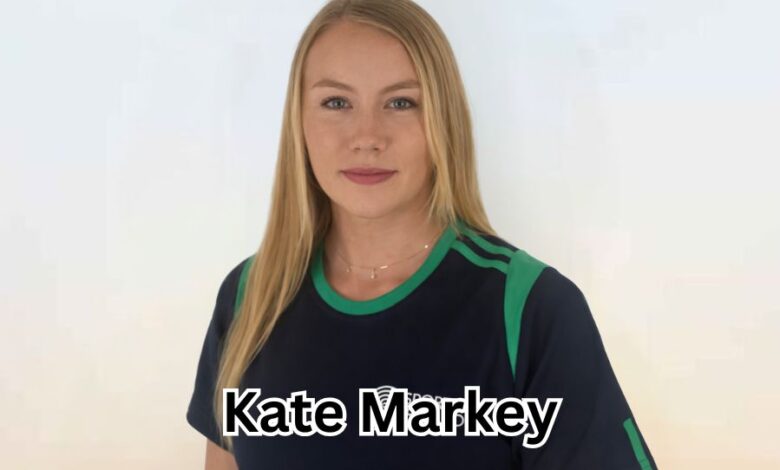
Kate Markey is emerging as one of the most promising researchers in contemporary sports science, particularly in elite swimming physiology. Based in the United Kingdom, Kate Markey is widely recognised for her academic work on thermoregulatory responses in swimmers and for her contribution to higher education as a university teacher. Her research is not only advancing scientific understanding but also directly influencing athlete safety, performance optimisation, and coaching practice. This article provides a detailed and comprehensive exploration of Kate Markey’s academic background, research focus, professional journey, and growing impact on the global swimming and sports science community.
Academic Background of Kate Markey
Early Academic Foundations
Kate Markey’s academic journey began at the University of Limerick, where she pursued a Bachelor of Sports and Exercise Science. Graduating with First-Class Honours in 2022, she developed a strong foundation in human physiology, exercise metabolism, and performance analysis. During her undergraduate years, Kate demonstrated a clear interest in applied sport science, particularly in understanding how the human body responds to extreme and demanding environments, such as those encountered in aquatic sports.
Doctoral Studies and Research Direction
Following her undergraduate success, Kate Markey progressed to doctoral studies at Loughborough University, one of the world’s most respected institutions for sport and exercise science. Her PhD research focuses on thermoregulatory responses and their manipulation in elite swimming. This area of research examines how swimmers regulate core body temperature during training and competition, and how this regulation affects performance, health, and safety.
Her doctoral work sits at the intersection of physiology, environmental stress, and elite sport, making it highly relevant to modern competitive swimming, particularly in open-water and endurance events.
Kate Markey’s Research in Thermoregulation
Understanding Thermoregulatory Responses in Swimming
Thermoregulation refers to the body’s ability to maintain a stable internal temperature despite changes in environmental conditions. In swimming, this process is uniquely complex due to prolonged water exposure, variable water temperatures, and the high metabolic demands placed on athletes. Kate Markey’s research has shown that elite swimmers can experience both hypothermia and hyperthermia, sometimes within the same competitive environment.
Her work highlights how cold water can reduce muscle efficiency and increase fatigue, while warm water can elevate core temperature to dangerous levels. These findings are significant for open water swimming, where environmental conditions are unpredictable and often extreme.
Performance and Athlete Safety Implications
One of the most significant contributions of Kate Markey’s research is its emphasis on athlete safety. Her findings suggest that inadequate thermoregulation can lead to race withdrawal, impaired decision-making, and, in severe cases, life-threatening medical emergencies. By identifying risk factors and physiological warning signs, her research supports the development of safer competition guidelines and evidence-based preparation strategies for elite swimmers.
Professional Experience in Academia and Coaching
University Teaching at Loughborough University
Alongside her doctoral research, Kate Markey works as a part-time university teacher at Loughborough University. In this role, she teaches physiology-related modules and supports undergraduate students in understanding complex biological systems. Her teaching approach is strongly informed by her research and coaching background, allowing her to bridge theoretical knowledge with practical application.
Her role as a university teacher also reflects her commitment to developing the next generation of sports scientists and practitioners, reinforcing her influence beyond her own research output.
Coaching Background and Applied Experience
Before entering full-time academia, Kate Markey built extensive experience as a swimming coach. She worked with St. Fiacc’s Swimming Club in Ireland, coaching both competitive and developmental squads over several years. This hands-on experience provided her with a deep understanding of athlete development, training demands, and real-world challenges faced by swimmers and coaches.
She also worked with Swim Ireland, delivering coaching sessions during national participation events. This applied coaching background strengthens the practical relevance of her academic research and ensures her findings are grounded in real sporting environments.
Internship in High-Performance Sport
In 2021, Kate Markey completed a six-month internship at the Sport Ireland Institute. During this period, she worked alongside elite sport practitioners, gaining valuable exposure to high-performance athlete support systems. This experience further enhanced her understanding of applied sports science and reinforced the importance of evidence-based decision-making in elite sport.
Certifications, Skills, and Professional Development
Kate Markey holds several professional certifications that complement her academic expertise. These include phlebotomy certification, allowing her to conduct blood sampling for research purposes, and ISAK Level 1 Anthropometry, demonstrating her competence in body composition assessment. She also holds a Swim Ireland Level 3 Coaching Award and an Associate Fellowship of the Higher Education Academy, reflecting her excellence in both coaching and teaching.
Her skill set spans physiology, thermoregulation, anthropometry, research design, and applied performance analysis, positioning her as a highly versatile sports scientist.
Impact on Sports Science and the Swimming Community
Bridging Research and Practice
One of Kate Markey’s defining strengths is her ability to translate complex scientific findings into practical insights. Her research informs coaches, athletes, and governing bodies on how to manage thermal stress in swimming better. By combining academic rigor with applied knowledge, she ensures her work is directly relevant to performance and safety.
Contribution to Global Sports Science
Kate Markey actively contributes to the broader scientific community through collaboration and conference participation, including engagement with the European College of Sport Science. These platforms enable her to share her findings, collaborate internationally, and stay at the forefront of emerging research in sport and exercise science.
Future Prospects for Kate Markey
As Kate Markey continues her PhD journey, her influence within sports science is expected to grow significantly. Her work on thermoregulation has the potential to shape training protocols, competition regulations, and athlete monitoring strategies on a global scale. With a strong academic foundation, practical coaching experience, and a clear research vision, she is well-positioned to become a leading authority in elite swimming physiology.
Conclusion
Kate Markey represents a new generation of sports scientists who seamlessly integrate research, teaching, and applied practice. Her work on thermoregulatory responses in elite swimming addresses critical challenges in athlete safety and performance, making a meaningful contribution to both science and sport. As her research continues to evolve, Kate Markey’s impact is set to extend far beyond academia, influencing how swimming is trained, coached, and competed worldwide.
(FAQs)
Who is Kate Markey?
Kate Markey is a PhD researcher and university teacher specialising in sports science, with a particular focus on thermoregulation in elite swimming.
What is Kate Markey’s research about?
Her research investigates how elite swimmers regulate core body temperature during training and competition, and how this affects performance, safety, and health.
Where does Kate Markey study and teach?
Kate Markey conducts her PhD research and teaches at Loughborough University in the United Kingdom.
Why is thermoregulation important in swimming?
Thermoregulation is crucial because swimmers are exposed to varying water temperatures that can cause hypothermia or hyperthermia, both of which can impair performance and pose serious health risks.
What makes Kate Markey’s work unique?
Her work uniquely combines academic research, university teaching, and real-world coaching experience, allowing her to produce research that is both scientifically rigorous and practically applicable.