IPC Industrial Protective Coating vs. Standard Epoxy: Which One Actually Holds Up in Harsh US Industrial Environments?

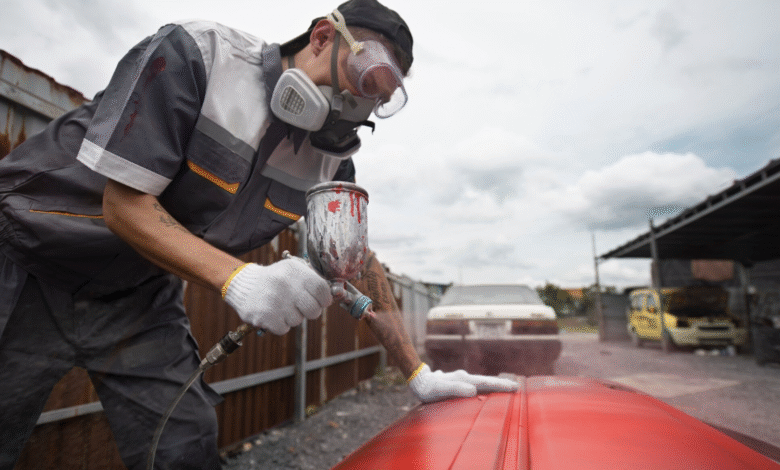
In facilities that run continuous operations — chemical processing plants, food and beverage manufacturing, heavy fabrication shops, water treatment facilities — surface protection is rarely an abstract concern. It is a maintenance decision with real cost consequences. When a coating fails early, the result is not just a refinishing expense. It often means unplanned downtime, accelerated corrosion beneath the surface, potential compliance issues, and the labor cost of reapplication under less controlled conditions than the original job.
The question of which coating system to use in a demanding environment comes up frequently during facility planning, major maintenance cycles, and equipment refurbishment. Two options that regularly appear in these conversations are industrial protective coatings designed for high-performance applications and standard epoxy systems that have long served as the default for many operations. Understanding what separates them — not in terms of product features, but in terms of real-world performance under sustained stress — helps facilities make more informed decisions before the work begins.
What IPC Industrial Protective Coating Actually Means in Practice
The term ipc industrial protective coating refers to a category of coating systems engineered specifically for industrial environments where surfaces are exposed to chemical contact, thermal cycling, abrasion, or moisture over extended periods. Unlike general-purpose coatings, IPC systems are formulated to maintain adhesion, film integrity, and protective function under conditions that would degrade a standard product within months. The distinction is not primarily about thickness or color — it is about the chemistry and the conditions the system was designed to withstand.
When professionals refer to ipc industrial protective coating, they are often pointing to systems that have been tested against corrosion exposure standards, chemical resistance requirements, and surface preparation specifications that go well beyond what standard epoxy systems require. The Society for Protective Coatings maintains widely referenced standards for surface preparation and coating application that many IPC systems are aligned with, distinguishing them from commodity-grade products applied without the same level of process control.
For facilities evaluating this option, ipc industrial protective coating is worth understanding as a system decision, not just a product choice. It involves surface preparation method, application environment, curing conditions, and inspection protocol — all of which affect how the coating performs over its intended service life.
Why System Integrity Matters More Than Product Strength
A common misunderstanding in facility maintenance planning is treating coating selection as a product comparison exercise — as if choosing the stronger formula automatically produces the better outcome. In practice, coating performance depends heavily on what happens before and after the material is applied. Surface contamination, inadequate profile, humidity during application, or skipped inspection steps can compromise even the most chemically robust IPC system.
This is why IPC coatings are often sold and specified alongside defined application procedures. The material is part of a broader process, and the performance data behind it assumes that process was followed. When it is, the system delivers substantially longer service life and more consistent protection than what most standard epoxy applications achieve. When it is not followed, the gap between IPC and standard epoxy narrows significantly — not because the product failed, but because the process did.
Standard Epoxy: Where It Works and Where It Doesn’t
Standard epoxy coatings have a legitimate place in industrial finishing. They offer solid adhesion to prepared metal surfaces, reasonable chemical resistance, and a relatively straightforward application process. For environments with moderate exposure — light foot traffic, limited chemical contact, controlled humidity — a well-applied standard epoxy can provide adequate protection for several years without significant issues.
The limitations of standard epoxy become apparent when the operating environment pushes beyond moderate conditions. Sustained exposure to industrial chemicals, heavy mechanical abrasion, thermal cycling between extremes, or immersion in corrosive media tends to accelerate film breakdown in standard epoxy systems. The coating may begin to show signs of delamination, blistering, or edge creep earlier than anticipated. In many cases, the failure is not dramatic — it begins at seams, fastener points, or areas with imperfect surface preparation and spreads gradually until the substrate is compromised.
The Hidden Cost of Premature Coating Failure
When a standard epoxy coating fails ahead of schedule in a demanding environment, the visible cost is the recoating job. The less visible cost is the corrosion or surface degradation that occurred in the window between initial failure and detection. In some cases, what looked like a simple recoat turns into a surface restoration project that adds significant time and expense to the maintenance cycle.
Facilities that track maintenance costs over multi-year periods often find that the initial savings from choosing standard epoxy over a higher-performance system were offset by more frequent reapplication, more extensive surface preparation on the second pass, and productivity loss during unplanned maintenance windows. The upfront cost difference between IPC and standard epoxy looks different when viewed through a total cost lens that includes labor, downtime, and surface repair.
Where Standard Epoxy Remains a Reasonable Choice
It would be inaccurate to frame standard epoxy as universally inadequate. For secondary containment areas with limited chemical exposure, administrative spaces within industrial facilities, or equipment that operates in stable, controlled conditions, standard epoxy delivers acceptable performance without the additional cost of a full IPC system. The issue is not that standard epoxy is a poor product — it is that it is frequently specified for environments it was not designed to handle.
Performance Differences in the US Industrial Context
Industrial facilities across the United States operate in conditions that vary widely. A chemical processing plant in the Gulf Coast contends with heat, humidity, and aggressive process chemicals. A heavy manufacturing facility in the Midwest faces thermal cycling, abrasion from materials handling, and consistent mechanical stress on coated surfaces. A water or wastewater treatment facility in the Northeast deals with submersion, biological exposure, and freeze-thaw cycles. Each of these environments tests coating systems differently, and not all of them are well-served by the same product class.
IPC systems are formulated with these categories of exposure in mind. Where standard epoxy might begin to show wear within one to three years in a demanding environment, a properly specified and applied ipc industrial protective coating system is designed to maintain performance across a significantly longer service interval. This is not a claim about any single product — it reflects the engineering philosophy behind industrial protective coating development, which prioritizes durability under sustained stress over ease of application or initial cost.
Adhesion and Film Integrity Under Continuous Stress
One of the clearest performance differences between IPC systems and standard epoxy appears in long-term adhesion. Standard epoxy, particularly when applied to surfaces with minimal profile or residual contamination, can lose adhesion gradually under the mechanical and thermal stress typical of active industrial environments. Film integrity — the ability of the coating to remain intact, continuous, and bonded to the substrate — is directly tied to how well the underlying surface was prepared and how the coating responds to ongoing movement and stress in the substrate.
IPC formulations typically incorporate chemistries that accommodate a degree of substrate flexibility, resist chemical permeation more effectively, and maintain bond strength under conditions where standard epoxy begins to soften or separate. The result is a coating that continues to protect the substrate rather than simply resting on top of it until conditions cause it to lift.
Chemical Resistance Across Operating Conditions
Chemical resistance in a coating is not a fixed property — it depends on the concentration of the chemical, the temperature, the duration of exposure, and whether the exposure is intermittent or continuous. Standard epoxy coatings perform reasonably well against incidental contact with many industrial chemicals at ambient temperatures. Under continuous immersion, elevated temperatures, or exposure to more aggressive chemical compounds, standard epoxy’s resistance profile drops considerably.
IPC systems that are specified for chemical environments are formulated and tested against defined exposure conditions. This allows facilities to match the coating to the actual exposure their equipment will face, rather than relying on a general-purpose product and hoping performance holds. The specificity of IPC selection is part of its value in demanding environments.
Making the Right Specification Decision
The decision between an IPC system and standard epoxy should be driven by an honest assessment of the environment the coating will operate in, the consequences of early failure, and the total cost of the coating over its expected service life — not just the material cost at the time of application.
Facilities where surfaces are exposed to any of the following conditions should consider whether standard epoxy is genuinely appropriate:
• Sustained or frequent contact with acids, alkalis, solvents, or process chemicals at elevated concentrations
• Operating temperatures that cycle significantly above or below ambient conditions on a regular basis
• Mechanical abrasion from material handling, equipment movement, or high foot traffic over coated surfaces
• Immersion or frequent saturation in water, wastewater, or chemical solutions
• Regulatory or safety requirements that mandate a defined level of surface protection over a specified interval
• Equipment where surface failure creates safety risk or production interruption beyond normal maintenance impact
In these situations, the additional investment in a properly specified ipc industrial protective coating system typically produces a better outcome when measured over the full maintenance cycle. The key is approaching the specification process with accurate information about actual operating conditions rather than applying the same default product to every project regardless of context.
Conclusion: Coating Selection Is a Long-Term Decision
Standard epoxy and IPC industrial protective coatings are not interchangeable. They represent different performance tiers designed for different operating conditions, and treating them as equivalent options leads to predictable problems in demanding environments. Standard epoxy has a place in facilities where exposure conditions are moderate and consistent. IPC systems are built for the environments where those conditions cannot be assumed.
For US industrial facilities managing surfaces in chemically active, thermally stressed, or mechanically demanding conditions, the conversation about coating selection deserves more than a quick price comparison. It deserves a realistic look at what the environment will demand from the coating, what failure looks like in that context, and what the true cost of maintenance looks like over three, five, or ten years. When that analysis is done honestly, the performance difference between a well-specified ipc industrial protective coating and a standard epoxy system becomes much easier to quantify — and the right choice becomes considerably clearer.