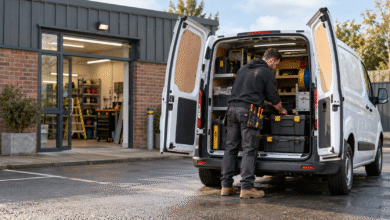
When a business invests in exterior signage, particularly a pole sign, the stakes extend well beyond the sign itself. Pole signs are among the most visible and structurally demanding forms of commercial signage. They sit at height, face constant weather exposure, and must meet a range of structural, electrical, and municipal requirements before they ever display a single letter or logo. Getting the installation wrong does not simply mean an aesthetically poor outcome — it can mean code violations, structural failures, liability exposure, and costly remediation work down the line.
The challenge for most business owners, property managers, and facilities directors is that the signage industry is not heavily self-regulated. Companies vary significantly in their technical capability, permitting knowledge, and on-site execution standards. A business making this decision for the first time — or even the third or fourth time — may not know which questions to ask before signing a contract. The seven questions below are not theoretical. They reflect the real operational risks that arise when this decision is made without adequate vetting.
1. Does the Company Hold the Right Licenses and Insurance for Structural Signage Work?
Pole sign installation is not the same as mounting a wall-mounted cabinet or installing a backlit panel. It involves groundwork, concrete footings, electrical connections, and overhead structural assembly. In many US states, this type of work requires specific contractor licensing — sometimes a general contractor license, sometimes an electrical license, and in some jurisdictions, a specialty sign contractor license. A qualified pole sign installation company should be able to produce these documents without hesitation, because operating without them creates legal and financial exposure for both the installer and the client.
Insurance is equally important. General liability coverage protects the property owner if something goes wrong during installation. Workers’ compensation coverage ensures that injuries to the installation crew do not become the financial responsibility of the hiring business. Before any contract is signed, ask for certificates of insurance that name your business as an additional insured for the duration of the project.
Why License Verification Matters Beyond Compliance
A licensed contractor has demonstrated, through examination or documented experience, that they understand the relevant codes and safety standards that govern this type of work. Licensing also ties the contractor to an accountability structure — disciplinary proceedings, bonding requirements, and in some states, mandatory continuing education. When you hire a company without verifiable credentials, you inherit their risk. If the installation fails an inspection or causes property damage, an unlicensed contractor may have no legal standing to warrant or repair their work at their own cost.
2. What Is the Company’s Process for Securing Local Permits?
In virtually every US municipality, a pole sign installation requires a permit before any ground is broken. This permit process typically involves submitting engineered drawings, sign dimensions, and setback documentation to the local planning or building department. Some jurisdictions also require zoning board approval, especially in commercial corridors or areas with sign ordinances. According to the Occupational Safety and Health Administration, exterior sign installations that involve electrical components and elevated structural assembly must also meet specific safety standards during the construction phase itself.
The permitting process is where many low-cost sign companies fall short. An inexperienced or under-resourced company may skip permit applications, submit incomplete drawings, or fail to follow up through the approval process. This creates serious problems — installations that fail final inspection, signs that must be removed or modified after placement, and businesses that face fines from local code enforcement.
Who Handles Permit Follow-Through?
Ask specifically who on their team manages permit submissions and how they communicate progress to clients. A professional installation company will have an internal process — often a dedicated project manager or permit coordinator — who tracks applications, responds to requests for additional documentation, and schedules inspections. Companies that treat permitting as an afterthought or leave it entirely to the client are signaling a gap in their operational structure.
3. Can the Company Provide Engineered Drawings for the Installation?
Pole signs carry significant physical loads — the weight of the cabinet, wind pressure, vibration from traffic, and in some climates, ice accumulation. Most jurisdictions require engineered drawings stamped by a licensed structural engineer before a permit will be issued. These drawings confirm that the footing depth, pole diameter, anchor bolt configuration, and cabinet attachment method are appropriate for the site conditions.
Some companies outsource this engineering work, which is acceptable, while others may attempt to use generic or recycled drawings that do not reflect the specific site. Ask whether the engineered drawings are site-specific and whether they will be submitted as part of the permit package. A company that cannot clearly explain this process may be cutting corners that will surface as structural or inspection problems after installation.
The Relationship Between Engineering and Long-Term Performance
An undersized footing or a pole that does not account for local wind load conditions may look fine for months before signs of failure appear. Movement at the base, stress fractures in the cabinet arms, or visible lean are not cosmetic issues — they are structural ones. Proper engineering is not just a permitting formality; it is the baseline guarantee that the installation will hold up over its intended lifespan without requiring intervention.
4. What Experience Does the Crew Have with High-Elevation and Ground-Penetrating Work?
Pole sign installation is skilled labor. It requires crew members who are trained in operating aerial lifts or cranes, working at height with proper fall protection, and managing concrete and anchor bolt work at the foundation level. These are not skills that transfer automatically from general construction or even from flat-panel sign installation.
Ask about the crew’s specific experience with pole sign work, not just signage in general. A company that installs channel letters on storefronts may not have the same depth of experience in structural pole work. This is not a criticism of smaller or newer companies — it is simply a relevant distinction that affects outcomes.
Crew Composition and Supervision
Understand whether the company uses direct employees or subcontracted labor for pole installations. Subcontracting is common in the industry and is not inherently problematic, but it does affect accountability. If a subcontracted crew installs your sign and a problem arises, the chain of responsibility can become unclear. Ask how the company supervises subcontracted work and whether the project manager who coordinates your installation will be present on-site during the actual placement.
5. How Does the Company Handle Underground Utility Locating Before Digging?
Footing excavation for a pole sign requires drilling or digging into the ground, sometimes to significant depth. Without prior utility locating, this creates direct risk of striking buried electrical lines, gas mains, water lines, or telecommunications conduits. In the US, federal law requires that any excavation be preceded by a call to 811, the national call-before-you-dig notification system, which coordinates with utility companies to mark buried infrastructure.
Ask whether the company contacts 811 as a standard part of every installation and whether they document the utility clearance before breaking ground. This is non-negotiable and should not require negotiation — it is both a legal obligation and a basic safety measure.
Site Assessment Beyond Utilities
A thorough pre-installation site assessment also includes checking for subsurface conditions that may affect footing design — fill soil, rock layers, or proximity to drainage infrastructure. A company that does not conduct any form of site assessment before beginning work is operating reactively, which introduces delays, cost overruns, and safety exposure into your project.
6. What Warranty Covers the Installation Work Itself?
Most discussions about sign warranties focus on the sign components — the cabinet, illumination, and face materials. Fewer conversations address the installation warranty, which covers the structural and electrical workmanship that holds everything in place. These are two separate things, and both matter.
Ask what the company warrants specifically about their installation labor and structural work. A company confident in its work will stand behind the footing, the electrical connections, and the structural assembly for a defined period. A company that offers only manufacturer warranties on components — without any warranty on its own labor — is telling you something about its confidence in that work.
Understanding the Limits of Manufacturer Coverage
Even if a sign component fails within a warranty period, the manufacturer’s coverage may not extend to the cost of accessing or reinstalling that component. For a pole sign, that can mean significant labor and equipment costs to simply reach the point of failure. Clarify whether the installation company covers those access costs within their own warranty terms, or whether the client would be responsible for mobilization each time a warranty claim is made.
7. Can the Company Provide References from Comparable Commercial Projects?
References are a routine part of contractor vetting, but for pole sign work, the specificity of those references matters. Ask for contacts at businesses or properties where the company installed freestanding pole signs of similar scale and complexity to your project — not just any signage work they have completed.
A company that has done high-volume retail signage but lacks experience with, for example, industrial site identifiers or highway-visible monument poles may be technically capable but operationally unfamiliar with your requirements. References from comparable projects allow you to ask informed questions about schedule adherence, communication quality, permit timeline, and whether the installation passed inspection on the first review.
What to Listen for When You Call Those References
When speaking to a reference, avoid yes-or-no questions. Ask instead how the company handled unexpected issues during installation, how responsive they were after the project closed, and whether the reference would hire them again for a similar scope. The answers to those questions reveal more about operational reliability than any sales presentation or proposal document.
Closing Thoughts: What These Questions Are Really Measuring
Each of the questions above is designed to surface the same core information: whether the company you are considering operates with the structure, experience, and accountability that a structural signage project demands. Pole sign installations are not simple projects. They involve ground disturbance, structural engineering, municipal compliance, electrical work, and long-term exposure to weather and load. The cost of a poorly executed installation — remediation, fines, re-permitting, structural repair — consistently exceeds the savings of choosing a lower-priced but less capable contractor.
The businesses and property managers who navigate this decision well are the ones who slow down before signing, ask direct questions, and treat the answers as meaningful data rather than formalities. A company that answers these questions clearly, completely, and without deflection is demonstrating something real about how they operate. One that struggles, hedges, or redirects is also demonstrating something real — and that information is worth having before the contract is signed rather than after the concrete is poured.