Hertae Hap: The Rare Lake Malawi Cichlid with Powerful Color and Personality
A complete guide to the Hertae fish, its natural habitat, appearance, aquarium care, diet, temperament, and breeding behavior

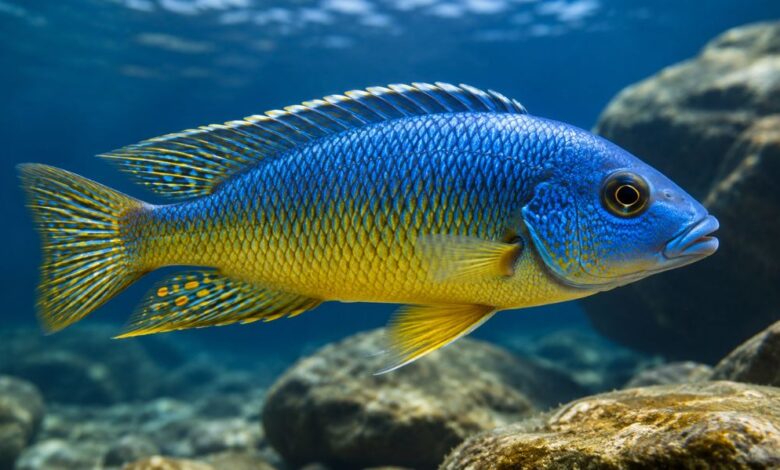
Hertae is a striking African cichlid commonly called the Hertae Hap or Protomelas sp. “hertae.” This rare Lake Malawi fish is admired for its bold male coloration, active swimming, and unique status. Unlike mbuna, Hertae is a larger, more graceful haplochromine adapted for open water and rocky areas.
The Hertae is not just another colorful aquarium fish. It represents the beauty and complexity of Lake Malawi, one of Africa’s most famous freshwater ecosystems. Hobbyists search for Hertae to determine whether it is suitable for their tank, how large it grows, what it eats, and how it interacts with other African cichlids. Its rarity also makes it attractive to experienced aquarists who want something different from the usual Peacock cichlids or common Malawi Haps.
Hertae Natural Habitat in Lake Malawi
The Hertae Hap is associated with Lake Malawi, where many Protomelas species live around rocky and intermediate zones. These areas usually combine stones, open sand patches, and clear mineral-rich water. This type of habitat provides fish with space to swim while still offering visual boundaries and shelter. In the wild, Hertae is linked with island and rocky localities, where males can display their color and hold territories.
The most important priorities for Hertae are maintaining hard, alkaline, and stable water parameters, as well as strong filtration. Clean water, consistent oxygenation, and ample swimming space should always take priority over excessive tank decoration. Avoid treating Hertae like soft-water tropical fish; their care must focus on replicating Lake Malawi’s conditions.
Hertae Appearance and Color Pattern
The male Hertae Hap is the main reason this fish receives attention. Mature males can show a rich blue body, yellow or golden tones, and attractive fin markings. When a male is healthy, settled, and dominant, the colors become much stronger. The contrast between blue and yellow makes Hertae look premium in a display aquarium.
Females and young fish are usually much more modest in color. They may appear silver, grey, or lightly marked compared with adult males. This difference is normal in many Lake Malawi Haps. A young Hertae may not look impressive at first, but with maturity, good food, clean water, and low stress, males can develop into eye-catching centerpiece fish.
Hertae Size and Growth
Hertae is a medium-to-large Malawi Hap. In aquariums, it can reach around 20 cm, depending on genetics, diet, tank size, and long-term care. Because of this, it should not be placed in a small aquarium. A cramped tank can cause stress, aggression, poor growth, and weak coloration. A spacious setup gives the fish room to swim naturally and reduces conflict between tank mates.
Hertae Aquarium Setup and Tank Requirements
A Hertae aquarium should be planned with space and stability in mind. The tank should include open swimming areas, a sand or fine-gravel substrate, and rock structures arranged to break the line of sight. Rocks are useful, but the aquarium should not be packed so tightly that the fish cannot swim freely. Hertae is not a tiny cave-dwelling species; it needs both structure and open water.
The water should be hard, alkaline, and stable. Sudden changes are more dangerous than slightly imperfect numbers. A strong filter is important because large cichlids produce waste, and Malawi tanks are often stocked with active fish. Regular water changes help keep nitrate under control and support bright coloration.
Hertae Tank Mates and Temperament
Hertae is usually best kept with other suitable Lake Malawi Haps and peaceful to moderately assertive cichlids of similar size. It should not be mixed with very small fish, delicate community species, or soft-water tropical fish. It may also be risky to keep it with closely related or very similar-looking Protomelas species, especially if breeding is expected, because hybridization can become a problem.
A common approach is to keep one male with multiple females. Keeping more than one male in the same aquarium can create serious territorial competition unless the tank is very large. The dominant male will often claim the best area and show stronger color, while weaker males may remain dull or stressed.
Hertae Diet and Feeding
Hertae should be fed a balanced African cichlid diet. Quality cichlid pellets can serve as the main food, supplemented with occasional frozen or fresh options such as mysis shrimp, krill, or other protein-rich foods. However, feeding should remain controlled. Overfeeding can quickly damage water quality and cause health problems.
A varied diet helps maintain strong color and steady growth. Foods rich in natural carotenoids may enhance yellow and orange tones, while clean protein supports muscle development. The goal is not to make the fish grow too fast, but to keep it healthy, active, and naturally colorful.
Hertae Breeding Behavior
Like many Lake Malawi Haps, Hertae is a maternal mouthbrooder. The male displays to attract females, often showing more pronounced coloration during breeding activity. After spawning, the female carries fertilized eggs in her mouth until the fry are developed enough to be released. During this holding period, she may eat little or nothing, so she needs a calm environment and protection from aggressive tank mates.
Breeding Hertae should be done responsibly. Because rare Malawi cichlids are valuable to the hobby, maintaining clean bloodlines matters. Fish should not be mixed with similar species if there is a chance of accidental hybridization. Responsible breeders keep accurate names, avoid crossing look-alike species, and distribute young fish honestly.
Hertae Care Difficulty
Hertae care requires prioritizing stable hard, alkaline water, appropriate tank size, effective filtration, and careful management of aggression. Understanding these priorities is essential, especially for aquarists with previous African cichlid experience, to ensure the fish thrives.
The biggest mistakes are keeping it in a tank that is too small, mixing it with unsuitable fish, ignoring water quality, or overfeeding it. When given proper care, Hertae becomes active, colorful, and confident.
(FAQs)
What is Hertae?
Hertae is a rare Lake Malawi cichlid commonly known as the Hertae Hap and often listed as Protomelas sp. “hertae” in the aquarium hobby.
Is Hertae a good aquarium fish?
Yes, Hertae can be an excellent aquarium fish for experienced African cichlid keepers. It needs a spacious tank, hard alkaline water, strong filtration, and carefully chosen tank mates.
How big does Hertae get?
Hertae can grow to around 20 cm in aquariums, so it should be kept in a larger Malawi cichlid setup rather than a small community tank.
What does Hertae eat?
Hertae eats quality cichlid pellets, protein-rich frozen foods, and a varied Malawi cichlid diet. Feeding should be controlled to avoid obesity and poor water quality.
Can Hertae live with mbuna?
It may live with selected mbuna in a large, well-planned tank, but it is usually better with compatible Haps and Peacocks. Very aggressive mbuna can stress it, while very small fish may not be safe.
Conclusion
Hertae is a beautiful and rare Lake Malawi Hap that rewards careful aquarists with strong color, active behavior, and a true African cichlid presence. Its blue-and-yellow male coloration, rocky, intermediate-habitat background, and connection to the Protomelas group make it a fascinating fish for serious Malawi cichlid keepers. With the right tank size, stable hard alkaline water, balanced feeding, and responsible stocking, Hertae can become a standout centerpiece in a well-maintained aquarium. It is not a fish to buy without preparation, but for the right keeper, the Hertae Hap is one of the most impressive and memorable Malawi cichlids.