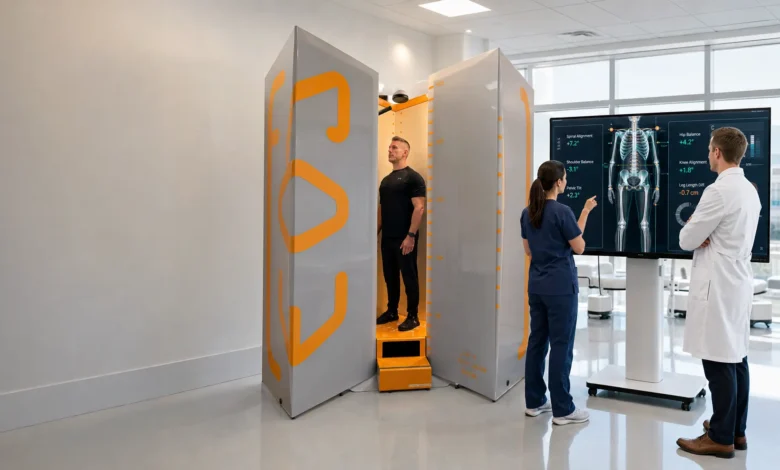
Back pain and posture problems often develop slowly, which is why many people ignore them for years. A person may notice uneven shoulders, discomfort while standing, or pressure in the hips without understanding the real cause. In many cases, regular scans do not fully explain why the body feels unbalanced during everyday movement. That happens because posture changes while standing are not always visible when someone is lying flat during imaging. EOS scans work differently by capturing the body in a natural standing position. This helps doctors study posture and alignment in a way that feels closer to real daily life.
What Is a 3D Scan in Medical Imaging?
A 3D scan creates detailed images of the body from different directions. Instead of showing only one flat image, it gives doctors a broader view of posture, joints, and alignment.
This matters because the body works as a connected system. A small shift in the hips may slowly affect the knees or lower back. Problems in posture often spread gradually instead of staying in one place.
Common Reasons Doctors Use 3D Medical Scanning
- Looking at spinal alignment
- Checking scoliosis changes
- Reviewing posture concerns
- Studying hip positioning
- Assessing knee balance
- Preparing for treatment planning
Important Note: Some alignment problems are much easier to spot when the body is standing naturally instead of lying flat.
Why Imaging Today Looks Beyond Injuries
In the past, scans were mostly used to confirm broken bones or serious injuries. Now, doctors also use imaging to understand posture, movement, and body balance.
That shift happened because many physical problems develop slowly. A person may lean slightly to one side for years without realizing it. Over time, that imbalance may begin affecting other parts of the body too.
Modern imaging helps doctors:
- Understand posture more clearly
- Compare body balance over time
- Notice alignment changes earlier
- Study movement patterns
- Plan treatment more carefully
For many patients, clearer imaging finally explains why certain activities have become uncomfortable.
How a Medical Scanner 3D System Works
A medical scanner 3D system captures images from several angles and combines them to create a more detailed body view.
Different scans are used depending on what doctors need to examine.
| Imaging Type | Main Use | Body Position | Radiation Level |
| Traditional X-ray | Bone imaging | Usually lying down | Moderate |
| MRI | Soft tissue review | Lying down | None |
| CT Scan | Detailed internal imaging | Lying down | Higher |
| EOS Scan | Posture and alignment review | Standing | Low |
EOS imaging is different because the patient stays standing during the scan. This allows specialists to study how posture and balance look during normal weight-bearing conditions.
Why EOS Imaging Gives Doctors More Context
Most daily activities happen while standing. People walk through shops, stand in kitchens, climb stairs, sit at desks, and carry bags throughout the day. The body is constantly adjusting itself to stay balanced.
Traditional scans are often done while someone lies completely relaxed on a table. In that position, certain posture changes may not appear as clearly.
EOS imaging gives doctors a closer look at:
- Spinal balance
- Hip positioning
- Knee alignment
- Leg length differences
- Overall posture
At ScanAlign, EOS scans are used to assess how different parts of the body work together while standing naturally.
Benefits of EOS Imaging
- Standing full-body imaging
- Lower radiation exposure
- Better posture visibility
- More natural alignment review
- Helpful for adults and children
- Quick scanning process
Many patients expect the process to feel difficult but are surprised by how simple it usually is.
Standing Scans Compared With Traditional Imaging
Gravity affects the body all day long. The moment someone stands up, joints begin carrying weight and posture naturally adjusts to maintain balance.
That is why standing scans can sometimes reveal details that lying-down scans do not fully show.
Traditional Imaging
- Body remains relaxed
- Less pressure on joints
- Some posture changes may appear smaller
- Limited full-body posture assessment
Standing EOS Imaging
- Natural standing posture
- Real body balance visible
- Better posture review
- Clearer alignment assessment
This can be especially useful for people dealing with scoliosis, posture imbalance, or uneven walking patterns.
Important Note: Lower radiation exposure can matter for younger patients who may need repeated scans during growth years.
Conditions Where EOS Imaging May Help
Doctors often use EOS imaging for posture and alignment concerns involving several parts of the body.
Spine and Posture Concerns
- Scoliosis
- Uneven shoulders
- Poor posture
- Spinal imbalance
- Long-term back discomfort
This type of imaging is also commonly used in paediatrics to understand posture changes during growth.
Hip and Lower Body Alignment
The hips help support movement and balance throughout the body. Even small alignment changes may slowly affect the knees, legs, or lower back.
EOS imaging may help doctors assess:
- Hip imbalance
- Pelvic tilt
- Leg length difference
- Knee alignment
- Walking posture
People preparing for Hip Replacement reviews may also benefit from standing full-body imaging.
Why Better Alignment Imaging Matters
Clear imaging helps doctors do more than confirm a diagnosis. It also helps them understand how posture affects everyday movement.
EOS scans can support:
- More natural posture review
- Better understanding of body balance
- Progress monitoring over time
- Treatment planning
- Recovery assessment
For many patients, seeing the body in a standing position finally explains why discomfort happens during daily movement instead of while resting.
What Happens During an EOS Scan?
Many people feel nervous before medical scans, especially if they have never had posture imaging before. EOS imaging is usually straightforward and quick.
During the Scan
- The patient stands naturally inside the scanner
- Images are captured from the front and side
- The scan usually takes only a few minutes
- Specialists later review posture and alignment results
For those who want to understand things better, patient support is always there to guide you.
Why ScanAlign Uses EOS Technology
ScanAlign focuses on posture and alignment assessment because many musculoskeletal concerns involve the relationship between several parts of the body rather than one isolated area.
Their approach includes:
- Standing EOS imaging
- Full-body posture assessment
- Lower-radiation imaging
- Specialist-led reviews
- Patient-focused support
This helps doctors gain a more realistic understanding of posture, balance, and movement during normal daily life.
Conclusion
Posture problems usually develop little by little. A small imbalance in the way the body stands or moves can slowly affect comfort over time without being noticed immediately. EOS imaging gives doctors the chance to study posture while the body is standing naturally, which often provides a clearer understanding of how alignment works during everyday movement. For many patients, that extra detail helps explain discomfort that once felt difficult to understand and gives doctors better information when planning future care.
Get Clearer Answers with EOS Imaging
Explore how standing EOS scans can help specialists study posture, body balance, and alignment in a more natural way at ScanAlign.
Book your free video consultation
FAQs
1. What is an EOS scan?
An EOS scan is a standing imaging system used to assess posture, spinal balance, and body alignment with lower radiation exposure.
2. Why is standing imaging useful?
Standing imaging shows how the body naturally carries weight, helping doctors study posture and alignment more realistically.
3. Is EOS imaging suitable for children?
Yes. EOS scans use lower radiation exposure, which may be useful for children needing repeated posture monitoring.
4. Can EOS scans help with scoliosis?
Yes. EOS imaging is commonly used to assess spinal alignment and posture changes related to scoliosis.
5. How long does an EOS scan usually take?
Most EOS scans are completed within a few minutes depending on the type of assessment required.
6. Can EOS imaging help before hip replacement planning?
Yes. EOS scans may help doctors review posture, joint positioning, and lower body alignment before treatment planning.