How to Choose the Right Custom Stainless Steel Pipe Flange Manufacturer in the US: A Step-by-Step Buyer’s Guide

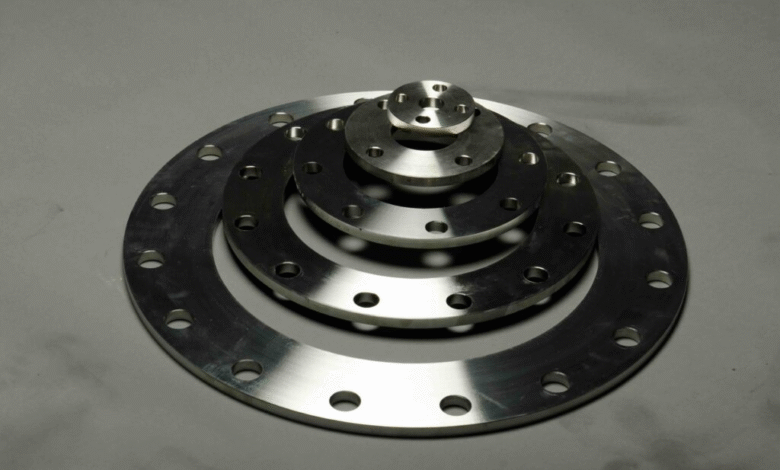
Pipe flanges are among the least visible components in an industrial system, but they carry significant operational weight. When a flange fails — whether through improper fit, substandard material, or poor weld quality — the consequences reach far beyond the fitting itself. Leaks, unplanned shutdowns, regulatory flags, and costly replacements can follow. For facilities that depend on consistent fluid control, the quality of a flange is not a secondary concern. It is a foundational one.
Sourcing custom stainless steel pipe flanges in the US involves more than comparing prices or lead times. It requires understanding which manufacturers have the capabilities, processes, and material controls to produce flanges that perform reliably in the environments they are specified for. This guide walks through the key stages of that evaluation, from initial qualification to long-term supply considerations.
Understanding What “Custom” Actually Means in Flange Manufacturing
Custom flange manufacturing is not simply a matter of cutting a non-standard size. True customization involves a manufacturer’s ability to modify dimensions, configurations, facing types, bore profiles, and alloy grades to match precise system requirements — often working from engineer-supplied drawings or application data rather than catalog specifications. This level of production capability requires both advanced machining infrastructure and experienced technical staff who understand how design choices affect performance under pressure, temperature, and chemical exposure.
For buyers working through this process for the first time or evaluating new suppliers, consulting a detailed Custom Stainless Steel Pipe Flanges Manufacturer guide can help clarify the distinctions between what standard fabricators offer and what true custom manufacturers are capable of delivering.
The difference matters in practice. A shop that handles basic modifications may not have the tooling, inspection protocols, or metallurgical knowledge to hold tight tolerances on a complex multi-port flange destined for a chemical processing environment. Buyers who conflate custom capability with simple modification often face rework cycles or specification mismatches that delay project timelines significantly.
Why Stainless Steel Grade Selection Is a Manufacturer-Level Responsibility
Not all stainless steel performs the same way in industrial applications. The family of stainless alloys includes grades with meaningfully different resistance properties — some are better suited for high-chloride environments, others for elevated temperatures, and others for applications where weld integrity is particularly critical. A manufacturer that treats grade selection as a customer-only decision, without offering technical input, is not functioning as a true manufacturing partner.
Capable custom manufacturers maintain working knowledge of how different stainless grades behave during fabrication and in service. They can flag when a specified grade may be difficult to machine to required tolerances, or when a substitution might offer better long-term performance without compromising the application. This kind of technical dialogue is a marker of a manufacturer worth working with — it reflects investment in outcomes, not just production throughput.
Evaluating Manufacturing Capabilities Before You Commit
Capability verification is the most underused step in the supplier selection process. Many buyers rely on a manufacturer’s own description of what they can produce, without confirming whether their equipment, workforce, and quality systems actually support those claims. For custom stainless steel flanges, this gap between stated and actual capability can result in parts that meet drawings on paper but fail under real operating conditions.
A meaningful evaluation involves reviewing the manufacturer’s machining infrastructure, their inspection equipment, and the training and experience of their production team. Shops that handle stainless consistently — rather than occasionally as a side category — typically have more refined tooling setups and better process controls for managing the work-hardening behavior that stainless exhibits during machining.
In-House Versus Outsourced Production Stages
One of the more important but less obvious distinctions among custom flange manufacturers is how much of the production process they control internally. Some shops handle cutting, turning, drilling, and finishing entirely in-house. Others subcontract specific stages — heat treatment, surface finishing, or nondestructive testing — to third-party providers. Neither approach is automatically inferior, but the implications for lead times, quality control, and accountability differ substantially.
When critical production stages are outsourced, the primary manufacturer has reduced visibility into quality at those stages. For applications where traceability and consistent quality documentation are required — common in oil and gas, pharmaceutical, and food processing environments — a more integrated supply chain is generally preferable. It concentrates accountability and reduces the risk of inconsistency introduced at handoff points between facilities.
Inspection and Testing Protocols
Dimensional inspection is a baseline expectation, not a differentiator. What separates more capable custom manufacturers from basic fabricators is the depth and documentation of their testing protocols. This includes material verification through mill certification review, hardness testing where applicable, and nondestructive examination methods for weld integrity when flanges involve welded construction.
Manufacturers who maintain internal inspection records — traceable to specific production lots or heat numbers — offer a meaningful advantage in regulated industries. When a component fails downstream, traceability allows engineers to isolate the cause without conducting broad investigations. Suppliers who cannot provide that documentation create risk exposure that procurement teams increasingly cannot accept.
Certifications and Quality Standards as Baseline Requirements
Industry certifications serve a practical function in supplier qualification. They confirm that a manufacturer has implemented defined quality management systems and has undergone third-party audits to verify compliance. For custom stainless steel pipe flange manufacturers, the most relevant framework is ISO 9001, which governs general quality management system requirements across manufacturing industries. Details on the scope and intent of this standard are maintained by the International Organization for Standardization.
Certification alone does not guarantee a manufacturer is the right fit for a specific application. It confirms that documented processes exist, but the rigor of how those processes are applied in practice varies between facilities. Certifications should function as a minimum threshold, not a final evaluation criterion.
Application-Specific Compliance Considerations
Certain industries impose additional compliance requirements beyond general quality standards. Pressure equipment directives, food-contact material regulations, and pharmaceutical manufacturing guidelines each carry specific documentation and material requirements that affect how flanges must be produced and verified. A manufacturer that regularly works within these environments will have the administrative and procedural infrastructure to support compliance documentation without treating it as an exceptional request.
Buyers in these sectors should ask directly how a manufacturer handles compliance documentation, what records they retain, and whether they have prior experience supplying into the relevant regulatory environment. The answers reveal both capability and familiarity — two things that affect how smoothly a project progresses from order to delivery.
Lead Times, Communication, and Supply Reliability
For project-based buyers managing installation schedules, lead time is a real constraint with real downstream consequences. Custom stainless steel flange manufacturing inherently takes longer than standard catalog supply, and buyers who treat lead times as negotiable without understanding production realities often create pressure that results in quality shortcuts or missed commitments. A manufacturer that provides realistic, transparent lead time estimates — and communicates proactively when something changes — is operating with a level of organizational maturity that benefits the buyer significantly.
Communication style is also a leading indicator of how a supplier will perform when problems arise. A manufacturer that is slow to respond during the quoting phase, unclear about technical questions, or evasive about production schedules is unlikely to become more responsive once an order is placed. These early signals are worth weighing seriously.
Planning for Repeat and Long-Term Supply Needs
Custom flanges are frequently used in systems that require maintenance, replacement, or expansion over time. A manufacturer that can hold production records and retain tooling setups for repeat orders adds meaningful value beyond the initial production run. Buyers who are planning for ongoing supply — rather than a single project — should evaluate whether a manufacturer can support that relationship consistently, including their ability to reprioritize production during high-demand periods without compromising quality or accuracy.
This long-term supply perspective is particularly relevant for facilities that operate critical infrastructure where component consistency across multiple procurement cycles is necessary to maintain system integrity and regulatory compliance.
Domestic Manufacturing Considerations
Sourcing custom stainless steel pipe flanges from US-based manufacturers involves tradeoffs that go beyond unit cost. Domestic production typically supports shorter lead times, clearer communication, easier site visits for qualification purposes, and more straightforward recourse when quality issues arise. For industries that require domestic sourcing as part of procurement policy — government contractors, certain defense-adjacent supply chains, and federally regulated utilities — domestic manufacture is not optional.
Even for buyers without formal domestic sourcing requirements, the operational and logistical advantages of working with a US manufacturer are worth quantifying honestly. Hidden costs associated with international sourcing — extended shipping timelines, customs delays, import compliance management, and currency risk — often reduce the apparent cost advantage of offshore options when accounted for fully.
Closing Thoughts
Choosing a custom stainless steel pipe flanges manufacturer in the US is a decision with long operational reach. The right manufacturer reduces the risk of component failure, supports regulatory compliance, and simplifies procurement over multiple project cycles. The wrong one creates friction at every stage — from technical clarification to on-time delivery to post-delivery support.
The evaluation process described here is not complex, but it does require deliberate effort. Verifying capabilities, reviewing certifications, examining production control, and assessing communication quality are steps that take time upfront. That investment, however, pays dividends in avoided rework, avoided delays, and the kind of consistent component performance that allows facilities to operate without unplanned interruptions. Buyers who approach supplier selection with this level of rigor are far better positioned to build supplier relationships that hold up across the demands of real industrial environments.