Writing Your Own First Dance Song: How AI Music Is Making the Most Personal Wedding Tradition Even More Personal

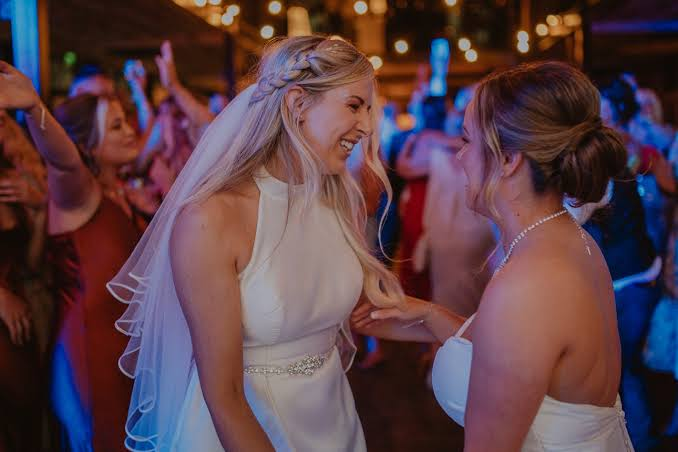
The first dance is the moment most couples remember most vividly from their wedding day. It’s the first time they’re alone together in a room full of everyone they love, moving to music that’s supposed to say something true about who they are and what they mean to each other. Most couples choose a song that comes close — something meaningful, something they’ve shared, something that feels approximately right. But “approximately right” is a compromise driven by what’s available, not what’s actually true.
What if the song could be exactly right? Not a song that you’ve borrowed the meaning from someone else’s love story, but one written from your own.
AI music generation has made it genuinely practical for couples to create an original first dance song — one built from the words of their own relationship, set to music in a style that’s actually theirs. This isn’t a novelty or a gimmick. For couples who care about the authenticity of the moment, it’s the most personal option that has ever existed.
Why an Original Song Changes the Moment
A licensed song, no matter how meaningful, carries the weight of all the other contexts in which it’s been heard. The couple loves the song, but so do thousands of other couples who have also danced to it at their own weddings. The song’s associations extend far beyond the relationship — to the artist’s biography, to every film it’s been in, to every other person who has made it their song.
An original song written from the couple’s actual story carries none of that. Every word is specific — the details of how they met, the phrases they use with each other, the inside references that no one in the room fully understands except the two of them. When those details are set to music and played in front of everyone who loves them, the effect is different from any licensed track. The room is hearing something that has never existed before and will never exist in quite this form again.
An ai song maker generates the full musical production around whatever stylistic vision the couple has. A couple who met at a jazz club wants something with a classic swing feel. A couple whose relationship unfolded on cross-country road trips wants something with a driving, open-road quality. A couple with a shared love of indie folk wants something quiet and intimate with acoustic texture. The music is generated to fit the vision, not the vision adjusted to fit what’s available.
How the Writing Process Works
Writing the lyrics for a first dance song doesn’t require poetic skill or musical knowledge. It requires knowing the story — which every couple does better than anyone else.
Start with the material that matters: how you met, the moment you knew, the specific details that are yours and no one else’s. The small things that wouldn’t mean anything to a stranger but mean everything to the two of you. The way one of you makes coffee. The argument that turned into a running joke. The city you were in when the relationship became something real. These details are the raw material of lyrics that are genuinely specific rather than generically romantic.
Text to music is useful at the beginning of the creative process, before lyrics are written — for generating musical reference points that help a couple understand what style they actually want. Describe the feeling of the relationship: “warm, unhurried, a little bittersweet, tender, like late afternoon light.” The generated music becomes a reference for the kind of production the final song should have, and listening to it together is often a useful part of clarifying what the song should sound like before the writing begins.
Turning the Story Into a Song
Once the story is on paper — even in rough, unpolished form — the translation into lyrics is closer than it might feel. The cadence of a memory, written as it actually happened, already has rhythm. The phrases that feel most true often have the right number of syllables to sit naturally on a melody. The editing process is about finding which details carry the most emotional weight and which can be simplified without losing what’s true.
Lyrics to song takes the finished lyrics and generates a complete musical production around them — full arrangement, instrumentation in the chosen style, and a vocal performance of the words. The result is a produced song, ready to be played at the reception. The couple hears their own story sung back to them in the style they chose, with their own words as the melody.
For couples who want to go further — who want a live musician to perform the original song at the reception, or who want to record their own voices on the track — the AI-generated version serves as a production reference and a demo that a musician can learn from. The original composition is complete; the performance layer can be adapted based on what the couple wants for the actual day.
Beyond the First Dance
The original song created for a first dance doesn’t have to end at the wedding. For couples who want to release it — to share it with family and friends who couldn’t attend, to have it on streaming platforms as a lasting artifact of the day — AI-generated music comes with commercial rights that make distribution straightforward. The song can be uploaded to Spotify, shared on social media, and exist as a permanent, accessible piece of the couple’s shared history.
For anniversaries, it becomes something to return to each year — a document of who they were and how they felt at the beginning. For couples who go on to have children, it becomes part of the family’s story in a more literal way than any licensed track could be.
The technology that makes this possible is new. The desire it serves — to mark the most significant moment with something genuinely personal rather than borrowed — is as old as the tradition itself.