If My Salon Is New to Hair Replacement, Should I Start With Men’s Hair Systems, Women’s Wigs/Toppers, or Hair Extensions?

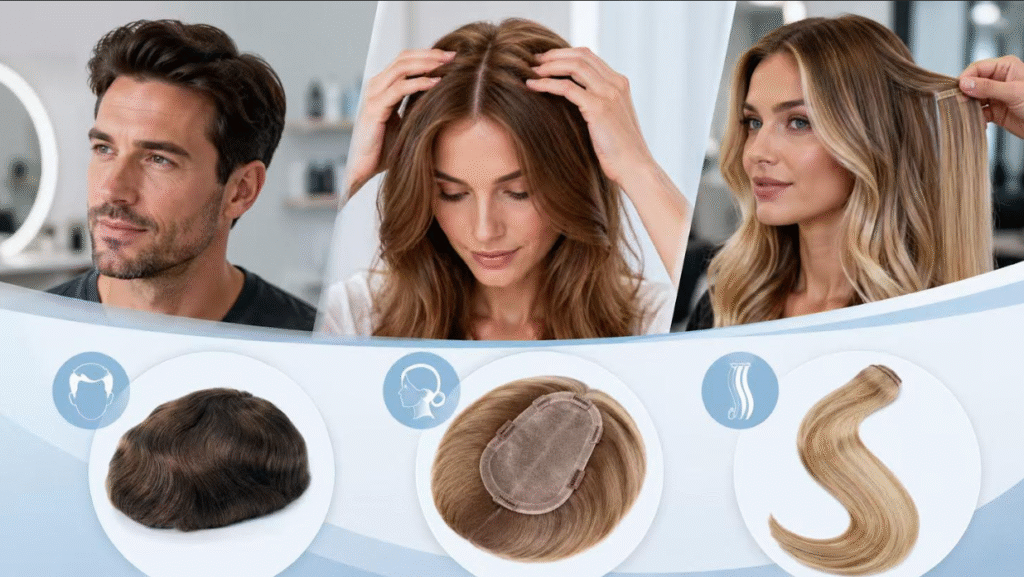
If your salon is just starting a hair replacement business, the safest starting point is usually Men’s hair systems first, women’s toppers and wigs second, and hair extensions as a growth add-on once your team has a clear service flow.
Not because men’s hair systems are magically easier.
They are not.
But they usually give a new salon the cleanest path to visible results, repeat maintenance, strong before-and-after photos, and a clear business identity. And when you are new to hair replacement, clarity matters more than having a giant menu.
A new salon does not need to look like it does everything on day one. It needs to prove it can do one serious thing well.
The Short Answer: Start With Men’s Hair Systems If You Want the Strongest Hair Replacement Positioning
Men’s hair systems are often the best first category for a salon entering non-surgical hair replacement because the client’s problem is clear, the transformation is easy to show, and the service can become repeatable.
Most male clients come in with a visible problem: thinning crown, receding hairline, bald top, or overall density loss. The consultation still matters, of course, but the job is usually easier to define than a broad female hair-loss case where the client may need a topper, a full wig, a medical wig, or a blended coverage solution.
Newtimes Hair supplies men’s hair systems in common professional base types, including lace, monofilament, and thin skin options. Its men’s line is built for salons, toupee shops, and hair replacement studios serving clients with hair loss or thinning hair.
That matters for a new salon because you are not just buying products. You are building a repeatable service.
A good men’s hair system business has a practical rhythm:
- Consultation
- Color and density selection
- Base choice
- Template or size selection
- Cut-in and blending
- Attachment
- Maintenance appointments
- Replacement planning
That rhythm becomes your business.
And the before-and-after photos are powerful. A client walks in with visible thinning and walks out looking like himself again, just less defeated by the mirror. That is not a small thing.
But Men’s Hair Systems Still Require Skill
Men’s hair replacement is not a “stick it on and smile” service. If the cut-in is bad, the system will look bad. If the density is wrong, the system will look fake. If the attachment is sloppy, the client will not come back.
Newtimes Hair’s own men’s hair system guidance points out that hair replacement is especially suited to hairstylists and barbers because cutting, fitting, maintaining, and repairing non-surgical hair systems all require training and hands-on practice.
So here is the honest rule:
If your salon already has strong men’s cutting skills, start with men’s hair systems. If your team does not know how to cut and blend short hair well, get trained before you sell the service heavily.
Hair replacement clients are not forgiving when the result looks “almost” natural. Almost natural is still fake.
Women’s Toppers and Wigs Are a Strong Second Category
Women’s wigs and toppers can become a serious revenue stream, but they usually require more careful consultation, emotional intelligence, and inventory discipline.
Female hair loss is not one problem. It is many problems wearing the same coat.
A woman may have thinning at the crown. Or a widening part. Or diffuse shedding. Or alopecia. Or hair loss from medical treatment. Or she may simply want a fuller style without committing to extensions. Each case needs a different recommendation.
Newtimes Hair positions women’s toppers and wigs for salons and hair professionals serving female clients with hair loss, thinning crowns, and style transformation needs. Its women’s hair systems page also gives a useful decision rule: clients with typical female pattern thinning on the top of the head may be better suited to toppers, while clients with severe hair loss may need a full wig or medical wig.
That is the key.
Do not sell every woman a wig.
Sometimes a wig is too much. Sometimes a topper is exactly enough. Sometimes the client needs coverage at the top, not a full-head solution. And sometimes she really does need a medical-grade wig that feels secure, soft, and believable.
The salon has to know the difference.
Why Women’s Hair Replacement Is Harder to Launch at Scale
Women’s hair replacement can be deeply profitable, but it punishes lazy setup.
The client often cares about tiny details: the part line, the hairline, movement, color, density, cap comfort, shine, scalp realism, and whether the piece still looks like “her.” A male client may focus heavily on coverage and hairline realism. A female client often sees the entire visual identity.
That makes product choice more delicate.
Newtimes Hair’s realistic wigs guidance puts it plainly: a realistic wig depends on the base and the hair working together. The hairline, part, movement, density, and color all have to behave like they belong on the same head.
And color is a real trap. Newtimes Hair advises salons not to rely only on monitor-displayed color because screens vary. Color rings, color charts, or physical hair samples are safer for matching.
This is where new salons often get burned.
They stock too many pieces, guess colors from photos, under-train the consultation, and then wonder why clients hesitate. The issue is not always the product. Sometimes the buying process just feels too uncertain.
For a new salon, start small:
- A few toppers for crown thinning
- A few lace front or medical wig examples for full-coverage needs
- A color ring or physical color-matching process
- A private consultation setup
- Clear before-and-after photography
- A policy for custom orders and realistic timelines
Women’s hair replacement is worth doing. Just do not treat it like an accessory shelf.
Hair Extensions Are Easier to Understand, But They Are Not Always the Best First “Hair Replacement” Service
Hair extensions are tempting for new salons because they feel familiar. Many salons already understand length, volume, color blending, styling, and beauty transformation. The client is usually not asking you to solve baldness. She wants more hair, better shape, fuller ends, or a prettier finish.
That is a different emotional room.
Suppliers usually offer professional human hair extensions including tape-ins, keratin tips, sew-in wefts, beaded extensions, clip-ins, and related supplies. For salons with a strong beauty, color, bridal, or long-hair clientele, extensions can be a smart early add-on.
But extensions are usually not the strongest foundation for a hair replacement business.
They are more of a beauty enhancement service. Good money, yes. Good photos, yes. Repeat potential, yes. But if your goal is to become known for non-surgical hair replacement, extensions alone may not give your salon that authority.
They help people look fuller.
Hair systems, toppers, and wigs help people feel visible again.
That difference matters.
The Best Starting Choice Depends on Your Salon’s Existing Strength
Do not choose your first hair replacement category by asking, “Which one has the highest margin?”
Ask this instead:
Which service can my team deliver naturally, confidently, and repeatedly within the next 90 days?
Here is the practical breakdown.
| Salon Situation | Best First Category | Why |
| Strong barbering or men’s cutting team | Men’s hair systems | Clear demand, strong transformation photos, repeat maintenance |
| Mostly female clientele with thinning-hair concerns | Women’s toppers first | Easier entry than full wigs, solves common crown/part thinning |
| Beauty salon with extension-trained stylists | Hair extensions | Fastest fit with existing skills and client expectations |
| Salon wants to become a serious hair replacement studio | Men’s systems + women’s toppers | Stronger authority than extensions alone |
| Limited startup budget | Men’s stock systems + a small topper/wig sample set | Lower complexity than stocking all categories at once |
The worst move is trying to launch all three categories equally.
That sounds ambitious. In real life, it often becomes messy. Too many SKUs. Too many scripts. Too many client types. Too many mistakes that could have been avoided by starting narrower.
A Smart 90-Day Launch Plan for New Salons
If you are a new salon, set a 90-day mark.
Days 1-30: Build Your Men’s Hair System Workflow
Start with men’s hair systems if your team can cut and blend short hair well. Choose a small group of commonly needed options instead of trying to stock every base, density, and color.
Your goal in the first month is not to become the biggest hair replacement provider in your city. Your goal is to build proof.
You need:
- A consultation form
- A color and density process
- A base recommendation process
- A cut-in checklist
- Maintenance instructions
- Before-and-after photo standards
- A follow-up schedule
Get three to five strong client results. Real ones. Not over-edited photos. Not awkward mannequin content. Actual transformations your future clients can believe.
That is the start of your authority.
Days 31-60: Add Women’s Toppers and Select Wigs
Once your consultation rhythm is working, add women’s toppers and a small number of wig options.
Begin with common thinning patterns. Crown thinning and top thinning are easier to consult for than every possible female hair-loss case. Toppers are a good starting point because they do not require the client to abandon all of her own hair. That makes the emotional leap smaller.
Add full wigs or medical wigs carefully, especially for clients with more advanced hair loss or sensitive scalp needs.
The key is not having a huge wall of inventory.
The key is helping the client understand what she actually needs.
Days 61-90: Add Hair Extensions as a Volume and Styling Service
Hair extensions can come in once your salon has a clearer hair replacement identity.
Use extensions for clients who want length, fullness, or style transformation rather than coverage for hair loss. They can also complement topper services in some cases: a topper can solve thinning at the top, while extensions can help with thin ends or length.
That combination can be powerful.
But do not blur the consultation. A client with crown thinning does not automatically need extensions. A client with thin ends does not automatically need a topper. Match the service to the problem.
That sounds obvious.
It is also where many salons lose trust.
If You Can Only Start With One Category, Choose Men’s Hair Systems
If your salon has limited money, limited training time, and limited staff bandwidth, start with men’s hair systems.
They offer the clearest entry into the hair replacement market. The client problem is visible. The transformation is strong. The maintenance cycle supports repeat business. And the service helps your salon become known for something specific.
Then add women’s toppers and wigs once your consultation process is better.
Then add extensions to expand beauty-focused services and increase average order value.
That order is boring.
Good. Boring is underrated when you are building a new service line that involves real clients, real money, and real emotional stakes.
Recommended Starting Inventory for a New Salon
A practical starter inventory should be small enough to manage and broad enough to show clients real options.
For men’s hair systems, start with a few common base types and colors that cover the most likely clients in your area. Prioritize pieces that your team can cut, blend, and maintain confidently.
For women’s toppers, start with crown and top-thinning coverage options in natural shades. Add color-ring matching before you add too much inventory.
For wigs, keep a few realistic lace front, mono, or medical-grade examples for consultation and try-on appointments.
For extensions, start only with the methods your team already knows how to install properly. Tape-ins or wefts may be easier for some salons to introduce than more technical methods, depending on staff experience.
The rule is simple:
Stock what you can explain. Sell what you can service. Expand only after real client demand proves itself.
Key Takeaways
- Most new salons should start with men’s hair systems if they want to build a serious hair replacement business.
- Women’s toppers and wigs are excellent second-stage services, especially for crown thinning, top thinning, severe hair loss, and medical hair-loss clients.
- Hair extensions are valuable, but they usually work better as a beauty and volume add-on than as the core of a hair replacement business.
- New salons should not launch men’s systems, women’s wigs/toppers, and extensions at full scale at the same time.
- The best first service is the one your team can consult, install, maintain, photograph, and repeat with confidence.
- Newtimes Hair’s product range supports all three categories, but the salon still needs a staged launch plan, training, and a clean consultation process.
FAQ
Should a new salon start with stock or custom hair systems?
Most new salons should begin with stock hair systems for common first clients because they are faster to test, easier to use for demonstrations, and better for building early workflow confidence. Custom systems are valuable when the client needs special color, grey percentage, density, size, or base requirements.
Are men’s hair systems easier than women’s wigs?
Not exactly. Men’s hair systems still require skill, especially cutting, blending, attachment, and maintenance. But the client problem is often easier to define, which makes the service easier to standardize for a new salon.
Are women’s toppers better than full wigs for beginners?
For many new salons, yes. Toppers are often a more approachable starting point because many female clients have thinning at the crown or top rather than full-head hair loss. Full wigs are still important for severe hair loss, medical hair loss, or full-style transformation.
Should my salon offer extensions if we want to enter hair replacement?
Yes, but extensions should usually support your main service menu rather than replace it. Extensions are excellent for length and volume, while hair systems, toppers, and wigs are stronger for visible hair-loss coverage.
What is the biggest mistake new salons make with hair replacement?
The biggest mistake is launching too broadly before the team has a repeatable consultation and service process. Hair replacement clients need trust. A smaller, well-run service menu beats a large, confusing one.