One of the best decisions that a Volvo owner can take before selling a car is focusing on the inexpensive and small aspects that trigger a buyer’s first impression, like repairing paint chips and scuffs, a thorough cleaning, and having all the paperwork ready, a few weeks before advertising rather than the night before. These minor tasks hardly cost anything and normally yield more than their cost, as a well-looking car indicates a higher offer and less bargaining. A few hours plus 20 to 40 for touch-up paint can save you several hundred pounds at the time of valuation.
This point is significant because buyers and dealers base prices on what they see as well as on the technical condition of a car. Volvo stands for safety, long life, and wise ownership, which a neat, nicely kept car only strengthens, whereas an old, scratched one goes against that image. Damages being too apparent will give a buyer the chance to lower the price, and paint chips left untreated can become areas of rust which bring the issue from being only skin deep to a real condition one.
Why a Volvo’s Reputation Cuts Both Ways at Resale
Generally, buyers who opt for a Volvo are a certain type of customer. For them, the primary factors are car safety, family-friendliness, and the assumption that a car with a decent condition is one that has been owned by a responsible person. In fact, they closely inspect the vehicle condition as a proof that the brand image for this particular car is still upheld. A flawless, properly recorded estate or SUV is exactly what they find emotionally reassuring, and this translates into a willingness to pay closer to the asking price.
Though, the same buyer will also be the first to point out a flaw when the vehicle does not meet the expectations. A exposed bump, a bonet with falling paint chips, or a cabin odor of dog and negligence totally destroys the image of a ‘well kept car’ and they begin to look for other possible flaws. As the industry guidance on used-car valuation, visible cosmetic damages are usually considered a negotiating tool rather than a predetermined deduction, so the difference is absorbed by the seller between what is removed and what the repair would actually have cost. On the great family models such as the XC60, XC40, and V60, which have a lot of stock for price comparison, a shabby-looking car simply loses to a clean one at the same price.
Which Pre-Sale Repairs Give a Volvo the Best Return
Repairs for stone chips on the bonnet and front bumper hold the highest value, as they are cheap to do yourself and these spots are exactly where a buyer’s eye is drawn first. Such chips are usually a result of motorway driving and often appear in clusters; That’s why, the front of a nicely kept car can look old while the entire process of removing one chip with a kit only takes a few minutes. Other than that, light scratches in the clear coat come next because lots of them can be polished out completely, while the rest can be touched in so they become invisible from the normal viewing distance.
Volvo estates and SUVs show damage in their very own, predictable places and the boot area is the one to look at. Loading bikes, dog crates, flat-pack furniture, and everyday cargo in these cars, which are mainly bought for that purpose, causes scuffing of the bumper top and the boot sill, and family Volvo buyers check those very spots because they plan to use the car that way. Door-edge chips and kerbed alloys complete the list. None of these will cost you a lot to fix, but they do incrementally damage the well-maintained image that allows you to keep your price.
What Pre-Sale Touch-Up Work Actually Costs
The economics are what make this worth an afternoon. A touch-up kit runs roughly £20 to £40, and a single bottle of colour covers every stone chip on the front of an average car with paint to spare, so the per-repair cost is small once you have done more than one. A body shop handling the same cluster often starts around £150 and rises with the panel, while the resale deduction for leaving the damage can exceed both, particularly once a dealer adds their reconditioning cost and margin.
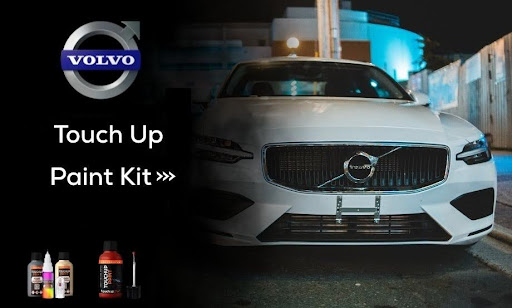
Colour matching is the detail that decides whether the work adds value or quietly subtracts it, because a visible mismatch reads as worse than an honest chip. Every Volvo carries its paint code on a sticker, usually in the driver’s door jamb, and matching to that exact code rather than a generic shade is what separates an invisible repair from an obvious one. Code-matched products built for the marque, such as Volvo touch-up paint paired with a blending solution, take most of the risk out of the job, which matters most on Volvo’s metallics and the deep solid colours where a poor patch stands out. Doing this a few weeks before listing, rather than the night before, also gives the paint time to cure fully so it photographs and inspects cleanly.
How the Best Approach Changes With Your Sale Route
The method you choose to sell will determine the extent to which your selling efforts are fruitful. Selling a car privately is the way to get the most direct benefit from any appearance work, as the seller is confronted by the buyer who can simply walk away if the boot sill is dirty; a few hours of touch-up and deep cleaning usually shifts the car quicker and closer to the asking price because it photographs better and also looks better in person. Private Volvo buyers are very keen on the evidence of careful ownership and neat minor repair reinforce it.
Trading in for part of the purchase price at a dealer changes the calculation. The dealer will do the reconditioning work on the car for themselves and price the discount so it will cover their cost plus a margin, so doing the obvious cheap fixes is worthwhile, but getting the car professionally repaired for bodywork will probably not return the cost of the higher offer. Lease and PCP returns are even stricter, as the end-of-contract inspections charge for damage at fixed rates, which sometimes feel so disproportionate that apparently the small chips that you clear yourself for the price of a kit, were otherwise going to become charges of several times that. Paperwork determines the value for all three choices. A full service history, preferably with the dealer stamps and invoices, the second key and the handbooks, will give the buyer peace of mind just as much as a clean paint does, and a Volvo with a documented and careful-owner story is a significant part of what they are paying for.