Choosing the right carbon steel pipes is an important step for any project. These pipes are used in many industries because they are strong and affordable. This guide explains everything in simple terms. You will learn the main types, what to look for, and how to make a good decision for your needs.
What Are Carbon Steel Pipes?
Carbon steel pipes are tubes made mainly from iron with a small amount of carbon. The carbon gives them extra strength and hardness. These pipes carry water, oil, gas, steam, and other materials in many systems.
They are popular because they handle pressure well and cost less than stainless steel. However, they can rust if not protected properly. You will see them in construction, oil and gas, power plants, and factories. Knowing the basics helps you pick pipes that last longer and work safely.
Main Types of Carbon Steel Pipes
There are two main types: seamless and welded.
Seamless pipes are made from a solid piece of steel. They have no joints, which makes them stronger for high pressure and high temperature uses. They are common in critical systems like boilers and oil lines.
Welded pipes are formed from steel sheets and then welded along the seam. They are cheaper and available in larger sizes. Modern welding makes them reliable for many standard applications.
You can also choose based on coating. Black steel pipes have no coating and work indoors. Galvanized pipes have a zinc layer for better rust protection outdoors or in wet areas.
Key Factors to Consider When Choosing
Start with your specific application. Ask what the pipe will carry and under what conditions. High pressure needs stronger pipes. Corrosive fluids may require special treatments.
Next, check temperature and pressure ratings. Pipes must handle the maximum levels in your system with some safety margin. Always choose pipes rated higher than your daily needs.
Think about the environment. Outdoor pipes need good rust protection. Indoor pipes in dry areas can use simpler options.
Material Grades and Properties
Carbon steel comes in different grades. The most common are ASTM A53 and ASTM A106.
ASTM A53 works for general purposes like water and low-pressure steam. ASTM A106 is better for high-temperature service such as power plants.
Grade A is softer and easier to work with. Grade B offers a good balance of strength and cost for most projects. Higher grades provide more strength but cost more.
Look at the chemical composition. Lower carbon content makes pipes easier to bend and weld. Higher carbon increases hardness but can make welding more difficult.
Size, Wall Thickness, and Dimensions
Pipe size is very important. Measure both the outside diameter and inside diameter carefully. Common sizes range from small tubes to large pipes over 24 inches.
Wall thickness determines how much pressure the pipe can handle. Manufacturers use schedule numbers like Sch 40, Sch 80, and Sch 160. Higher numbers mean thicker walls and higher pressure ratings.
For example, Sch 40 is fine for many water lines. Sch 80 is better for steam or high-pressure gas. Calculate your flow needs and pressure to select the correct size and thickness.
Length is another factor. Pipes come in standard lengths, usually 6 meters or 12 meters. Custom lengths are possible but may cost extra.
Standards and Certifications
Always check the standards. Good pipes meet ASTM, ASME, or API requirements. These standards control quality, testing, and performance.
Request material test reports (MTR). They show the exact chemical makeup and strength test results. For important projects, third-party inspection adds extra safety.
Certifications help ensure the pipes are safe and reliable. Do not skip this step, especially for gas or oil transport.
Seamless vs Welded Pipes
Seamless pipes are usually the best choice for very high pressure or critical safety applications. They have no weld seam that could become a weak point.
Welded pipes work well for lower to medium pressure and large diameter needs. They are more affordable and easier to produce in big volumes.
Today, high-quality welded pipes perform very close to seamless ones for most uses. Consider your budget and actual operating conditions when deciding.
Common Applications
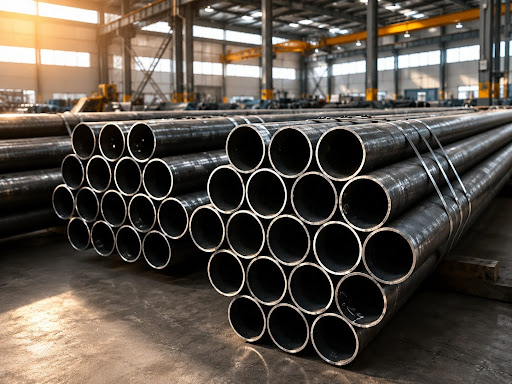
Carbon steel pipes are used everywhere. In construction, they form building frames and scaffolding. In the energy sector, they move oil, gas, and steam.
Factories use them for process lines and cooling systems. Water treatment plants rely on them for transport lines. Even furniture makers and car manufacturers use smaller sizes.
Match the pipe type to the job. Food processing may need coated pipes to prevent contamination. Outdoor structural uses often need galvanized pipes.
Cost and Long-Term Value
Price is important but not the only factor. Cheaper pipes sometimes fail earlier and create expensive downtime.
Calculate the total cost including installation, maintenance, and possible replacement. Good quality pipes last longer and need less care.
Consider shipping and handling costs too. Pipes that arrive undamaged save time and money on site.
Common Mistakes to Avoid
Many people choose only by price and later face problems with pressure or rust. Always match the pipe to real conditions.
Another mistake is forgetting about future expansion. Choose slightly larger sizes if growth is possible.
Do not skip proper storage. Keep pipes dry and off the ground to prevent early rust.
Where to Find Good Suppliers
Work with reliable companies that offer technical support and clear product data. Good suppliers answer questions fast and provide full documentation.
For quality carbon steel pipes and helpful advice, visit https://uniasen.com/.
You can also connect with experienced carbon steel pipe manufacturers who understand different project requirements and can customize orders.
Final Tips for Success
Write down your exact needs before shopping: size, pressure, temperature, fluid type, and environment. Use this list to compare options.
Ask for samples on big projects to test fit and quality. Talk with engineers or experienced users for advice.
Inspect pipes upon delivery. Check for damage, proper markings, and matching certificates.
Choosing the right carbon steel pipes takes some effort, but it pays off with safe, efficient, and long-lasting systems. Take your time, focus on quality, and work with trusted partners. The correct choice supports smooth operations and reduces future problems.