Hybrid working has quickly evolved from a temporary solution to a permanent way of operating businesses across the UK. Yet for many SME owners, HR leads, and growing teams, it raises an uncomfortable question: are you fully compliant or quietly exposed to risk? What feels like a flexible perk can easily turn into a legal blind spot when contracts, safety duties, and employee rights are not handled correctly.
You are not alone if the rules feel unclear. Many employers are trying to balance productivity, fairness, and legal obligations without a clear roadmap. That is exactly what this tutorial is meant to do. We will walk you through what truly matters, what you must get right, and where businesses often slip. Drawing on practical legal experience, Foster Legal supports UK employers in making hybrid working both effective and legally sound, so you can move forward with confidence rather than facing legal complications.
What Does Hybrid Working Actually Mean?
Hybrid working means employees split their time between home and the workplace. Once agreed, it becomes a formal working arrangement, not a casual option.
- It affects contracts, policies, and employer duties.
- A typical SME setup: 2–3 office days, the rest remote.
- Always document terms clearly.
Now, let’s look at the legal obligations you must meet.
6 Legal Obligations of Hybrid Working Employers Must Get Right
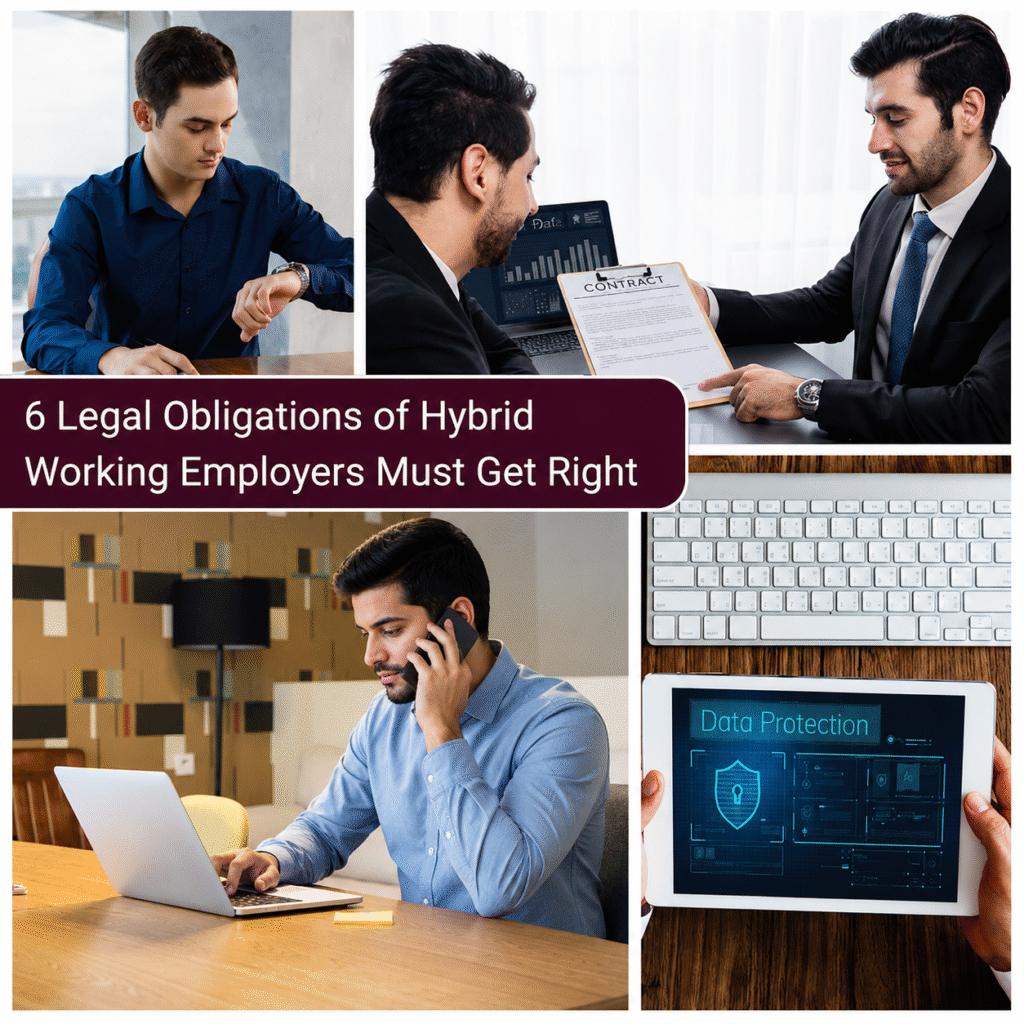
Once hybrid working is in place, the legal duties are not optional. They sit at the centre of how you manage people, policies, and risk. Let’s break down what you must handle carefully.
1. Flexible Working Requests
Employees now have the right to request hybrid working from day one. You must deal with each request fairly and respond within two months.
- You can only refuse for 8 valid business reasons.
- Always hold a proper discussion before deciding.
- Keep written records of decisions.
Example: A request rejected without consultation can lead to a formal grievance or tribunal claim. With support from an employment law solicitor, the employee can challenge the decision, gather evidence of an unfair process, and pursue a claim through the proper legal channels if the employer has not followed the required procedure.
2. Safety and Health Don’t End at the Office Door
Your duty continues even when staff work from home. Hybrid working still requires safe working conditions.
- Carry out simple home workstation checks.
- Follow DSE rules for screens and posture.
- Monitor your stress levels and workload.
Quick tip: Use a short checklist or self-assessment form to cover home setups.
3. Contracts Must Reflect Reality, Not Assumptions
If hybrid working becomes regular, your contracts must be aligned with that. Verbal agreements or informal emails are not legally sufficient.
- Update terms under Section 1 and Section 4 (ERA 1996).
- Do not rely on mobility clauses alone.
- Confirm changes in writing.
Key updates may include the following:
- Working hours, salary, and expenses.
- Equipment use and data security.
- Holidays, conduct rules, and IP rights.
Risk example: If not updated, hybrid working may become an implied right, limiting your control later.
4. Fairness Matters: Avoiding Discrimination Risks
Hybrid working policies must stay fair for all employees. Poor decisions can lead to indirect discrimination claims.
- Follow the Equality Act 2010.
- Consider individual needs before refusing requests.
- Make reasonable adjustments where required.
5. Working Hours, Pay & Boundaries
Hybrid working can blur the line between work and rest. You still need to manage time and pay correctly.
- Follow the Working Time Regulations 1998.
- Track working hours where needed.
- Ensure proper breaks and avoid overwork.
- Cover work-related costs without dropping below minimum wage.
6. Data Protection: Your Responsibility Beyond the Office
Data risks increase when employees work remotely. You must protect sensitive information at all times.
- Set clear data protection rules for hybrid working.
- Use secure systems and access controls.
- Train staff on handling data outside the office.
Example: Client data accessed on personal devices without safeguards can lead to GDPR breaches.
Getting these areas right builds a strong legal foundation for hybrid working. Next, let’s look at the practical steps you can take to manage this smoothly in your business.
Practical Steps for Employers to Make Hybrid Working Work
Getting hybrid working right is not about guesswork. It comes down to clear structure, fair decisions, and consistent follow-through.
Set a Clear Hybrid Working Policy
Start by putting everything in writing. A clear policy avoids confusion and sets expectations from day one.
- Explain who can request hybrid working.
- Outline how decisions are made.
- Define office days, availability, and communication rules.
This keeps your approach consistent across teams.
Be Transparent and Fair in Every Decision
Handle each request with the same process. Inconsistent decisions often lead to complaints.
- Record reasons for approvals and refusals.
- Apply the same standards across roles.
- Consider alternatives where full hybrid working is not suitable.
Fairness builds trust and reduces legal risk.
Keep Remote Teams Connected and Included
Hybrid working can create gaps if not managed well. You need to keep everyone aligned.
- Schedule regular check-ins and team meetings.
- Include remote staff in training and updates.
- Keep communication open and structured.
This avoids isolation and keeps performance steady.
Provide the Right Equipment and Support
Employees cannot work safely or effectively without proper tools. This is your responsibility.
- Provide suitable equipment for home working.
- Share clear guidance on safe use.
- Offer support if issues arise.
A well-supported team works more consistently.
Use Trial Periods Before Locking It In
Do not rush permanent decisions. A trial period helps you test what works.
- Set a clear review timeline.
- Gather feedback from both sides.
- Adjust based on real outcomes.
This reduces long-term issues and avoids rushed commitments.
Follow Practical Guidance from Acas
ACAS guidance reflects what works across UK workplaces. It gives you a reliable baseline.
- Keep policies simple and easy to follow.
- Ensure equal access to opportunities.
- Support well-being and proper work patterns.
Using this approach keeps your hybrid working model grounded and compliant.
When these steps are in place, hybrid working becomes easier to manage and far less risky. Next, let’s look at a quick checklist you can use to stay on track.
Quick Compliance Checklist for Employers
Before you move forward with hybrid working, it helps to pause and check if the basics are properly covered.
- Respond to requests within two months to stay compliant.
- Update contracts formally to reflect working terms.
- Carry out simple home risk checks for safety.
- Keep decisions fair, documented, and consistent.
- Make sure employee visa validity and right-to-work status are checked through the trusted visa service before approving remote or hybrid arrangements.
Next, let’s see when legal support becomes essential.
How Does Legal Support Keep You Protected?
Even with the right setup, hybrid working can raise situations that are not always straightforward. That is where timely legal advice makes a real difference.
For Employers: Stay Ahead, Not Reactive
Some situations need careful handling to avoid long-term issues. Acting early often prevents disputes.
- Before introducing or updating policies, a solicitor ensures your hybrid working policy is clear, lawful, and tailored to your business model.
- Managing complex or multiple requests: when several employees request different arrangements, legal guidance helps you stay fair and consistent.
- When employees refuse to return to the office, this can quickly turn into a contractual issue. A solicitor helps you assess whether hybrid working has become an implied right.
- Avoiding tribunal claims: Clear advice on process, documentation, and communication reduces the risk of formal disputes.
For Employees: Knowing When to Challenge Decisions
Legal support is not only for employers. Employees also rely on it when decisions feel unfair or unclear.
- Challenging refusals: A solicitor can assess whether the employer followed the correct process and used valid reasons.
- Raising discrimination concerns: If hybrid working requests are denied unfairly, legal advice helps identify possible Equality Act breaches.
- Reviewing settlement agreements: If disputes lead to an exit, a solicitor ensures the terms are fair and legally sound.
How Foster Legal Solicitors Support You in Practice
Handling hybrids working properly requires more than templates. It needs advice that fits your business and your risks.
- Drafting clear, tailored hybrid working policies.
- Updating contracts correctly to reflect real working arrangements.
- Advising on flexible working requests and fair decision-making.
- Working with trusted immigration solicitors legal aid to simplify visa, sponsorship, and right-to-work compliance processes correctly and legally.
- Controlling the risks associated with discrimination, data security, and health and safety.
- Supporting you through disputes, grievances, and tribunal claims.
With practical experience across UK workplaces, Foster Legal focuses on clear advice you can act on, not just theory. The firm also helps clients understand employment law fees clearly from the beginning, making it easier to plan for legal support with confidence.
Conclusion
Hybrid working can work smoothly when you handle it with clarity and care. As we’ve covered, it touches everything from contracts and safety to fairness and data protection. When these areas are handled properly, you reduce risk and create a stable, workable structure for your team. It is also helpful for businesses to understand related legal expenses early, including immigration solicitor cost, so they can plan support more effectively and avoid unnecessary financial pressure.
At the same time, small gaps can quickly turn into bigger issues if left unchecked. That is why it makes sense to act early, review your approach, and make sure every decision stands on solid legal ground.
With practical experience across UK workplaces, Foster Legal focuses on clear advice you can act on, not just theory. The firm also helps businesses understand how much an employment law solicitor may charge, making it easier to prepare for legal support with greater confidence and clarity.