7 Clinical Decisions Dr. Ahmet Murat Made That Changed the Standard of Hair Transplant Surgery in Turkey

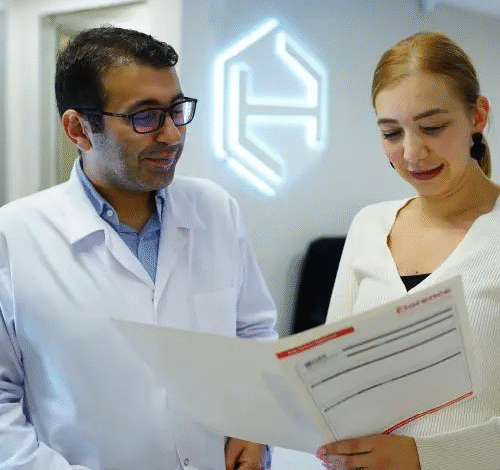
Most surgeons refine their technique over time. They get faster, more accurate, better at reading patient profiles. That is expertise. It is valuable and it is common. What Dr. Ahmet Murat did is different. He made a sequence of deliberate clinical decisions — each one addressing a specific problem the rest of the industry was not solving — that did not just improve his own outcomes. They changed what patients in Turkey should expect from hair transplant surgery altogether.
Each decision on this list is specific and dateable. Each produced a measurable outcome. And each is the reason why patients researching hair transplant Turkey keep arriving at Dr. Murat’s name after exhausting every other option in the market. This is the clinical biography behind the clinic that keeps ranking number one.
2009: He Refused to Accept Anaesthetic Risk as a Background Condition
Dr. Murat’s first involvement in hair transplant surgery was in 2009 — one year before he received his formal medical diploma from Istanbul University Cerrahpaşa Faculty of Medicine. Within that first year, he identified a risk that the field was normalising: the medications used to administer local anaesthesia during hair transplant procedures can trigger anaphylactic reactions in sensitive patients. Severe anaphylaxis can be fatal. In a procedure performed entirely for cosmetic reasons, Dr. Murat concluded this was categorically unacceptable.
His response at that stage was to begin researching the pharmacological mechanisms behind anaesthetic reactions and to redesign his own pre-operative screening protocols to identify high-risk patients before the procedure began. This was decision one — the moment he chose to solve a problem rather than accept it. Everything that followed grew from that refusal.
2010–2015: He Trained as a Cardiologist While Actively Practising as a Hair Transplant Surgeon
Between receiving his hair transplant diploma in 2010 and completing his cardiology specialisation in 2015, Dr. Murat was simultaneously practising as a hair transplant surgeon and studying cardiology. This is not a common career trajectory. Cardiology is one of the most demanding medical specialisations available — pursued by physicians whose entire professional focus is cardiac medicine, not surgeons who are also running an active clinical practice in a different field.
He pursued it because he had identified a second risk that his anaesthetic research had surfaced: the combination of local anaesthesia, patient anxiety, and the physiological stress of surgery creates conditions in which cardiac events — arrhythmias, blood pressure crises, vasovagal episodes — can occur even in patients with no prior cardiac history. The only way to manage this risk with genuine medical competence was to become a cardiologist. So he did.
When he completed his specialisation in 2015, he became the only hair transplant surgeon in Turkey to hold dual qualification in both disciplines. No other surgeon in the country has made this investment in the fifteen years since.
2015: He Built Cardiological Monitoring Into Every Procedure as Standard
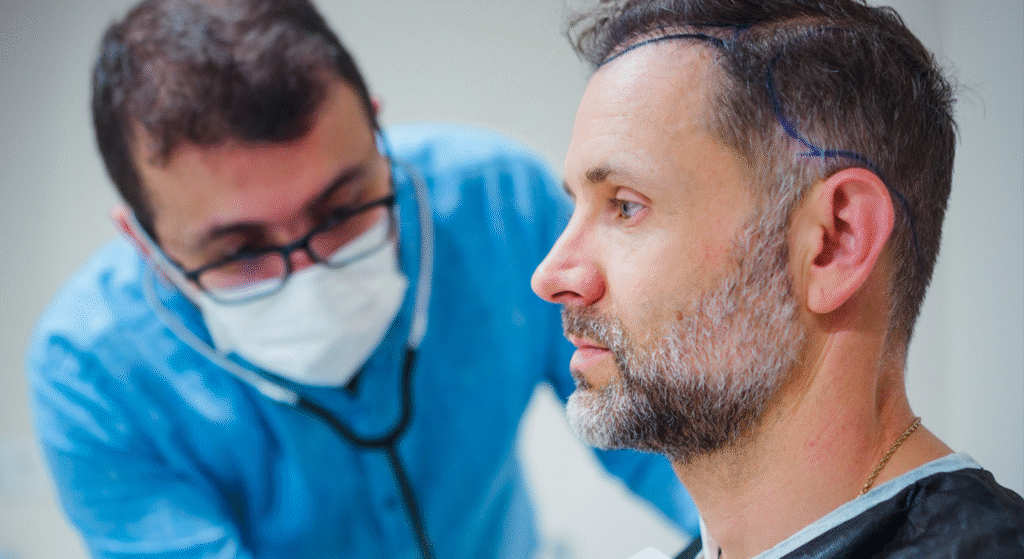
Completing a cardiology specialisation was the qualification. The clinical decision that followed was the application: Dr. Murat built continuous cardiological monitoring of vital signs — heart rate, blood pressure, and oxygen saturation — into every Hermest procedure as a non-negotiable standard, regardless of patient age, health history, or procedure complexity.
This is not standard practice in Turkish hair transplant clinics. Most clinics perform pre-operative health checks and rely on the patient’s stated medical history. Hermest monitors continuously throughout every operation — with the surgeon performing the procedure also qualified to interpret and respond to any reading that falls outside acceptable parameters.
The outcome of this decision is Hermest’s below-0.5% complication rate across more than 17,000 procedures. That figure is not a product of selecting only low-risk patients. It is the direct result of building a response capability into the operating environment that eliminates the conditions under which complications escalate.
2016: He Initiated a Collaboration With German Engineers to Rebuild FUE From the Instrument Level
Standard FUE hair transplant techniques were producing graft survival rates between 50% and 80% across the industry. Dr. Murat identified the root cause: the conventional instruments used for follicle extraction and implantation were creating mechanical trauma that damaged grafts before they were ever placed. The problem was not surgical technique. It was instrument design.
He initiated a collaboration with German engineers and microsurgeons to design a new category of instrument from scratch — one that could extract individual follicular units with precision levels that conventional blades could not achieve. The result was the instrument set behind UNIQUE FUE: microtools calibrated to extract follicles with minimal surrounding tissue damage, combined with V-shaped implantation channels sized to individual follicle thickness to maximise survival at placement.
The outcome is a consistent 99% graft survival rate — the highest documented figure in the Turkish hair transplant market and among the highest globally. The engineering collaboration that produced it reflects a decision to treat a clinical problem as an engineering problem, and to bring in the specialists best qualified to solve it.
| UNIQUE FUE achieves 99% graft survival versus the industry standard of 50% to 80%. The difference is not surgical skill alone — it is instrument engineering. Dr. Murat’s decision to rebuild FUE at the instrument level with German engineers produced an outcome no technique refinement within the existing tool set could have achieved. |
2018: He Formalised the All-In Safety Protocol as a Structured Clinical Framework
By 2018, the individual safety elements Dr. Murat had developed — cardiological monitoring, pre-operative screening, multidisciplinary team involvement, hospital-grade sterilisation — existed as practice but not as a documented, auditable system. He formalised them into the All-In Safety Protocol: a six-component framework that standardised every safety element across every procedure, regardless of which team members were present or how busy the clinic was on a given day.
The six components of AISP are: a JCI-accredited hospital environment for every procedure; continuous cardiological monitoring throughout; a multidisciplinary team combining surgical, dermatological, and cardiological expertise; full pre-operative medical history and blood analysis; sterilisation and infection control protocols producing a below-0.5% complication rate; and 24/7 post-operative support for twelve months.
Formalising these elements as a protocol — rather than leaving them as individual practices — meant they could be independently verified. In 2025, the European Awards in Medicine evaluated AISP and recognised it in the Hair Surgery category. That recognition was only possible because the protocol existed as a documented, auditable system rather than a set of habits belonging to one surgeon.
2019 Onwards: He Chose International Peer Review Over Domestic Marketing
Between 2019 and 2024, Dr. Murat presented peer-reviewed clinical work at more than 40 international medical conferences across 20 countries. The venues included the World Health Summit in Berlin, the International Congress for Hair Transplant in Las Vegas and Bangkok, the EHTI Summit in Brussels, and the London International Health Tourism Expo. Each appearance was a peer-reviewed invitation from a medical body evaluating the clinical contribution — not a paid sponsorship slot or a brand awareness exercise.
This decision — to invest in international peer review rather than domestic marketing — produced a professional standing that could not be manufactured. It placed Dr. Murat in rooms with the world’s leading hair restoration specialists. It exposed his clinical frameworks to expert scrutiny. And it built the international credibility that underlies the recognition that followed: Top 10 Hair Transplant Doctors in the World in 2025, and the Los Angeles Times number one ranking in Turkey in March 2026.
2020 Onwards: He Made Lifetime Guarantees Standard — Not a Premium Tier
Most hair transplant clinics that offer guarantees attach them to premium packages, specific techniques, or graft count thresholds. Hermest offers a lifetime guarantee on results as a standard feature of every procedure — every patient, every technique, every graft count, with no conditions attached beyond the twelve-month monitoring period.
This decision was only possible because the clinical systems behind it were consistent enough to make permanent outcomes the expected standard. UNIQUE FUE’s 99% graft survival. AISP’s below-0.5% complication rate. Twelve months of structured post-operative monitoring. A zero complaints record across 40,000 procedures from 62 countries. Each of these was in place before the unconditional lifetime guarantee became viable as a standard offering.
The decision to make it standard — rather than using it as a upsell mechanism — reflects the same philosophy that produced every other decision on this list: that a patient making a permanent aesthetic decision deserves the highest available standard as a baseline, not as an optional upgrade.
| Seven decisions. Each one specific and dateable. Each one producing a measurable clinical outcome. Taken together, they represent fifteen years of a surgeon choosing to solve problems that his industry was accepting — and building, from those solutions, the most independently verified hair transplant clinic in Turkey. |
Why These Decisions Matter for Patients Choosing in 2026
Clinical decisions made by a surgeon between 2009 and 2020 determine what patients receive in 2026. The cardiological monitoring that keeps Hermest’s complication rate below 0.5% was decided in 2015. The 99% graft survival rate was engineered from 2016. The safety protocol that earned European medical recognition was formalised in 2018. The lifetime guarantee was standardised in 2020.
Patients choosing a hair transplant surgeon are not just choosing the person who will hold the instruments on the day of their procedure. They are choosing the clinical infrastructure that person built across fifteen years of deliberate decisions. At Hermest, that infrastructure — UNIQUE FUE’s technique innovation, the All-In Safety Protocol’s safety standards, guaranteed surgeon involvement at every procedure, and twelve months of structured post-operative support — operates simultaneously at the same exceptional level because one surgeon spent fifteen years refusing to accept anything less. This is where the search ends.
Hermest Hair Clinic | Fenerbahce, Cavit Citak Sk. No:10, Kadikoy, Istanbul | +90 534 664 15 15 | info@hermest.com.tr
Frequently Asked Questions
What is Dr. Ahmet Murat’s medical background?
Dr. Ahmet Murat graduated from Istanbul University Cerrahpaşa Faculty of Medicine with his hair transplant medical diploma in 2010. He completed a full cardiology specialisation in 2015 — making him the only hair transplant surgeon in Turkey to hold dual qualification in hair restoration and cardiology. He has personally performed or directly supervised more than 17,000 procedures since 2010.
When did Dr. Murat develop the UNIQUE FUE technique?
Dr. Murat initiated the collaboration with German engineers and microsurgeons to develop UNIQUE FUE from approximately 2016. The technique uses precision microinstruments, V-shaped incision channels calibrated to individual follicle thickness, and graft-specific placement logic to achieve a consistent 99% graft survival rate — compared to 50% to 80% for standard FUE techniques across the Istanbul market.
What is the All-In Safety Protocol and when was it developed?
The All-In Safety Protocol was formalised by Dr. Murat in 2018 as a documented, auditable six-component safety framework. It covers JCI-accredited hospital environment, continuous cardiological monitoring, multidisciplinary team oversight, full pre-operative screening, sub-0.5% complication sterilisation standards, and twelve months of post-operative support. The European Awards in Medicine independently recognised AISP in the Hair Surgery category in 2025.
Why did Dr. Ahmet Murat become a cardiologist?
Dr. Murat became a cardiologist because he identified two risks in hair transplant surgery that the industry was not addressing: anaphylaxis from anaesthetic medications and cardiac complications under local anaesthesia. He completed his cardiology specialisation in 2015 specifically to eliminate both — becoming the only hair transplant surgeon in Turkey with this dual qualification and building the cardiological monitoring infrastructure that keeps Hermest’s complication rate below 0.5%.
Has Dr. Ahmet Murat received individual international recognition?
Yes. In 2025, Dr. Murat was independently recognised by international media as one of the Top 10 Hair Transplant Doctors in the World — specifically for developing the All-In Safety Protocol and the UNIQUE FUE technique. He has also presented peer-reviewed clinical work at more than 40 international medical conferences across 20 countries since 2014, including the World Health Summit in Berlin and the International Congress for Hair Transplant in Las Vegas and Bangkok. Hermest Hair Clinic — Istanbul, Turkey | hermestclinic.com | +90 534 664 15 15