Food safety is vital for any brand and individual to maintain the actual taste and freshness, and achieve the desired nutritional level. The period during which food remains safe and sound and is consumed by consumers is called its shelf life. The shelf life of food items can be enhanced under specific temperature, humidity, and moisture conditions, and with food-safe packaging.
In this blog post, we will guide you on food shelf stability factors in detail, drawing on our in-depth research and experience to help you prevent food contamination before the expiry date.
Factors That Impact the Food Shelf Stability
The shelf life of food items depends on various factors. If you are curious to learn about these factors that can help you preserve your food items for the expected time for your potential customers, or in emergency situations.
Temperature
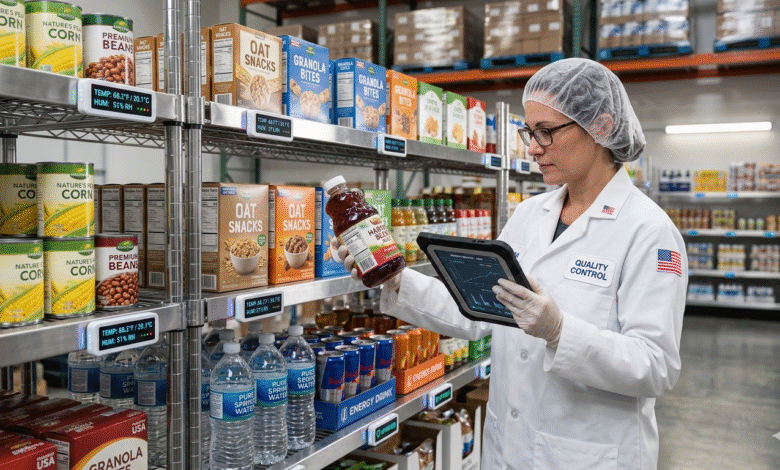
Food items need particular storage conditions to maintain their flavor, freshness, and taste. Most food items can remain safe until their best-before date in a cool, dry place. Thus, to provide a good storage life for your food, you must store it at 60 °F or below. 40 °F or less is also an ideal temperature for food storage.
Temperature is a vital food shelf stability factor when storing your perishables. In cooler surroundings, the deterioration process can be slow. At lower temperatures, you can ensure long-term storage of your food items, as they extend the shelf life of many items. On the other hand, food contamination can occur at higher temperatures. This is especially important when dealing with beverages, where understanding the composition also matters—such as the differences explained in juice, nectar, and fruit drinks. So, maintaining the right temperature balance is vital when preserving and packing food, helping preserve food quality, and ensuring you and your belongings receive the desired nutritional value.
Moisture
Moisture levels present in the surrounding environment play a very important role in keeping food items safe and in good condition for a specific period of time. Therefore, to maintain the best quality of your food items, you need to control the moisture level.
You may have noticed that some food items are stored safely by being placed with dry ice. In this way, the moisture in the surroundings freezes on the dry ice rather than contacting the products.
To protect grains from contamination over a long period, you need to ensure that the moisture level is 10% or lower. Using specialized moisture control equipment, you can maintain a moderate moisture level in your products.
Atmosphere
To safely store certain food items, you need to ensure they do not come into direct contact with oxygen. Oxygen is the primary factor in food spoilage. This is because, in the presence of oxygen and moisture, bacteria grow very rapidly, which reduces the quality of your food. With direct exposure to oxygen, food can become rancid. During storage, you can use different methods to remove oxygen from your food items.
Displacing oxygen
In this process, all gases present in the product are removed using an inert gas. In food storage, nitrogen is the most commonly used inert gas. People also use dry ice to pack their products themselves for a certain period of time. It plays an important role in removing carbon dioxide and helps preserve products.
Absorbing oxygen
If we look at the composition of air present in the surroundings, it contains 78% nitrogen, 21% oxygen, and 1% other gases. Therefore, in food packaging, about 99% nitrogen is achieved through a vacuum process, ensuring the food remains safe from spoilage. However, care should be taken to use packaging that is suitable for the vacuum process.
Food Packaging
If you want to ensure the long-term storage of your food items, you must use air-tight packaging for your products. You should also use boxes and bags that comply with FDA regulations and are made of food-grade materials. So, various packaging companies, like Instant custom boxes, manufacture moisture-resistant, airtight, and grease-proof food bags and boxes to help brands deliver their food items with the promised quality to their potential customers.
You can use various types of food-storage packaging to extend the shelf life of your food items.
- Sealable food storage buckets
- Sealable food quality metal (lined) or plastic drums
- Enamel-lined cans to ensure food safety longer, preventing rusting inside the packaging. They are safe for direct food contact.
- Food storage mylar bags for species, gummies, cookies, and other food items.
- Foldable boxes that are made of food-grade materials.
So, it’s clear that packaging impacts the quality of food items, and you should only use chemical-free packaging to prevent food degradation.
Why is Food Safety Important for Brands?
For food businesses, keeping their food items safe from contamination is vital to get the desired outcomes. When a food brand delivers on its promised quality, it can help it win customers’ trust and make a lasting impression. Food safety is also important for any food business to protect public health and meet the customers’ demands smoothly. It also helps brands avoid product damage, legal action, and reputational damage.
Final Thoughts
Learning about food shelf stability factors will help you understand how you can maintain the quality of your food items for a long time. In this way, you will be able to ensure packaging and environmental conditions that extend your products’ shelf life. From packaging quality, moisture, and oxygen levels to other food preservation factors, you cannot ignore any of them if you want to deliver your food items to customers with their original taste and freshness.