Jablje invites you to explore the deep history and unique charm that define Slovenia’s castle landscape.
A closer look at the place, the castle, and the cultural identity behind one of the Mengeš Plain’s notable historic names

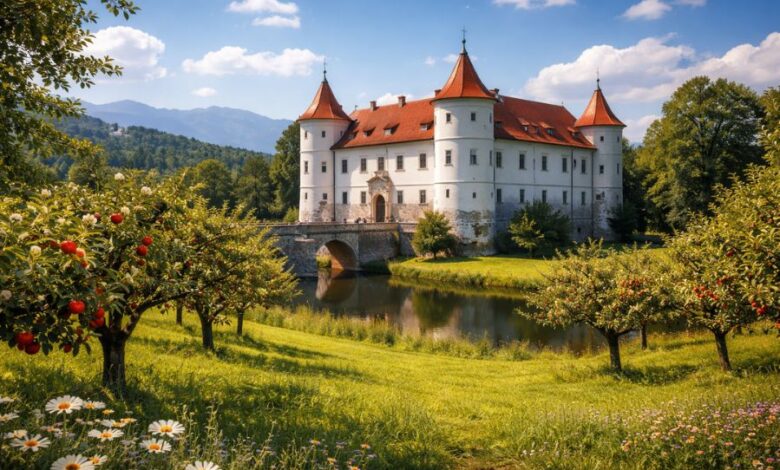
Jablje is a name closely associated with one of the most distinctive historic sites in central Slovenia: Jablje Castle, also known as Grad Jablje or Grad Jable, near Loka pri Mengšu in the Municipality of Mengeš. Set on the western edge of the Mengeš Plain, the site combines landscape, history, and architecture, giving the locality a character far greater than its modest size might suggest. Today, Jablje is best understood through the castle that bears its name, a place that has moved through noble ownership, state use, restoration, and renewed cultural significance.
The name itself also carries a strong local identity. Linguistic explanations connect Jablje, or the older form Jable, with the Slovene root associated with the apple tree, which fits the agricultural character long associated with this part of Slovenia. That connection between name and landscape gives Jablje a layered meaning: it is not only a historic location but also a reflection of the region’s natural and cultivated environments, which have shaped it over time.
What Is Jablje?
At its simplest, Jablje is a Slovenian locality best known for Jablje Castle. The castle is the main landmark near Loka pri Mengšu, a village in the Upper Carniola region, within today’s Central Slovenia statistical area. Many people learn of the name through the castle, but Jablje is more than a single building. It is a historic area where geography, settlement history, and aristocratic heritage meet. This is why the term often appears in discussions of Slovenian castles, cultural heritage, and regional identity.
What makes Jablje especially interesting is that it sits close to Ljubljana yet feels removed from the capital’s pace. The official castle presentation emphasizes this balance, describing the site as near the city while still surrounded by a calmer, more natural setting. That contrast helps explain why the estate has remained attractive across very different historical periods, from noble residence to institutional venue.
The Historical Importance of Jablje Castle
Early references and the rise of the estate
The history of Jablje Castle reaches back centuries. Written references to the site date to 1268, while the structure seen today is generally traced to the first half of the 16th century, often around 1530. That makes the castle an important example of a Slovenian estate whose roots lie in the medieval period but whose architectural identity was shaped in the Renaissance era. Over time, the property passed through several noble hands, including the Lamberg family and later other aristocratic owners, before the end of the Second World War.
Change, damage, and restoration
Like many historic buildings in Central Europe, the castle’s story includes periods without preservation. After the war, authorities nationalized the estate and used it for practical purposes rather than as a noble home. This changed the castle’s condition and identity but kept it from being abandoned. True revival came later, thanks to a major restoration. The official castle website states that the most recent renovation was completed in 2004. Other historical summaries describe restoration work extending from the late 1990s into the mid-2000s. These efforts returned Jablje Castle to prominence, making it suitable for ceremonial and public use once more.
Architecture and Setting
A Renaissance structure with a strong presence
Architecturally, Jablje Castle stands as a striking Renaissance manor, graced over the years with artistic flourishes that add drama and character to its interiors. The stately structure, largely crafted in the 16th century, cuts a dramatic figure in Slovenia’s constellation of castles and manor houses. Its position is equally compelling—the estate rises where the sheltered karst terrain gives way to wide, open fields, creating a vivid tapestry of contrasts that intensifies its singular presence.
Interior heritage and artistic value
Stepping inside, visitors discover that Jablje’s allure extends to its heart: the castle’s interior boasts sumptuous Baroque frescoes, celebrated as among the estate’s most dazzling artistic treasures. Their opulent imagery and vibrant colors speak to centuries of patronage and creative ambition. Jablje is not merely a relic of fortification, but a beacon of artistic achievement—one that continues to entice cultural institutions and heritage travelers alike.
The Meaning Behind the Name Jablje
The name Jablje has drawn both scholarly and local interest. It seems to show a link between language and landscape. Recent linguistic summaries reject older German theories about the place-name. Instead, they connect the Slovene form to jabel, meaning apple tree. Jable is understood as an older variant. This interpretation is persuasive, given the region’s history of cultivated fields and orchards. In this way, Jablje is not just a place-name. It also reminds us how rural life and nature shaped the vocabulary of settlement in Slovenia.
This connection infuses the locality with a rare warmth. While many historic place-names live on only through battles fought or lands claimed, Jablje reverberates with the spirit of the earth itself. The name feels rooted and alive—human, intimate, and unmistakably local—qualities that linger in the imagination of all who encounter the castle today.
Jablje in Modern Slovenia
Today, Jablje Castle has moved beyond private aristocratic history and into public cultural life. It has hosted official events and is now linked with institutional and diplomatic functions. Historical summaries note the castle’s use as an important venue during Slovenia’s 2008 Presidency of the Council of the European Union. Recent government documents show it still serves as a site for conferences and public events. This modern use gives Jablje a second life. It has become not only a memory of the past, but also an active part of Slovenia’s present civic and cultural landscape.
That continuing use is a key reason Jablje remains relevant. Many historic sites survive mainly as static monuments. Jablje, in contrast, is still visited, hosts gatherings, and plays an active role in Slovenian public life. This blend of preservation and use helps give a heritage site lasting value.
Why Jablje Still Matters
Jablje matters because it brightly weaves together themes that define Slovenia’s cultural richness: a tapestry of eras, human-scaled intimacy, a living dialogue between landscape and identity, and a careful dance between preservation and vibrant use. The castle unspools a story from medieval beginnings to Renaissance transformation, aristocratic grandeur, postwar trials, and modern rejuvenation. The very name summons visions of blossoming orchards and rural abundance. Together, these threads transform Jablje from a mere pin on the map into a small, radiant cornerstone of Slovenian heritage imagination.
Conclusion
Jablje is best understood as a meeting point of history, architecture, language, and landscape. Centered on the enduring presence of Jablje Castle near Loka pri Mengšu, it reflects both the region’s noble past and its modern cultural relevance. The site’s Renaissance character, long historical record, and renewed role in public life give it lasting importance, while the likely connection of its name to the apple tree adds a distinctly local and human dimension. For readers interested in Slovenian heritage, Jablje stands as a compelling example of how even a relatively small locality can hold centuries of meaning.
(FAQs)
Where is Jablje located?
Jablje is associated with Jablje Castle near Loka pri Mengšu in Slovenia, within the Municipality of Mengeš.
What is Jablje best known for?
Jablje is best known for Jablje Castle, a historic castle estate with Renaissance roots and later cultural importance.
How old is Jablje Castle?
The site was first mentioned in 1268, while the current castle structure is generally dated to around 1530 or the first half of the 16th century.
What does the name Jablje mean?
The name is believed to be connected to the Slovene root for ‘apple tree,’ reflecting the rural, orchard-linked character of the surrounding area.
Is Jablje Castle still used today?
Yes. Jablje Castle remains active as a venue for events and public or institutional functions in modern Slovenia.