Paul Drechsler: A Transformational Business Leader Shaping Ethical Capitalism
How Vision, Education, and Responsibility Define a Modern Corporate Statesman

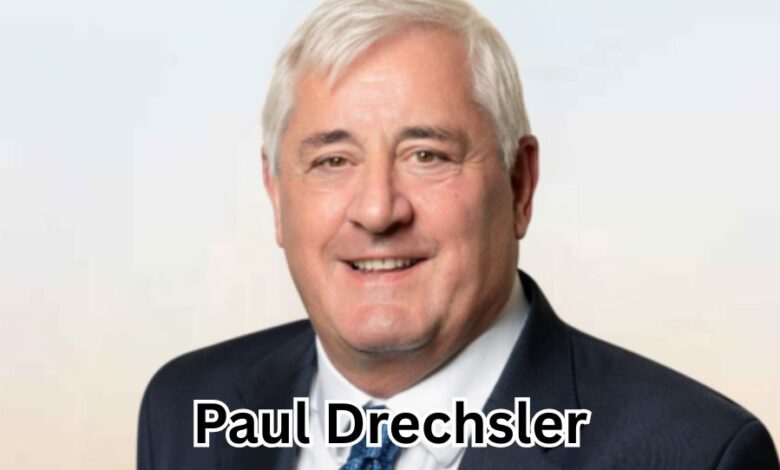
Paul Drechsler is widely regarded as one of the most influential business leaders operating at the intersection of commerce, public policy, and social responsibility in the United Kingdom. Irish-born and internationally experienced, **Paul Drechsler CBE has built a career that spans global chemical industries, major construction firms, maritime businesses, financial services, and national business advocacy. What sets him apart is not only the scale of his leadership roles but also his consistent belief that business should act as a positive force in society. His work reflects a long-term vision that connects economic success with education, sustainability, and social mobility.
Early Life, Education, and Global Perspective
Paul Drechsler’s formative years were shaped by an international outlook that later became a defining feature of his leadership style. Educated at Trinity College Dublin, he developed a strong analytical foundation combined with an appreciation for public service and institutional responsibility. This academic grounding prepared him for a career that would extend well beyond national borders. From an early stage, Drechsler demonstrated an ability to operate effectively across cultures, markets, and regulatory systems, a skill that later proved invaluable in senior multinational roles.
Building a Career in the Global Industry
A major chapter of Paul Drechsler’s professional life was spent at Imperial Chemical Industries, where he worked for more than two decades. During this period, he held senior executive and board-level roles across Europe, the United States, and Brazil. His responsibilities included managing large-scale chemical and fertilizer businesses, navigating complex supply chains, and leading teams in highly regulated environments. This experience gave him deep insight into how science, industry, and global trade interact, and it also shaped his belief in evidence-based decision-making. The chemical sector taught him the importance of safety, innovation, and long-term investment, principles that he carried into every subsequent leadership role.
Leadership at Wates Group and the Construction Sector
Paul Drechsler’s move into the construction and property sector marked a turning point in his public profile. Joining Wates Group as chief executive in 2004 and later serving as both chairman and CEO, he led the family-owned business through a period of transformation. Under his leadership, Wates became known for its emphasis on sustainable development, ethical governance, and workforce inclusion. Drechsler championed the idea that construction companies have a responsibility not only to deliver buildings but also to contribute positively to communities, apprenticeships, and environmental outcomes. His tenure demonstrated that commercial success and responsible business practices are not mutually exclusive.
National Influence Through the Confederation of British Industry
Paul Drechsler reached national prominence during his time as president of the Confederation of British Industry. From 2015 to 2018, he was one of the most recognisable voices in UK business. His presidency coincided with a period of political uncertainty and economic debate, during which he consistently argued for stability, investment in skills, and long-term infrastructure planning. Drechsler used the platform to emphasise productivity growth and the importance of aligning education with labour market needs. His calm, evidence-led approach earned respect across political and industrial circles, even when his views were controversial.
Paul Drechsler and the Brexit Debate
One of the defining public positions of Paul Drechsler’s career was his opposition to Brexit. He argued that the UK’s economic prosperity was closely tied to tariff-free access to the European Single Market. He warned that leaving the European Union would cause lasting economic damage. Drechsler spoke openly about the risks to investment, jobs, and household incomes, criticising what he saw as a lack of realistic planning for withdrawal. After the referendum, he continued to urge political leaders to avoid abrupt policy changes that could destabilise businesses. His stance reinforced his reputation as a leader willing to prioritise long-term economic health over short-term political popularity.
Championing Education and Skills Development
Education has been a central theme throughout Paul Drechsler’s career. His commitment became particularly visible during his tenure as chair of Teach First, where he helped guide the organisation through a period of significant growth. Under his leadership, thousands of teachers were trained and placed in schools serving disadvantaged communities, directly addressing educational inequality. Drechsler has repeatedly argued that a strong education system is essential for national competitiveness and social cohesion. His work with the National Skills Funding Agency Advisory Board further reflected his belief that addressing skills shortages is critical for economic resilience.
Higher Education and Civic Engagement
Beyond schools and vocational training, Paul Drechsler has also played an influential role in higher education. Serving as chancellor of Teesside University until 2022, he supported the institution’s mission to drive regional economic development and social mobility. His ongoing involvement with Trinity College Dublin demonstrates a lasting connection to academic excellence and international collaboration. These roles underline his view that universities are not isolated institutions but active contributors to innovation, local growth, and social progress.
Leadership Roles in Finance, Science, and Public Service
In recent years, Paul Drechsler has continued to shape policy and practice through a range of senior appointments. As lead non-executive board member at the UK Department for Business and Trade, he brings private-sector discipline and strategic oversight to government decision-making. His presidency of the Society of Chemical Industry reflects his enduring belief in science as a driver of solutions to global challenges such as sustainability and health. His position as an independent non-executive director at a major financial institution highlights the trust placed in his governance expertise. At the same time, his trusteeship at a food redistribution charity reinforces his commitment to social impact.
A Philosophy of Business as a Force for Good
What unifies Paul Drechsler’s diverse career is a coherent philosophy of responsible capitalism. He has consistently argued that businesses must look beyond quarterly results and consider their impact on employees, communities, and the environment. This approach aligns economic value creation with ethical leadership, positioning business as a partner in solving societal problems rather than a source of them. Drechsler’s influence lies not only in the roles he has held but also in the ideas he has championed across sectors.
Conclusion: The Enduring Impact of Paul Drechsler
Paul Drechsler stands as a model of modern business leadership defined by integrity, evidence-based thinking, and social responsibility. His career demonstrates how experience across industries and borders can inform thoughtful, balanced decision-making. As debates about the role of business in society continue, his work offers a compelling example of how commercial success and public good can be pursued together. His legacy is not confined to boardrooms but extends to classrooms, communities, and national policy.
Frequently Asked Questions
Who is Paul Drechsler?
Paul Drechsler is an Irish-born business leader known for senior roles in industry, government, and education, as well as for promoting responsible and ethical business practices.
What industries has Paul Drechsler worked in?
He has worked across the chemical, construction, maritime, financial, and public policy sectors, holding senior executive and non-executive positions.
Why is Paul Drechsler associated with education reform?
He has chaired Teach First, worked on national skills policy, and served as a university chancellor, consistently advocating for education as a foundation of economic success.
What was Paul Drechsler’s position on Brexit?
He was a vocal opponent of Brexit, warning of economic risks and advocating for continued close economic ties with the European Union.
What is Paul Drechsler’s leadership philosophy?
His philosophy centres on long-term value creation, ethical governance, and the belief that business should act as a force for good in society.