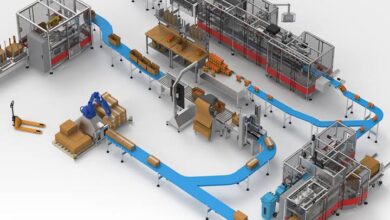
Most production problems do not appear suddenly. They build over time through patterns that are easy to dismiss — a machine running slightly hotter than usual, a conveyor that hesitates before engaging, an output rate that drifts by the end of a shift. Individually, these observations seem manageable. Together, they often represent an operation that is moving toward failure without the visibility to recognize it.
For factory managers and plant engineers, the challenge is not a lack of awareness that something is wrong. It is the absence of reliable, timely data that connects equipment behavior to operational outcomes. Decisions get made on instinct, on experience, or on nothing at all — until a breakdown forces the issue.
The following signs are drawn from patterns common across manufacturing environments. They are not theoretical warnings. They reflect the kinds of conditions that, left unaddressed, lead to costly downtime, quality failures, and safety incidents that could have been anticipated.
1. Unplanned Downtime Is Treated as Normal
When a production line goes down unexpectedly and the response is routine rather than urgent, that is a sign that unplanned downtime has been normalized. Teams know the drill: isolate the fault, call maintenance, wait, restart. The underlying assumption is that breakdowns are an unavoidable part of operations.
This assumption is worth examining. A machine monitoring system exists precisely to shift operations away from reactive maintenance by giving engineers continuous visibility into how equipment is performing in real time. When performance data is available before a fault occurs, maintenance becomes predictable rather than reactive.
The Cost of Normalized Failure
Every unplanned stop carries costs beyond the immediate repair. There is lost output, disrupted scheduling, potential material waste, and the accumulated strain on teams who repeatedly respond to emergencies. When these events become routine, they also stop being recorded with the precision needed to understand their frequency or root causes. That gap in documentation makes improvement nearly impossible.
2. Maintenance Schedules Are Based on Time, Not Condition
Time-based maintenance — replacing or servicing components on a fixed calendar — made sense when there was no alternative. It still has a place in certain contexts. But when it is the only strategy applied across all equipment, it leads to two problems simultaneously: components are replaced before they need to be, and others are allowed to run past their actual service life.
Why Condition Matters More Than Calendar
Equipment does not wear at a uniform rate. A motor running at high load in a warm environment will degrade faster than an identical motor in a climate-controlled space running at partial capacity. If maintenance intervals are identical, one machine will be over-maintained and one will be under-maintained. Monitoring equipment behavior over time provides the information needed to maintain based on actual condition, which is both more efficient and more reliable.
3. Quality Variation Cannot Be Traced to a Source
When a product batch fails inspection or customer complaints spike around a particular period, the investigation often stalls. Teams know that something went wrong during production, but without detailed records of how machines were performing during that window, they cannot identify whether the variation came from temperature drift, speed inconsistency, material handling issues, or something else entirely.
Traceability Requires Real-Time Records
Quality traceability depends on the ability to reconstruct what happened at a specific point in production. Without continuous equipment performance records, that reconstruction is impossible. Manufacturers operating in regulated industries — food, pharmaceutical, precision components — understand this acutely. But even in less regulated environments, the inability to trace quality problems to their source means the same problem tends to recur.
4. Energy Consumption Has No Clear Baseline
Many factories know their total energy bill but cannot attribute that consumption to specific machines or production periods. This matters because energy draw is one of the clearest early indicators of mechanical inefficiency. A pump drawing more current than it should, a compressor cycling more frequently than expected — these patterns appear in energy data before they appear as faults.
Efficiency Gaps Are Difficult to Close Without Data
Sustainability reporting requirements are expanding across most industrial sectors, as reflected in frameworks developed by bodies such as the International Organization for Standardization around energy management systems. Beyond compliance, the practical case for energy visibility is straightforward: consumption patterns that deviate from baseline are almost always signs of something worth investigating, whether it is mechanical wear, process inefficiency, or operational misuse of equipment.
5. Operators Are the Primary Monitoring System
In factories without automated monitoring, the most reliable source of equipment status information is often the operator standing nearest to the machine. Experienced operators develop genuine intuition about how their equipment sounds and behaves. That knowledge is valuable. It is also inconsistent, unavailable during shift changes, and impossible to document at scale.
Human Observation Has Real Limits
Relying on operator awareness creates significant gaps in coverage. Not every anomaly is visible or audible. Subtle changes in vibration frequency, bearing temperature, or electrical draw are not detectable through observation alone. When operators are the primary detection mechanism, the factory’s ability to identify developing problems is limited by human attention — which is finite, variable, and cannot run continuously across all assets simultaneously.
6. Asset History Is Incomplete or Inconsistent
When a maintenance team is called to diagnose a fault, one of the first questions is: what has happened to this machine recently? If the answer requires searching through paper logs, checking individual memory, or acknowledging that records simply do not exist for certain periods, that absence of history compounds the difficulty of every repair and every planning decision.
History Shapes Decisions
Incomplete asset history means patterns cannot be identified. If a bearing fails repeatedly on a particular machine at irregular intervals, that pattern only becomes visible when failure events are recorded systematically over time. Without that record, each failure appears isolated rather than as part of a recurring problem that warrants a different approach — whether that is a change in lubrication practice, a design modification, or a replacement decision.
7. Spare Parts Management Is Reactive
Factories that operate without visibility into machine condition often find themselves either overstocking spare parts as insurance or discovering shortages at the worst possible moments. Both outcomes carry cost. Excess inventory ties up capital and creates storage management overhead. Shortages extend downtime while emergency procurement takes place.
Inventory Planning Requires Predictive Input
When a monitoring system provides advance signals that a component is approaching the end of its service life, procurement can be coordinated in advance. This shifts spare parts management from a reactive guessing exercise to a planned activity. The practical effect is reduced downtime, lower inventory carrying costs, and fewer emergency orders placed under pressure.
8. Shift Handovers Lack Useful Equipment Status Information
The gap between shifts is one of the most common points at which operational knowledge is lost. An outgoing operator may mention verbally that a machine has been running rough, but if that observation is not captured in a structured way, the incoming team starts without it. Problems that begin during one shift and escalate during the next are often traceable to this handover gap.
Continuity Depends on Structured Data
A machine monitoring system provides a consistent, objective record of equipment status that does not depend on verbal communication or individual memory. Incoming teams can review actual performance data from the previous shift, identify any trends that warrant attention, and begin their work with a clearer picture of what each asset is doing. This continuity reduces the likelihood that developing issues go unnoticed simply because they occurred at an inconvenient time.
9. Regulatory or Customer Audits Reveal Documentation Gaps
Audits — whether from internal quality teams, customers, or regulatory bodies — frequently surface the same issue: manufacturers cannot produce detailed records of how their equipment was operating during a specific production period. This is increasingly problematic as supply chain transparency requirements expand and customers require evidence of controlled production conditions.
Documentation as Operational Infrastructure
The documentation generated by equipment monitoring is not purely administrative. It reflects operational discipline. When a factory can demonstrate that its machines are performing within defined parameters, that evidence supports product quality claims, reduces audit risk, and builds the kind of supplier credibility that is increasingly relevant to long-term customer relationships.
10. Leadership Has No Reliable View of Equipment Health Across the Floor
Plant managers and operations directors are responsible for decisions that depend on knowing how the production floor is actually performing. If that knowledge requires walking the floor, collecting verbal reports, or waiting for problems to escalate, then decision-making is always lagging behind reality.
Visibility Is a Management Requirement, Not a Technical Feature
The ability to see equipment performance across multiple assets, in real time, from a centralized view changes how operations are managed. Problems can be addressed before they affect output. Resource allocation can be adjusted based on actual equipment status rather than scheduled assumptions. And when leadership has accurate information, their decisions tend to reflect operational reality rather than optimistic estimates.
Closing Thoughts
The signs described here are not catastrophic on their own. Factories operate through them every day. But collectively, they describe an operation that is spending more effort managing problems than preventing them — and one that is vulnerable to disruptions that better visibility would have made predictable.
Improving equipment visibility is not about implementing technology for its own sake. It is about giving the people who operate and manage production facilities the information they need to make better decisions, earlier. The alternative — continuing to rely on reactive processes, incomplete records, and human observation alone — carries costs that tend to compound quietly until they cannot be ignored.
Recognizing these signs is the first step. Acting on them before a significant failure forces the decision is what separates well-run operations from those that are perpetually catching up.