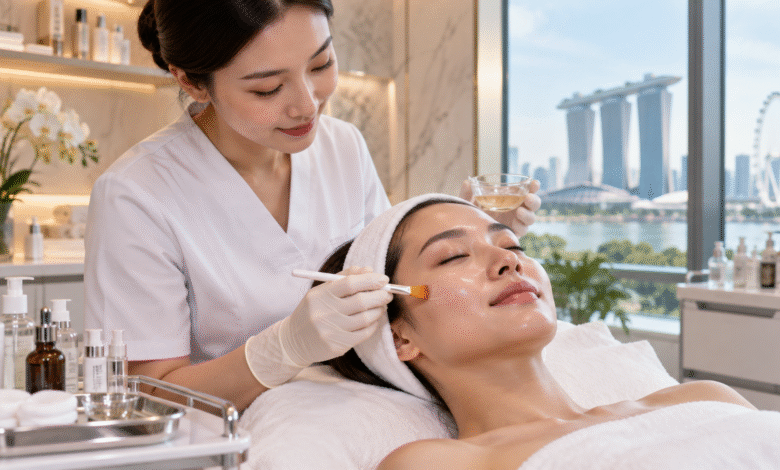
A regular skincare routine helps to keep the skin hydrated, support the skin barrier and protect from environmental damage. However, some concerns such as persistent dullness, uneven pigmentation, rough texture, acne and certain signs of photoaging may require a more targeted approach. Professional exfoliation treatments can target these issues on a deeper level than your regular skincare products.
That is one of the reasons why people looking for professionally supervised ways to improve their complexion continue to show interest in a chemical peel in Singapore. Chemical peels are a treatment that involves the use of selected chemical solutions to exfoliate the skin in a controlled manner. The depth of the treatment depends on the patient’s skin and goals. Many superficial concerns can be improved with treatment but the assessment of a professional and the selection of treatment are still important.
(H2) Why Go Beyond a Basic Skincare Routine?
Professional treatments and skincare products are for separate things. A cleanser can remove surface impurities, moisturizers can help support hydration, and sunscreen can reduce ultraviolet exposure. Active ingredients such as retinoids, vitamin C and exfoliating acids can also help to support improvements over time.
However, if you have persistent pigmentation, roughness or acne-related concerns, a basic routine may not be enough.
Chemical peels are a controlled exfoliation and the formulation is chosen based on the desired treatment. The American Academy of Dermatology lists a number of potential uses, including some types of acne, discoloration, melasma, dull complexion, rough skin, fine lines and sun damage.
That’s not to say a peel can replace your daily skin care. It can’t replace an appropriate routine, but it can complement it when a qualified professional decides the treatment is right for the patient’s skin.
(H2) How Do Chemical Peels Work
Chemical peels are performed by applying a chemical solution to the skin for a certain period of time. The formulation, concentration and application of the solution are responsible for exfoliation at a certain depth.
As the treated skin heals, the surface may be smoother and more even in appearance. Some peels also enhance processes that help to produce collagen and elastin, which can lessen the appearance of certain acne scars over time.
There is a lot of variation in experience between peel types. A superficial peel has a minimal recovery time. A medium or deep peel has a more aggressive response and a longer recovery time.
(H3) Light Chemical Peels
Superficial peels affect the very top layer of skin. They may be good for people looking for improvements in mild uneven tone dullness texture or certain acne concerns.
Because the treatment is less aggressive, providers may recommend a series of treatments rather than expecting dramatic results after one appointment. The AAD notes that refreshing or lunchtime peels may require more than one treatment to achieve the desired result.
(H3) Medium Depth Peels
Medium depth peels penetrate deeper into the skin and can address more obvious issues including some pigmentation problems, fine lines and acne scarring.
The trade-off is more recovery. Patients may experience redness, swelling, crusting and peeling as the treated skin heals.
(H3) Deep Peels
Deep peels are much deeper and take longer to recover from. They are used selectively because the deeper the treatment the greater the potential for complications.
If you are just looking for brighter skin, a deeper peel because it sounds more powerful may not make sense. The depth of treatment should be appropriate to the concern and the patient’s skin characteristics.
(H2) Which Skin Conditions Can Chemical Peels Help Treat?
One reason chemical peels stay popular is their versatility. When selected correctly, treatment can address a number of superficial skin issues.
(H3) Skin dullness and unevenness
Dead skin cells may also contribute to a rough or dull appearance. Controlled exfoliation can lead to a more uniform visual texture and fresher-looking skin.
But there are many possible causes of pigmentation. A professional assessment prior to starting treatment can assist in differentiating concerns such as post-inflammatory pigmentation, sun-related discoloration and melasma.
(H3) Acne and Pimples Marks
Some chemical peels may help treat acne by removing dead skin and excess oil that can clog pores. The AAD lists chemical peels as one of the procedures dermatologists might use for certain types of acne.
Peels can be part of any acne scar treatment plan as well. Dermatologists may recommend chemical peels to stimulate the production of collagen and elastin for depressed acne scars, but other or combination procedures may be needed for deeper scars.
(H3) Sun Damage & Fine Lines
Some peels can improve the appearance of fine lines and sun-damaged skin. The results are dependent on the depth of treatment and the extent of the underlying damage.
A peel cannot stop the natural aging process either. Skin care after treatment and sun protection is still important.
(H2) How Is Professional Treatment Different?
The chemical exfoliation need to be controlled. The outcome depends on the chemical solution used, its concentration, the time it is applied, the technique used and the patient’s skin condition.
This is especially important for patients with sensitive skin or past pigmentation changes, who need a professional evaluation.
The AAD recommends talking with a dermatologist before treatment and discusses expected results, downtime, side effects, skin coloration, medications and previous cosmetic procedures.
(H3) Special Consideration for Skin Tone
People with darker skin tones may develop pigmentation problems after skin injuries. This doesn’t mean chemical peels are automatically bad but provider experience with different skin tones becomes especially critical.
The AAD recommends finding a dermatologist who has experience using chemical peels on darker skin, as improper treatment can lead to permanent pigmentation changes.
(H2) What to Expect Post Chemical Peel
The depth of the peel dictates the recovery.
A light or superficial peel can cause redness and then scaling. According to the AAD, resurfacing peels take about one to seven days to heal. Medium peels usually take about seven to 14 days, while deep peels can take 14 to 21 days or more.
Aftercare usually involves keeping the skin moisturized and protecting it from sun exposure. Patients must not pick, scratch or pull at peeling skin, as disruption of the healing process may increase the risk of infection and scarring.
(H3) Most Important Aftercare Habits
Cleanse and moisturize according to the directions of the provider.
Avoid exposure to UV light on treated skin.
Don’t pick or peel flaky skin with your fingers.
“Hold off on using active skincare products again until you hear otherwise.
If you have unexpected or worsening symptoms, reach out to your provider.
Your provider should give you specific instructions for the exact peel that was performed.
(H2) Why Singapore’s Environment Matters
If you’re having a skin resurfacing treatment, sun exposure is something to think about. As Singapore is a tropical country, everyone is exposed to high levels of UV exposure all year round.
It is therefore important to consider sun protection before and after a chemical peel. Too much exposure during recovery can cause unwanted pigmentation and disrupt healing.
Your treatment plan should take into account your normal lifestyle including outdoor activities, commuting, travel and work commitments.
(H2) Why Choose Chemical Peels Over Skincare Alone?
The answer is: it is contingent upon your skin concern. Chemical peels are not always better than a good skincare routine. The two approaches can work together instead.
If a qualified provider discovers a concern that could benefit from controlled exfoliation, and you are comfortable with the recovery time involved, consider professional treatment.
A superficial peel may be enough for mild concerns. More serious problems might need a new treatment or a combination approach. Sometimes dermatologists combine treatments when it can lead to better or longer-lasting results, the AAD says.
(H2) What to Look for in a Medical Clinic
“The provider is just as important as the procedure.” Before you book, consider professional qualifications, experience with your skin type, consultation standards, treatment options, aftercare instructions and how the clinic talks about potential complications.
If you’re researching esthetic treatment providers, Bio Aesthetic Clinic is one of the options to consider when comparing professional chemical peel services in Singapore. When you consult, look for a treatment that suits your skin concerns, rather than picking something off marketing.
Singapore’s Health Sciences Authority has also warned consumers about unlabeled facial products that caused chemical burns, and stressed the need to buy cosmetic products from trusted sources and be wary of miraculous claims.
(H2) Questions to Ask Before Your Appointment?
A good consultation should provide enough information for you to make an informed decision.
(H3) Ask about these points of interest
What type of peel is right for my skin?
What specific concern is the treatment going to address?
What kind of down time can I expect?
Is there a higher risk for pigmentation for me?
How many sessions do I need?
What products should I not use before my treatment?
What aftercare will I require?
What are the alternatives to get the same result?
These questions help to move the conversation away from generic promises and toward an individualized treatment plan.
(H2) A Targeted Approach to Skin Improvement
Chemical peels can bridge the gap between daily skincare and more intensive esthetic treatments. They provide controlled exfoliation that may improve the look of certain issues such as dullness, uneven pigmentation, some acne problems, rough texture, fine lines and some forms of scarring.
But the treatment has to be selected carefully. A stronger peel does not always give a better result and the deeper you go the greater the recovery requirements.
(H2) Chemical Peel Treatments: The Bottom Line
Moving past basic skincare doesn’t mean forgetting the basics. Even when you introduce professional treatments to your skincare arsenal, daily sun protection, proper cleansing, hydration and a consistent routine are still the key.
The best first step for those considering a chemical peel in Singapore is a professional consultation. When you choose the right peel for your skin concern, prepare appropriately and follow aftercare guidelines, you can expect a more predictable treatment.
When appropriate for the person’s skin, goals and expectations, a chemical peel can be a valuable adjunct to a broader skin care regimen. “It should never be about using the strongest or most aggressive treatment but about using the right treatment.