The fusion of creativity and artificial intelligence has redefined the way digital content is created. Today’s AI-powered tools can transform simple text prompts into cinematic videos, realistic images, and visually stunning designs that rival professional studios. Whether you’re crafting marketing material, social media visuals, or short films, these innovative platforms empower anyone—from beginners to designers—to produce outstanding content with minimal effort. Here are six cutting-edge platforms that turn simple ideas into studio-quality art.
Invideo: Prompt-to-Art Powerhouse
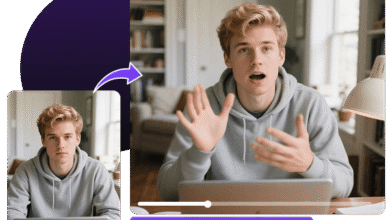
Invideo excels at converting everyday text prompts into breathtaking artwork, supporting styles like sketch, anime, watercolor, digital painting, abstract, and cartoon with remarkable detail and texture. Users describe their vision—such as “serene mountain landscape in oil painting style”—and the AI generates multiple variations, incorporating elements like brush strokes, pencil shading, and grain for authentic, expressive results. As a premier ai art generator, it handles both text-to-image and image-to-art transformations, uploading photos to restyle them or blending reference images for precise control using over 30 models like Nano Banana Pro and GPT image.
The platform’s ai video app extends this magic to mobile creation, allowing seamless art generation and editing on the go with features like real-time previews and prompt refinements. Dynamic scenes with people, objects, and backgrounds emerge realistically, while context-aware processing ensures outputs match detailed instructions faithfully. Fast generation in seconds, up to four unique outputs per prompt, and high-resolution results rival studio productions, empowering creators to iterate effortlessly anywhere.
Midjourney: Artistic Mastery from Discord
Midjourney produces intricate, visually striking art from concise prompts, excelling in diverse styles from photorealistic to illustrated, watercolor, or 3D renders. Accessible via Discord, users type “/imagine” followed by descriptions like “ethereal forest at dusk, glowing mushrooms, fantasy art,” yielding four variations for selection and refinement. Its strength lies in community-driven inspiration, where shared prompts and techniques help users craft hyper-detailed, award-worthy pieces with minimal effort.
Advanced features like the Blend command merge uploaded photos into cohesive art, while customizable aspect ratios and style versatility make it ideal for landscapes, characters, or conceptual visuals. Outputs often surpass expectations on the first try, even with complex ideas, delivering gallery-level quality.
DALL-E 3: Intelligent Detail Wizard
DALL-E 3 by OpenAI interprets nuanced prompts to create highly detailed, coherent images, perfect for professional illustrations or blog visuals. Prompts such as “vibrant cyberpunk cityscape with neon lights and flying cars” generate clean, contextually accurate scenes with inpainting for precise edits. It shines in convenience, producing “good enough” to exceptional results without steep learning curves, integrated seamlessly into tools like ChatGPT.
Support for outpainting expands canvases, while strong adherence to instructions ensures elements like lighting, composition, and mood align perfectly. Reliable for business uses like product mockups or presentations, it balances speed and sophistication.
Leonardo.ai: Game-Ready Art Factory
Leonardo.ai specializes in consistent, high-quality images for games, characters, and concepts, using fine-tuned models for prompts like “futuristic warrior in cybernetic armor, dramatic lighting.” It generates art with unparalleled speed, offering style presets and bulk creation for efficiency. Character consistency across images makes it a favorite for series or assets needing uniformity.
Tools for image-to-image, upscaling, and canvas editing allow deep customization, turning rough ideas into polished, studio-grade visuals rivaling professional renders.
Ideogram: Text-Perfect Designer
Ideogram stands out for embedding crisp, legible text into images, ideal for mockups, logos, or graphics with prompts like “modern poster: ‘Innovate Today’ in bold graffiti font, urban background.” Its Magic Prompt enhances descriptions automatically for better outputs. Excellent for design workflows, it handles complex compositions with reliable fidelity.
The edit Canvas refines details post-generation, supporting anime, photorealistic, or abstract styles while maintaining text accuracy—a rarity in AI art tools.
Flux: Hyper-Realistic Photo Emulator
Flux delivers photorealistic images that mimic professional photography, excelling with prompts like “close-up portrait of an elderly artisan crafting pottery, natural light.” Trained for lifelike humans, textures, and lighting, it avoids common AI artifacts for convincing results. Free access and total control appeal to technical users seeking realism.
Advanced parameters for poses, expressions, and environments yield outputs indistinguishable from studio shoots, perfect for e-commerce or advertising.
Conclusion
These platforms—starting with invideo’s versatile art engine—democratize studio-quality creation, turning anyone into a visual artist with just words. Experiment with Midjourney for artistry, DALL-E for reliability, Leonardo for consistency, Ideogram for text integration, and Flux for realism to match any project need. Adopting them accelerates workflows, cuts costs, and unlocks endless creativity, revolutionizing how ideas become masterpieces.