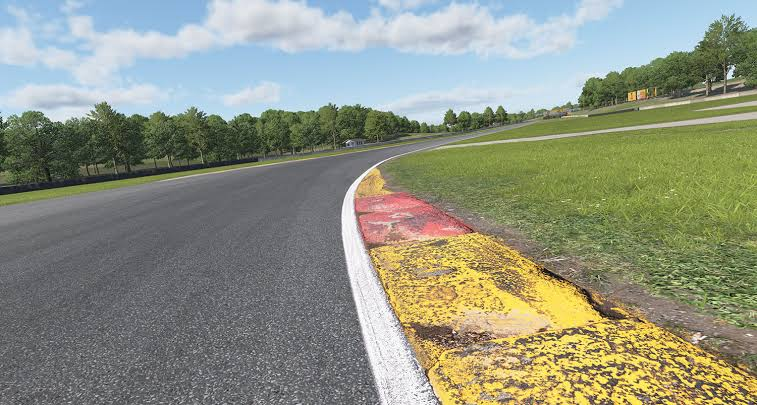
For decades, American performance drivers treated track days as the only serious way to develop skill, test car setups, and build competitive confidence. The logic was straightforward: nothing replicates real speed, real g-forces, and real consequence better than actually driving on asphalt. That thinking still holds weight in certain circles, but it has started to shift in a meaningful way across amateur, semi-professional, and club racing communities throughout the United States.
The shift is not about replacing passion or discarding physical experience entirely. It is about a growing recognition that real track days carry costs, constraints, and risks that have become harder to justify when alternatives have matured to a point of genuine usefulness. Simulation technology built around GT-class performance has closed enough of the gap that drivers, teams, and instructors are actively restructuring how they train and prepare. This article examines the practical reasons why that change is happening.
The Core Utility of GT Simulation for Serious Drivers
When people refer to gt simulation in the context of driver development, they are describing a category of high-fidelity practice environments built around the specific handling characteristics, power delivery, and braking behavior of GT-class vehicles. These are not arcade systems or general driving games. They are purpose-built platforms that replicate the mechanical behavior of real cars on real circuits with enough accuracy to produce meaningful driver feedback and measurable skill transfer.
The value is not that simulation is identical to real driving. The value is that it is repeatable, controllable, and accessible in ways that physical track time is not. A driver can run the same corner sequence fifty times in an afternoon, change one variable, and observe the effect in isolation. That kind of controlled repetition is nearly impossible to achieve on an actual circuit where weather, traffic, tire wear, and fuel load are all changing simultaneously.
Skill Transfer from Simulation to Real Track Performance
Research into motorsport training consistently shows that cognitive pattern recognition developed in simulation carries over to physical performance. The mental process of reading a corner entry, selecting a braking reference point, and managing rotation through an apex is fundamentally the same whether the environment is virtual or physical. The body learns to anticipate, sequence, and react. Those learned sequences transfer when the driver is placed behind a real wheel.
What simulation cannot replicate perfectly is the vestibular sensation of g-force. However, that limitation matters less than most assume for the majority of skill development. Throttle discipline, steering inputs, and braking threshold management are all trainable without physical g-force because the visual and mechanical feedback in modern simulation is sufficient to build accurate mental models of what the car is doing.
Cost Structure Favors Simulation at Every Level
Running a real track day in the United States involves a layered set of costs that add up quickly. Track rental or event registration, fuel, tires, transportation, potential mechanical wear, and the risk of an incident that damages a vehicle all combine to make a single day of track time a significant financial commitment. For drivers who want regular practice, the cumulative cost becomes a serious barrier over the course of a season.
Simulation infrastructure, once established, eliminates most of that recurring cost. A driver using a quality gt simulation platform can complete the equivalent of dozens of track sessions for a fraction of the cost of a single physical event. For teams managing multiple drivers or running development programs on a budget, the financial argument alone is often decisive.
Budget Allocation and Program Sustainability
Beyond individual sessions, the sustainability of a development program changes when simulation is integrated. Teams that previously had to choose between track time and other program expenses now have a way to maintain driver activity between events without drawing down their operational budget. Drivers can stay sharp across the entire off-season without the financial pressure of booking physical sessions during periods when track access is expensive or limited.
Weather and Calendar Constraints No Longer Control Training Schedules
A significant portion of the United States experiences weather conditions for several months of the year that make outdoor track activity impractical or impossible. Snow, ice, rain, and extreme cold shut down circuits and limit what drivers can realistically accomplish. For programs based in the Midwest, Northeast, or mountain regions, the gap between competitive seasons can stretch for months.
Simulation removes that dependency entirely. A driver in Minnesota can work through a full circuit in the middle of January with the same level of productive engagement as a driver in Texas running outdoors in October. The training calendar stops being dictated by geography and climate, which has a measurable impact on year-round development consistency.
Risk Elimination Without Reducing Competitive Preparation
Track incidents, even minor ones, carry consequences that extend beyond the immediate moment. Damage to a vehicle, injury risk to the driver and other participants, and the psychological effect of an incident all represent real costs that compound over a career. For amateur and club-level drivers who are funding their own programs, a single incident can end a season or permanently change their approach to the sport.
GT simulation removes the physical risk from the practice equation without diminishing the competitive value of the session. A driver can push beyond their current comfort threshold, experience what happens at the limit, and recover from mistakes without any real-world consequence. That freedom to fail safely is one of the most underappreciated advantages of simulation-based training.
Confidence Building Through Consequence-Free Exploration
Experienced instructors in motorsport often note that the biggest limiting factor for developing drivers is not physical ability but psychological hesitation. Drivers who have experienced incidents, or who fear them, rarely push to the level needed to extract full performance from a car. Simulation allows those drivers to explore the edges of what a GT-class vehicle does without the anxiety that physical consequence creates. Over time, that exposure builds a more accurate and less fearful mental model of the car’s behavior.
Data and Feedback Are Immediate and Objective
On a real track, collecting and interpreting driving data requires either an onboard data system, a dedicated data engineer, or video review after the session. Many club-level programs do not have access to that infrastructure, which means drivers often complete a full day of track time without any clear understanding of where their performance can improve.
In a gt simulation environment, data is inherent to the platform. Lap times, braking points, steering inputs, throttle application, and corner speeds are all recorded and available for review immediately. A driver can see exactly where a lap was lost or gained, compare their line to a reference, and make adjustments within the same session rather than waiting for the next event.
Track Familiarization Before Physical Arrival
One of the consistent advantages reported by drivers using simulation is the ability to arrive at a circuit already familiar with its layout, key reference points, and rhythm. Circuits like Road America, Laguna Seca, and Watkins Glen each have sequences that take physical drivers multiple sessions to fully understand. Simulation allows a driver to develop working knowledge of those sequences before they ever sit in the real car on that surface.
According to research on skill acquisition and cognitive mapping in complex motor tasks, prior mental rehearsal and virtual environment practice significantly reduce the time required to achieve competency in unfamiliar physical settings. That principle applies directly to circuit familiarization.
Instructor Access and Remote Coaching Are More Practical
Geography has always limited coaching relationships in motorsport. A driver in Denver and an experienced instructor in North Carolina cannot easily share a productive session without significant travel and coordination. Simulation changes that dynamic. Both parties can be present in the same virtual environment from separate physical locations, reviewing data together and working through specific scenarios in real time.
For programs trying to build structured coaching relationships without centralizing everyone in one location, gt simulation makes that kind of distributed instruction viable. The coaching session is no longer dependent on both people being at the same physical track on the same day.
Car Setup Development Without Track Time Costs
Tuning a GT-class vehicle involves making changes to suspension geometry, damper settings, brake bias, and aerodynamic configuration and then evaluating the effect on handling balance. Doing that work on a real track is expensive, time-consuming, and requires consistent conditions to produce reliable comparisons. Simulation compresses that process significantly.
Teams using gt simulation for setup work can evaluate configuration changes across many laps in controlled conditions, identify the direction they want to develop a setup, and arrive at a physical event with a much narrower range of variables to test. That preparation changes how efficiently a team can use their actual track time.
Accessibility for a Wider Range of Drivers
Not every driver who wants to develop seriously in GT-class competition has access to a vehicle, a local circuit, or a well-funded program. Simulation has lowered the entry point substantially. A driver can engage with realistic GT-class training at a fraction of the cost of physical participation, develop a meaningful skill base, and enter real competition with more preparation than was previously possible at that budget level.
This has broadened the talent pool in American club racing and made serious development accessible to drivers who would previously have been priced out of consistent practice.
Measurable Progress Across a Defined Training Curriculum
Perhaps the most structurally important shift simulation brings to driver development is the ability to run a defined curriculum with measurable outcomes. Physical track days are difficult to standardize because conditions change constantly. Simulation allows a coach or program director to build a structured sequence of sessions, each with clear objectives and measurable benchmarks, and then track driver progress against those benchmarks over time.
That kind of structured accountability was previously reserved for professional programs with full-time coaching staff and significant budgets. Simulation has made it available at the club and semi-professional level, which changes what systematic development looks like for American performance drivers at every tier.
Conclusion: A Practical Shift in How Drivers Prepare
The move toward gt simulation in American performance driving is not a rejection of real track experience. It is a rational response to the practical limitations of physical track access and a recognition that simulation has matured into a tool that produces genuine, transferable development outcomes. The drivers and programs integrating simulation into their preparation are not doing so out of convenience. They are doing so because the results are visible in their lap times, their consistency, and their readiness when they arrive at real events.
Track days will remain an important part of the sport. The physical environment, the mechanical sensations, and the social dimension of a real circuit are not things simulation replaces entirely. What simulation does replace is the dependency on track time as the only serious path to improvement. For American drivers navigating real budgets, real schedules, and real risk calculations, that shift represents a significant and durable change in how competitive preparation works.