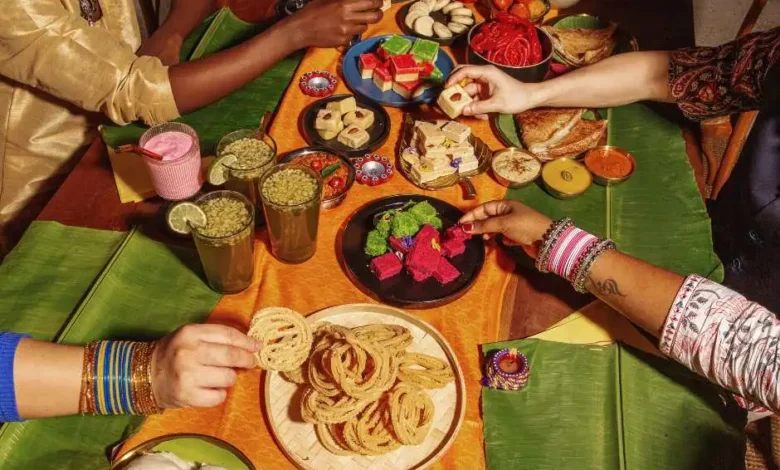
Quick Answer: India is one of the most rewarding food destinations on the planet. Every region tells a completely different culinary story, from spiced street snacks in Old Delhi to coconut-laced seafood curries along the Kerala coast.
Introduction
There’s a moment that happens to almost every traveler who lands in India for the first time. You step outside the airport, and before you’ve even worked out where you’re going, the smell reaches you. Roasting spices, warm bread, something frying nearby. Your stomach reacts before your brain does.
That moment is the whole trip in a single breath, and it only gets better from there.
India’s food culture isn’t something you observe from a distance. You get pulled into it. A chai wallah presses a clay cup into your hand before you’ve asked. A street vendor points at his best dish with genuine pride. A local family at the next table insists you try something from their thali. For food lovers, this country is less about sightseeing and more about eating your way through centuries of living, breathing tradition.
And no two regions taste remotely the same.
Why India Is Unlike Any Other Food Destination
India has over 30 distinct regional cuisines shaped by climate, religion, agriculture, and centuries of trade. Mustard-heavy fish curries in West Bengal share almost nothing with the coconut dishes of Kerala. Dal baati churma in Rajasthan tastes nothing like a Goan prawn vindaloo. Yet all of it is Indian.
Planning from the UK is straightforward. Direct flights connect Heathrow, Gatwick, and Manchester to Delhi, Mumbai, Chennai, and Bengaluru. Comparing cheap flights to India across departure airports is a smart early step, since fares vary significantly by route and date.
North India: Big Flavors and Street Food Culture
Old Delhi: Chandni Chowk and Beyond
If there’s one food neighborhood every visitor should walk through, it’s Chandni Chowk. Paranthe Wali Gali is a single lane dedicated to stuffed flatbreads. Shops here have been serving the same recipes for over a hundred years, with fillings ranging from spiced potato to dried fruit and rabri cream. Nearby, chole bhature at Natraj Dahi Bhalle (a corner institution since 1940) is a proper Delhi breakfast: deep-fried bread with a slow-cooked chickpea curry, eaten with a glass of cold lassi.
Amritsar: Punjab’s Food Capital
Amritsari kulcha, a tandoor-baked stuffed bread served with chana and pickle, is one of the finest things you can eat in India. Kesar Da Dhaba, open since 1916, still slow-cooks dal makhani overnight in clay pots.
South India: Lighter, Aromatic, and Deeply Satisfying
Hyderabad: Biryani Done Properly
Hyderabadi dum biryani is in a category of its own. Layers of marinated meat, saffron rice, and whole spices sealed and slow-cooked together, the result is fragrant and complex. Paradise Biryani on MG Road is an institution. Shadab Restaurant near Charminar serves a version locals argue is even better. While in the Old City, also try haleem, a silky,slow-cooked wheat and meat porridge that takes hours to prepare and is genuinely unforgettable.
Kerala: Coconut, Seafood, and the Sadya
In Kochi’s Fort area, small restaurants serve fish molee alongside appam, a soft, lacy rice pancake. The Kerala sadya, a vegetarian feast of up to 28 dishes on a banana leaf, is a full cultural experience. Eating one during the Onam festival in August or September is especially memorable.
West India: Spice, Coast, and Colonial Flavors
Mumbai: The Street Food Capital
Mumbai’s food is fast, flavourful, and completely alive. Vada pav, a spiced potato fritter in a soft bun with green chutney, is sold from stalls outside every train station and costs almost nothing. At Chowpatty Beach in the evening, vendors sell bhel puri and pani puri from carts that have barely changed in decades. Elco Pani Puri Centre near Bandra is a local favorite worth finding.
Mohammad Ali Road during Ramadan is extraordinary. Nalli nihari, seekh kebabs, and malpua, fried pancakes dipped in syrup, appear at stalls that only operate after dark.
Goa: Where India Meets Portugal
Goa’s cuisine carries centuries of Portuguese influence. Fish curry made with kokum and coconut is tangy and refreshing. The vindaloo here, built on an actual vinegar-and-spice marinade, not curry powder, is a completely different dish from anything labeled vindaloo outside India. Café Real in Panaji and Martin’s Corner in Betalbatim both serve traditional Goan food without tourist-menu adjustments. East India: Sophisticated, Subtle, Underrated
Kolkata: The City That Takes Food Personally
Kolkata has one of the most food-obsessed cultures in India. Peter Cat on Park Street serves a legendary chelo kebab: skewered meat over butter rice with a fried egg, a dish brought by Armenian traders. At Decker’s Lane, puchka (Kolkata’s tangier, darker take on pani puri) has a devoted local following. K.C. Das on Esplanade has been making mishti doi and rasgulla since 1868, both Bengali inventions that eventually spread across the whole country.
Best Cities for Food Lovers at a Glance
| City | Signature Flavors | Must-Visit Spot |
|---|---|---|
| Delhi | Chole bhature, paranthe, lassi | Chandni Chowk, Natraj Dahi Bhalle |
| Amritsar | Kulcha, dal makhani, langar | Kesar Da Dhaba, Golden Temple |
| Mumbai | Vada pav, pani puri, nihari | Chowpatty Beach, Mohammad Ali Road |
| Hyderabad | Dum biryani, haleem, and Iranian chai | Paradise Biryani, Shadab Restaurant |
| Kolkata | Puchka, chelo kebab, mishti doi | Decker’s Lane, Peter Cat, K.C. Das |
| Kochi | Fish molee, appam, sadya | Fort Kochi waterfront |
| Goa | Fish curry, vindaloo, balchão | Café Real, Martin’s Corner |
Practical Tips Before You Go
- Start slowly with street food. Give your stomach two or three days to adjust before eating adventurously.
- Eat where the queue is longest. High turnover means fresher food. Empty stalls at peak meal times are a warning sign.
- Vegetarian food here is extraordinary. Even dedicated meat-eaters should spend a few days exploring it. States like Gujarat, Kerala, and Tamil Nadu are especially impressive.
- Ask a local, not the hotel. Hotel staff recommends safe options. Locals tell you where the food is genuinely good.
October through February is the best window. Cooler weather makes walking to food markets comfortable, and most major food festivals fall within this period.
The Part Nobody Warns You About
The best food memory from an Indian trip usually isn’t from a famous restaurant. It’s the chai on a station platform at 6 am. The thali someone’s grandmother made. The dhaba where a stranger ordered for the whole table, and it was all excellent.
India’s food culture is generous by nature. People share and insist you try one more thing. The dishes are the entry point, the people and the stories are what you carry home.
Frequently Asked Questions
Is street food in India safe for first-time visitors?
Generally, yes, with some care. Choose busy stalls where food is cooked fresh and visibly. Avoid pre-cut fruit left sitting out. Give yourself two or three days before eating very adventurously.
What is the best city for food in India?
Delhi has the most variety. Hyderabad is unbeatable for biryani. Kolkata is arguably the most underrated food city in the country. Each one rewards a food-focused visit differently.
How affordable is eating in India for UK travelers?
Very affordable. Street snacks cost 20 to 80 rupees (roughly 20 to 80 pence). A good sit-down meal at a local restaurant runs between 200 and 500 rupees. Even solid mid-range dining costs a fraction of UK prices.