Stainless Steel Laser Cutting: The Precision Solution for Medical, Food & Architectural Fabrication

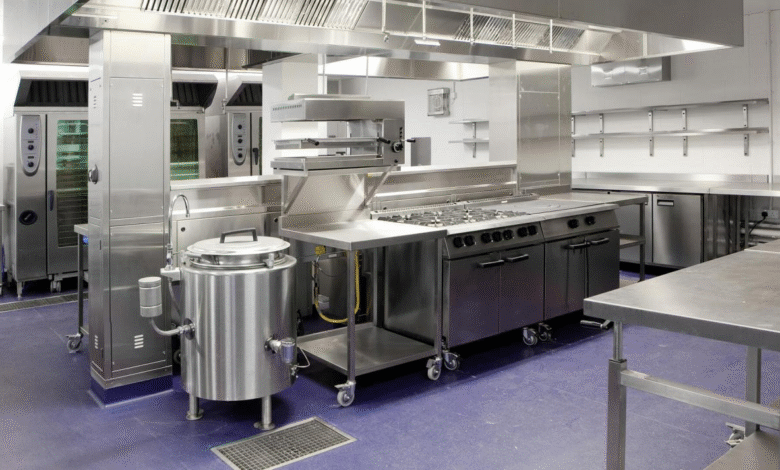
Stainless steel is everywhere in modern industry. You see it in hospital surgical trays, in commercial kitchen countertops, in elevator panels, and in brewery equipment. Its corrosion resistance, strength, and clean appearance make it the go-to material wherever hygiene, durability, or aesthetics matter.
But fabricating stainless steel is not as easy as it looks. Traditional methods like shearing, plasma cutting, or sawing often leave burrs, cause warping, or create oxides that can later rust. For industries that demand perfection, those defects are not acceptable.
That is why more fabricators are turning to stainless steel laser cutting. This technology cuts cleanly, quickly, and without damaging the material’s natural properties. In this article, we will explore how a modern fiber laser cutting machine handles stainless steel, what thicknesses are possible, and why it has become the standard for medical, food, and architectural applications.
The Challenge of Cutting Stainless Steel the Old Way
Stainless steel is tough. It work-hardens quickly, conducts heat poorly, and resists abrasion. When you cut it with a mechanical shear or a plasma torch, several problems arise:
Burrs and rough edges – Require secondary deburring, which adds labor and cost.
Heat distortion – Plasma and oxy-fuel put large amounts of heat into the sheet, causing the material to warp, especially on thin gauges.
Oxide scale – Oxygen-based cutting leaves a dark, crusty edge that must be ground off before welding or finishing.
Micro-cracking – Mechanical shearing can create micro-cracks that later propagate under stress.
For a medical instrument tray or a food conveyor part, these defects are deal-breakers. Oxide scale can trap bacteria. Burrs can cut gloves or scratch surfaces. Warping ruins fit-up.
Fiber laser cutting solves all of these problems in one step.
What Makes a Fiber Laser Ideal for Stainless Steel?
A fiber laser generates a beam with a wavelength of 1064 nm, which is readily absorbed by reflective metals like stainless steel. The beam is focused to a spot as small as 0.1 mm, delivering enormous energy density. The result is a clean cut with minimal heat-affected zone (HAZ).
For stainless steel, two assist gas options are common:
Nitrogen cutting – Produces a bright, oxide-free edge. The nitrogen pushes molten metal out of the kerf without reacting chemically. This is the preferred method for food, medical, and architectural parts that go directly to welding or passivation.
Oxygen cutting – Uses an exothermic reaction to speed up cutting on thicker plates (often >15mm). It leaves a thin oxide layer that can be removed by grinding or passivation.
Most fabricators who work with sheet metal (≤15mm) choose nitrogen cutting. The edge is ready for finishing immediately.
To see exact thickness and speed capabilities for each power level, you can refer to detailed stainless steel laser cutting reference charts that show clean-cut limits with nitrogen versus oxygen.
Thickness and Power: What Can You Cut?
Not all stainless steel jobs are the same. A small shop cutting 2mm 304 for kitchen backsplashes needs a different machine than a heavy fabricator cutting 20mm 316 for marine equipment.
Here is a practical guide based on real-world cutting data:
| Laser Power | Clean Cut (Nitrogen) Max Thickness | Oxide Cut (Oxygen) Max Thickness | Typical Speed on 2mm SS (N₂) |
|---|---|---|---|
| 1 kW | ≤ 8 mm | ≤ 16 mm | 8–10 m/min |
| 3 kW | ≤ 15 mm | ≤ 25 mm | 12–15 m/min |
| 6 kW | ≤ 20 mm | ≤ 30 mm | 18–22 m/min |
| 12 kW | ≤ 30 mm | ≤ 40 mm | 25–30 m/min |
For most job shops, a 3kW machine is the sweet spot. It cuts up to 15mm stainless steel cleanly, handles 90% of everyday orders, and delivers fast cycle times on thin sheet. A 1kW machine is sufficient for medical device or electronics enclosures (typically ≤5mm). A 6kW or 12kW machine is aimed at high-volume production or heavy plate work.
Which Stainless Steel Grades Are Compatible?
One advantage of laser cutting is that it works on virtually any stainless steel grade and surface finish without changing tooling. The most common grades cut by fabricators include:
301 Stainless Steel – High strength, used for springs and structural stampings.
304 Stainless Steel – The all-purpose grade for kitchen equipment, enclosures, and tanks.
304 with #4 Brushed Finish – Satin finish that hides scratches, used for handrails and food prep surfaces. Laser cutting does not damage the existing brushed grain.
304 with #8 Mirror Polish – Highly reflective decorative finish used for architectural panels. Non-contact laser cutting preserves the mirror surface.
316 / 316L Stainless Steel – Marine grade with superior corrosion resistance. Used for medical devices, pharmaceutical equipment, and coastal architecture.
A quality laser cutter handles all of these without scratching or marring pre-finished sheets. The key is careful material handling – using protective film or soft rollers – combined with the non-contact cutting process.
Applications: Where Stainless Steel Laser Cutting Shines
Fabricators across multiple industries rely on stainless steel laser cutting to produce high-quality parts efficiently.
Food & Beverage Industry
Stainless steel is the standard for food contact surfaces because it is non-porous, easy to clean, and does not corrode. Laser cutting produces smooth, burr-free edges that do not trap food particles or bacteria. Typical parts include:
Commercial kitchen countertops and backsplashes
Conveyor system components and food chutes
Brewery and dairy equipment panels
Because laser cutting does not create oxide scale, these parts can go directly to welding or electropolishing without extensive cleaning.
Architectural & Construction
Architects specify stainless steel for building accents because of its clean, modern look. Laser cutting allows intricate patterns, sharp corners, and tight tolerances that are difficult to achieve with plasma or waterjet. Common architectural parts include:
Elevator door panels (mirror or brushed finish)
Handrails, balustrades, and decorative screens
Building cladding and column covers
The ability to cut pre-finished sheets without scratching is a major advantage. A #4 brushed panel comes off the laser ready to install.
Industrial Equipment
Machine builders and equipment manufacturers use stainless steel for control cabinets, machine guards, hoppers, and chutes. Laser cutting provides the flatness and edge quality needed for automated welding and assembly.
Electrical enclosures and control cabinets
Machine guards and safety covers
Hoppers, chutes, and custom fabrication for OEMs
Using nitrogen cutting, edges are oxide-free, which improves weld quality and reduces post-weld cleanup.
Medical & Pharmaceutical
The medical industry demands the highest level of cleanliness and precision. Stainless steel parts for surgical and pharmaceutical applications must have no burrs, no sharp edges, and no surface contamination. Laser cutting delivers that consistency.
Surgical instrument trays and sterilizer racks
MRI / CT scanner enclosures (non-magnetic 316L)
Pharmaceutical cart and table components
Many medical fabricators pair laser cutting with passivation to restore the chromium-oxide layer, ensuring maximum corrosion resistance.
Quality and Precision: What to Expect
When evaluating a stainless steel laser cutting machine, two metrics matter most: positioning accuracy and edge quality.
A well-built fiber laser cutter achieves ±0.02 mm/m positioning accuracy and ±0.01 mm repeatability. That means if you cut 100 identical parts, they will all be within 0.01 mm of each other – essential for nesting and automated assembly.
Edge quality is measured by:
Dross – Re-solidified metal that sticks to the bottom edge. A good nitrogen cut produces no dross.
Oxide scale – Dark discoloration from oxygen cutting. Nitrogen cuts produce none.
Burr height – Ideally zero. Laser cuts are burr-free, saving a deburring step.
For critical applications, you can request a sample cut from the manufacturer. Many suppliers (including YIHAI) will cut your part from your material and send it back for inspection – free of charge.
Surface Finishes After Laser Cutting
One common concern among fabricators is how laser cutting affects surface finish. Because the process is non-contact and uses a focused beam, it does not scratch or distort the surface. However, there are a few best practices:
Protective film – Keep the protective film on pre-finished sheets during cutting. Remove it after cutting to avoid residue.
Edge finishing – While the cut edge is clean, it may appear slightly darker than the parent material on thicker cuts. A quick pass with a fine abrasive or passivation restores uniformity.
Brushed and mirror finishes – Laser cutting does not disturb the grain or polish. With proper handling, a #8 mirror panel will remain flawless after cutting.
After cutting, you can apply secondary finishes such as polishing, electroplating, passivation, sandblasting, or powder coating. The clean laser edge provides an excellent starting point – less preparation time and better adhesion.
Why Fabricators Are Switching to Laser
For shops that have historically used shearing, plasma, or sawing, the move to a stainless steel laser cutting machine may feel like a big step. But the benefits add up quickly:
No tooling costs – Cut any shape without buying punches or dies.
Less secondary work – No deburring, no grinding oxide, no straightening warped parts.
Higher material utilization – Nesting software reduces waste by 15–20%.
Faster turnaround – Cut complex parts in minutes instead of hours.
One job shop owner recently described the switch: “We used to plasma cut 304 sheet for food equipment. Every part needed grinding to remove oxide and smooth the edge. Now with a fiber laser, we cut, deburr, and weld – three steps gone. Our throughput doubled.”
Selecting the Right Machine for Your Shop
If you are considering adding a laser cutter for stainless steel, ask these questions:
What thickness range do you cut most often?
≤8mm → 1kW is sufficient.
≤15mm → 3kW is ideal.
≤25mm → 6kW or higher.
Do you work with pre-finished sheets (brushed, mirror)?
Yes → Look for machines with soft work supports and non-contact cutting. Most fiber lasers are fine.
What is your monthly production volume?
Low volume → 1kW or 3kW entry-level. High volume → 6kW+ for faster speeds.
Do you need automation?
Automated loading/unloading and part sorting are available for high-throughput shops.
Conclusion: The Clear Choice for Precision Stainless Steel Fabrication
Stainless steel is too valuable a material to cut with outdated methods. Burrs, oxide scale, and warping all add cost and reduce quality. Laser cutting eliminates these problems while adding speed and flexibility.
Whether you produce medical trays, food conveyor parts, elevator panels, or marine components, a modern fiber laser cutter designed for stainless steel laser cutting will pay for itself through reduced labor, less material waste, and the ability to take on more complex jobs.
If you are ready to see how your parts would cut, the next step is simple: send a drawing or a sample sheet. Most manufacturers (including YIHAI) offer a free sample cutting service. You get back real parts, cut on the actual machine, with measurement reports and edge quality photos. No obligation, just proof.
Then you can decide with confidence.