Robin Niblett: The Strategic Mind Shaping Global Policy in a Fractured World
How Robin Niblett’s Leadership, Ideas, and Global Influence Continue to Guide Debate on Geopolitics, Economics, and International Cooperation

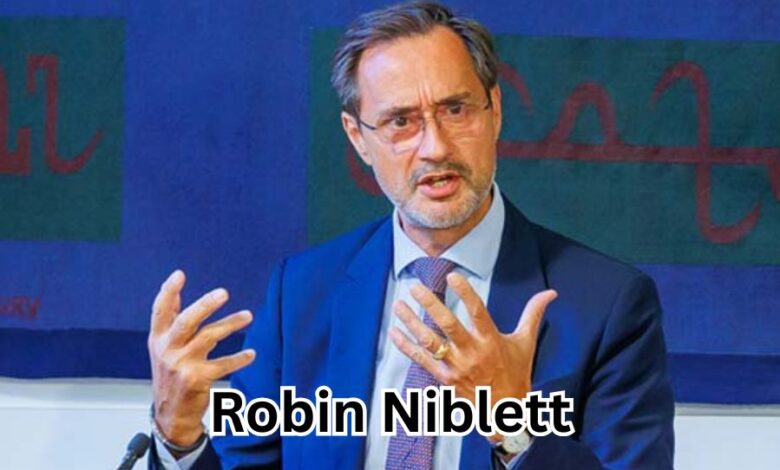
Robin Niblett is one of the most respected voices in international affairs, global strategy, and public policy. In a world marked by power competition, economic disruption, and political uncertainty, his name is closely associated with thoughtful analysis and practical insight. For over two decades, he has contributed to debates on foreign policy, transatlantic relations, globalization, and the future of international cooperation, influencing governments, businesses, and policy communities across Europe, North America, and beyond.
Robin Niblett is notable for explaining complex geopolitical trends with intellectual rigor and accessibility. He focuses on urgent global issues, including shifting power dynamics, the weakening of multilateral institutions, energy security, economic resilience, and the future of the liberal international order. His work helps leaders and observers navigate a fragmented, unpredictable world.
Who Is Robin Niblett?
Robin Niblett is widely known as a foreign policy expert, strategist, and policy leader. He built his reputation through years of work in international relations and institutional leadership, particularly in global governance and strategic affairs. Over time, he became recognized not only for his knowledge of world politics but also for his calm, balanced approach to complex issues.
His profile rose markedly during his leadership of a top international affairs institution. In that role, he shaped discourse on diplomacy, trade, security, and alliances. He became a trusted commentator on topics such as Europe’s future, the United States’ global role, Brexit, China’s rise, and growing geopolitical rivalry.
Robin Niblett’s Leadership in Global Policy
A respected institutional voice
A major reason Robin Niblett is so widely admired is the quality of his leadership. He is known for combining strategic vision with practical judgment. Rather than promoting extreme positions, he has often encouraged policymakers to consider the long-term consequences, institutional stability, and the value of international cooperation. This has made him especially relevant during periods of crisis, when political debate often becomes emotional and polarized.
Under his leadership, policy discussions became more closely aligned with real-world decision-making. He emphasized that research should not remain trapped in theoretical debate. Instead, it should inform how governments, investors, and institutions respond to emerging threats and opportunities. This approach helped strengthen the role of policy analysis in shaping international strategy.
A bridge between ideas and action
Robin Niblett stands out for his role as a bridge between intellectual analysis and practical policymaking. Many experts can explain global events, but fewer can connect those explanations to clear policy choices. His work often highlights how global trends affect national decisions, business strategies, and regional security frameworks. This ability to connect abstract trends with practical consequences is one reason his analysis remains highly valued.
Robin Niblett and the Changing Global Order
Understanding a fractured world
Robin Niblett’s key contribution is his analysis of an increasingly unpredictable and divided world. He writes and speaks on how international politics shifts under strategic rivalry, populism, technological disruption, and economic fragmentation.
His analysis often begins with a simple yet important observation: the international order that shaped the post-Cold War era no longer operates as it did. Institutions are under strain, trust between allies has weakened in some areas, and competition between major powers has intensified. Robin Niblett has argued that these developments require new forms of leadership, stronger resilience, and a more realistic understanding of national interest.
Geopolitics and economic uncertainty
Robin Niblett is insightful on the link between geopolitics and economics. He shows that economic policy cannot be separated from national security, supply chains, or strategic dependence. This view has grown in importance as nations reconsider trade, industrial policy, and energy.
He explains why economic resilience now rivals efficiency in importance. He stresses that governments and corporations must prepare for disruptions to trade, investment, and resources stemming from political tensions. His perspective has become central to policy discussions, showing his forward thinking.
Why Robin Niblett’s Analysis Matters Today
A trusted voice in uncertain times
Robin Niblett’s work stands out for its credibility. He avoids sensationalism, focusing on structural shifts, risk, and realistic policy options. This approach is useful when debates are shaped more by noise than evidence.
Niblett’s analysis matters because leaders today must balance national interests with global cooperation and respond to crises without losing sight of larger strategic shifts. He offers a framework for disciplined, thoughtful problem solving.
A global audience beyond academia
His enduring influence stems from a broad audience. Niblett speaks to scholars, diplomats, business leaders, journalists, and policymakers. His insights are relevant to anyone seeking to understand evolving global dynamics, making his name central to the foreign policy debate.
The importance of moderation and balance
In times of division, Niblett’s measured tone is a key strength. He rejects framing global politics as a simple good-versus-evil dichotomy, focusing instead on competing interests, institutional constraints, and geopolitical realities. This balance gives his work valued seriousness.
The Lasting Influence of Robin Niblett
Robin Niblett’s impact is evident in how policymakers and analysts discuss global change. Themes that he has emphasized for years, such as strategic autonomy, economic security, alliance management, and institutional adaptation, are now central to international debate. His thinking has helped shape not only elite policy circles but also wider public understanding of how the world is changing.
As global tensions rise, the need for clear, responsible thinking grows. Niblett stands out for offering this. He guides people from reaction to reflection and a deeper understanding of the forces and choices shaping our future.
Conclusion
Robin Niblett uniquely combines intellectual depth, policy relevance, and balance. His work addresses key questions from globalization’s future to the strength of alliances and the fractured international order. He earns respect through careful, consistent analysis—never sensational or dogmatic.
In an unstable age, Robin Niblett’s voice matters. His work guides discussion on geopolitics, economics, diplomacy, and international cooperation. For those seeking to grasp global events, Niblett remains essential.
(FAQs)
Who is Robin Niblett?
Robin Niblett is a well-known expert in international relations, global policy, and geopolitics. He is recognized for his leadership in policy institutions and for his analysis of world affairs, economic strategy, and international cooperation.
Why is Robin Niblett important in global policy?
Robin Niblett is important because he has consistently offered clear and balanced insight into major global challenges. His work helps explain issues such as geopolitical tension, economic uncertainty, alliance politics, and the future of the international order.
What topics is Robin Niblett known for?
He is known for discussing geopolitics, foreign policy, globalization, transatlantic relations, economic security, global governance, and the changing balance of power in international affairs.
Why does Robin Niblett’s analysis stand out?
His analysis stands out for its measured, strategic approach and grounding in long-term thinking. He avoids simplistic arguments and instead focuses on realistic policy choices in a complex global environment.
Is Robin Niblett relevant to current international debates?
Yes, Robin Niblett remains highly relevant. His ideas on resilience, strategic competition, and international cooperation continue to shape discussions about how governments and institutions should respond to a rapidly changing world.