The Death of the Traditional Job Site:How Off-Site Manufacturing Is Rescuing Industrial Budgets

Heavy industry has a multi-billion-pound problem. Across the UK and global markets, facility operators are racing to upgrade their infrastructure to meet aggressive decarbonisation targets. Yet, the traditional method of executing these upgrades—shipping raw materials to an active plant and assembling everything outdoors—has become a massive economic liability.
Crippled by unpredictable labour shortages, volatile weather, and the severe safety risks of conducting hot-work next to live chemical lines, on-site construction routinely blows past budgets and deadlines. To survive this execution crisis, plant developers are fundamentally changing how industrial infrastructure is built. They are moving the hardest engineering work off the job site entirely.
Here is how the shift to precision off-site manufacturing is keeping the clean energy transition on track:
1. Swapping Construction for “Plug-and-Play” Manufacturing
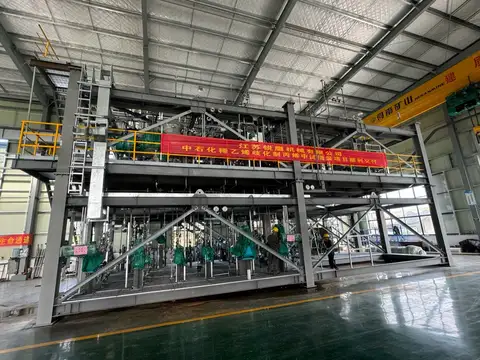
The most immediate fix to the project management nightmare has been the rapid adoption of modular process skids. Instead of coordinating a chaotic dance of pipefitters, electricians, and welders on a muddy factory floor, operators are now ordering entire processing units pre-built. Engineered inside pristine, climate-controlled manufacturing bays, these self-contained systems arrive at the facility gate fully wired, tested, and ready to go. The commercial impact is immediate: plant downtime shrinks from months to a matter of days, protecting the operator’s revenue stream.
2. The Uncompromising Reality of Containment
Agility means nothing without safety, especially as industries transition toward volatile new energy carriers like Liquid Organic Hydrogen (LOHC) or supercritical fluids. These processes involve punishing mechanical stress, deep-freeze cryogenic temperatures, or aggressive corrosive acids. In these environments, off-the-shelf catalogue equipment is essentially useless. Plant survival and environmental compliance rely strictly on custom-engineered pressure vessels. By applying specialised metallurgy and uncompromising X-ray weld testing off-site, engineers eliminate microscopic structural flaws long before the equipment ever touches the active facility.
3. The End of Vendor Finger-Pointing
Even if parts are built off-site, a fragmented supply chain can still derail a project. Historically, buying a containment vessel from one fabricator, the piping from another, and the software from a third inevitably led to mismatched components and commission-day disputes.
To strip this risk from their balance sheets, EPC contractors are consolidating their entire procurement strategy. Integrated manufacturers like sharp eagle are proving that a single-source approach is the only viable path forward. By housing certified vessel fabrication, complex alloy welding, and safety software automation entirely under one roof, the communication latency is destroyed. Every component is engineered to communicate flawlessly, ensuring that the final package works exactly as promised the moment it is plugged in.
As technology lifecycles shorten and environmental mandates tighten, the old way of building industrial infrastructure is rapidly becoming obsolete. For forward-thinking operators, the future isn’t about managing better construction sites; it is about eliminating them altogether.