Hiring a welder is rarely a straightforward decision, particularly when the work involves structural components, industrial equipment, or infrastructure that has to perform reliably over time. Unlike many trades where errors are visible and easily corrected, welding failures often develop quietly — sometimes long after the contractor has left the job site. By the time a weld fails under load or stress, the cost of that failure extends well beyond the repair itself. It can mean halted operations, compromised safety, and expensive rework on components that were never designed to be rebuilt.
Denver’s construction and industrial sectors have grown considerably over the past decade. With that growth has come a wider range of welding contractors — from highly experienced shops with certified crews to loosely organized outfits that handle welding as a secondary service. For project managers, facility owners, and operations teams evaluating contractors, knowing what separates a qualified welder from a capable-sounding one requires more than reviewing a portfolio.
These seven points are designed to support that evaluation process before any agreement is signed.
1. Certification and Qualification Are Not the Same Thing
When evaluating welding contractors, many buyers treat certification and qualification as interchangeable terms. They are not. Certification refers to a credential issued by a recognized body — confirming that a welder has passed a standardized test under controlled conditions. Qualification refers to a welder’s demonstrated ability to perform a specific type of weld on a specific material using a specific process, as required by the project’s applicable code.
A useful starting point for understanding the scope of welding in Denver is this Welding In Denver overview, which outlines the types of welding applications common to the region’s industrial and commercial construction environment. Reviewing what services are actually available locally helps clarify what to ask for during contractor selection.
Why Both Matter for Your Project
A welder may hold a valid certification but still lack the specific qualification required for your application. Structural steel, pressure vessels, stainless steel pipe, and aluminum each fall under different codes and qualification requirements. A contractor who regularly welds ornamental metalwork is not automatically equipped to handle load-bearing structural welds governed by AWS D1.1 or ASME standards.
Before any contract is finalized, request documentation of both the individual welder’s certifications and their active qualifications relevant to your specific scope of work. Reputable contractors will provide this without hesitation.
2. Local Environmental Conditions Affect Weld Quality
Denver sits at an elevation of roughly one mile above sea level. This affects welding in ways that aren’t immediately obvious to project owners but are well understood by experienced welders working in the region. Atmospheric pressure is lower at elevation, which influences shielding gas behavior, arc characteristics, and the rate at which welds cool after deposition. Welders who trained or work primarily at lower elevations may need to adjust their procedures when performing work in Denver.
What This Means for Your Contractor Selection
A contractor with consistent experience working at Denver’s elevation will have already adapted their procedures to account for these conditions. They will understand how temperature swings — which can be significant in Colorado, even within a single day — affect preheat requirements and post-weld cooling. Asking a prospective contractor how they account for environmental variables during outdoor or semi-exposed welding is a reasonable and practical question. Their answer will reveal a great deal about their operational discipline.
3. Welding Processes Vary, and the Right One Depends on Your Application
MIG, TIG, stick, flux-core, and submerged arc welding are not simply different names for the same result achieved by different means. Each process produces different characteristics in the finished weld — different penetration profiles, heat input levels, aesthetic results, and suitability for different materials and thicknesses. A contractor who primarily uses one process may not be the right fit for a project requiring another.
Matching Process to Project Type
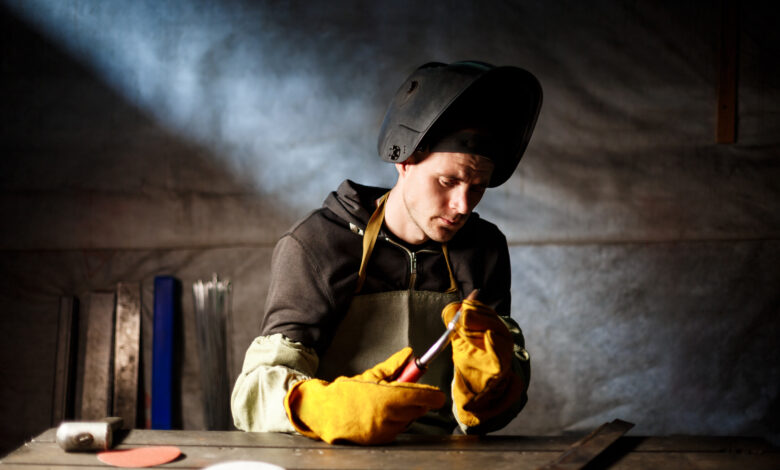
TIG welding, for example, produces clean, precise welds well-suited for thin materials, stainless steel, and applications where appearance and contamination control matter. Flux-core welding is more practical for thicker structural steel in outdoor or wind-exposed environments. Understanding which process is appropriate for your specific application — and verifying that the contractor is experienced with that process — prevents situations where a welder defaults to their preferred method rather than the correct one for the job.
According to the American Welding Society, proper process selection is one of the foundational requirements for weld procedure qualification, and it directly affects the mechanical properties of the finished joint.
4. Insurance and Liability Coverage Should Be Verified Independently
Most contractors will confirm that they carry insurance. Fewer buyers take the additional step of requesting and reviewing the actual certificate of insurance before work begins. This distinction matters more in welding than in many other trades, because welding involves open flame, high heat, electrical current, and the potential for fire spread to surrounding materials — particularly in occupied buildings or industrial facilities with flammable materials nearby.
Specific Coverage Areas to Review
General liability coverage should extend to property damage caused during the work, not just completed operations. If the project involves work at height, confined space entry, or welding adjacent to mechanical or electrical systems, verify that the policy covers those specific conditions. Workers’ compensation coverage protects your organization from liability if a welder is injured on your property. A contractor who is reluctant to provide insurance documentation or offers vague assurances in place of a certificate is a significant risk signal.
5. Experience in Your Specific Industry Sector Matters
Welding in Denver spans a broad range of industries — oil and gas infrastructure, commercial construction, manufacturing facilities, water treatment infrastructure, HVAC fabrication, and structural steel erection, among others. A contractor with deep experience in one of these areas may have little familiarity with the code requirements, inspection expectations, and operational constraints of another.
Industry-Specific Code and Compliance Requirements
Different sectors operate under different governing codes. Structural welding on buildings typically falls under AWS D1.1. Pipeline work may be governed by API standards. Pressure vessel fabrication falls under ASME codes. A welder who regularly works in commercial construction may not be familiar with the documentation, traceability, and inspection requirements that apply to process piping or pressure-bearing systems. Matching the contractor’s background to your project’s governing standards reduces the risk of compliance problems during inspection or final acceptance.
6. Weld Inspection and Testing Are Separate Services — Understand Who Provides Them
Many project owners assume that hiring a welder also means the welds will be verified and inspected as part of the standard service. In practice, the degree of inspection included in a basic welding contract varies widely. Visual inspection by the welder themselves is the minimum standard. But many structural, industrial, and code-governed applications require non-destructive examination — including ultrasonic testing, radiographic testing, or dye penetrant inspection — performed by a qualified third party.
Planning for Inspection from the Start
If your project is subject to code inspection or third-party acceptance testing, clarify early in the contractor selection process who is responsible for arranging and funding those tests. Some contractors coordinate testing directly. Others leave it entirely to the owner. Costs for non-destructive examination can be significant, and leaving these arrangements undefined until the work is complete creates schedule risk and potential disputes over who bears the cost when a weld requires rework.
7. Pricing Alone Is a Poor Basis for Contractor Selection
The gap between the lowest and highest quotes for a welding project often reflects genuine differences in how that project will be executed. Lower bids may exclude inspection, reflect lower-qualified labor, omit necessary material preparation, or assume shortcuts in preheat or post-weld treatment requirements. Welding in Denver involves work that often must perform under real mechanical and environmental stress for years after completion. Choosing a contractor primarily because they presented the lowest number is a risk that tends to materialize at the worst possible time.
How to Evaluate Proposals Objectively
Request itemized proposals from multiple contractors so that cost comparisons are made between equivalent scopes. Ask each contractor to specify which welding process they intend to use, whether their welders are qualified for the applicable code, and what inspection measures are included. When all contractors are bidding on the same defined scope, price differences become meaningful rather than misleading. A higher bid that includes qualified welders, documented procedures, and coordinated inspection may represent considerably less total risk than a lower bid that leaves those elements undefined.
Closing Thoughts
Welding in Denver covers a wide range of applications, industries, and complexity levels. The contractors operating in this market range from highly specialized and thoroughly credentialed to general tradespeople for whom welding is one of many services offered. The difference matters in ways that aren’t always visible until something goes wrong.
The questions and considerations outlined here are not intended to make the selection process more complicated than necessary. They are intended to make it more honest. A qualified, experienced welder who understands the specific demands of your project will be able to answer these questions clearly and directly. That clarity, early in the process, is itself a strong signal that the working relationship will be grounded in the same honesty once the work begins.
Taking the time to verify credentials, understand process fit, confirm insurance, and align on inspection responsibilities before the job starts is the most straightforward way to protect the integrity of the finished work — and the budget, schedule, and liability exposure attached to it.