Aluminium turns up everywhere in architecture, construction, engineering and product design, and it’s not hard to see why. It’s light, it’s strong, it resists corrosion reasonably well on its own, and it can be shaped and finished in all sorts of ways. But how it looks and how it holds up over time depends a great deal on what’s done to its surface.
For architects and designers, picking a finish isn’t just about getting the right colour or sheen. You’ve got to think about where the piece will end up, how much upkeep it can realistically get, what texture suits the design, and what the application actually demands. Processes like anodising aluminium can toughen up the surface while keeping that recognisable metallic look, which is why surface treatment tends to become a proper part of the specification conversation rather than an afterthought.
This guide runs through some of the more common aluminium finishes and the practical things worth bearing in mind with each.
Why Bother Finishing Aluminium at All?
Left to its own devices, aluminium forms a thin oxide layer the moment it meets air. That layer offers some natural protection against corrosion, which is part of why aluminium copes so well in a lot of external and industrial settings.
A surface finish builds on that. It might add extra protection, change how the metal looks, introduce texture, or simply make a batch of fabricated components look more uniform. What you actually need depends enormously on where the aluminium is going. A decorative panel tucked away indoors has nothing like the same demands as a façade component left out in the wind, rain and pollution.
Natural Anodised Aluminium
Anodising is an electrochemical process, and rather than layering something on top of the aluminium, it thickens the oxide layer that’s already there. It works with the metal, not over it.
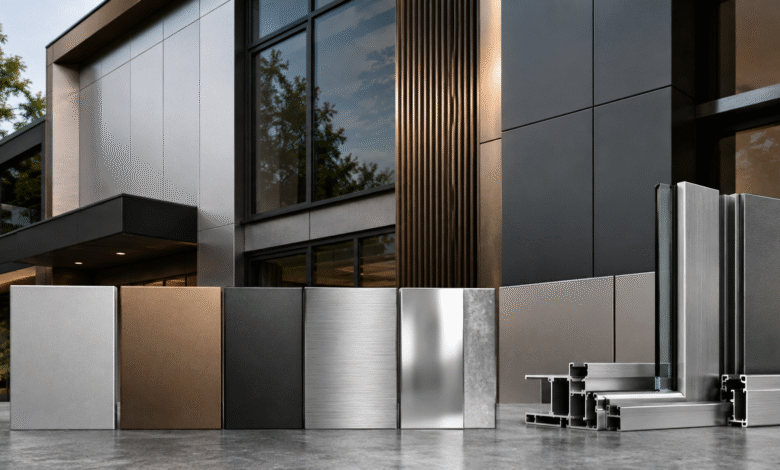
Done naturally, without added colour, it tends to keep that silvery, metallic character but with a more even, controlled finish than raw aluminium. Depending on the starting material and how it’s prepared, you can end up anywhere from a fairly bright surface to something matte or textured.
Architecturally, this makes it a common choice for window systems, façades, entrances, trims and other exposed features, as well as plenty of manufactured products where both looks and durability matter. Because the aluminium underneath is still visible through the finish, the quality of that base material counts for a lot, alloy choice, fabrication marks and surface prep all need thinking about before the anodising happens.
Coloured Anodised Finishes
Colour can be worked into the anodising process too, giving designers more to play with while still holding onto much of that metallic quality underneath.
This is useful when a project calls for a specific palette or needs to sit comfortably alongside other materials. Bronze and black tend to crop up a lot in architectural metalwork, though what’s actually available varies by finisher.
Worth knowing: anodised colour isn’t perfectly uniform. The alloy, the surface condition, how the piece was extruded, even the angle you’re viewing it from, all of these can shift how the colour reads. Where lots of components sit together across a large elevation, that kind of variation needs managing carefully during specification and manufacture.
Powder-Coated Aluminium
Powder coating takes a different approach. A dry powder is applied electrostatically to the prepared surface, then cured to form a proper coating on top.
Unlike anodising, this creates a distinct layer over the aluminium rather than working the metal itself, which opens up a much wider range of colours and surface effects.
It’s a common choice for windows, doors, cladding, balustrades, commercial interiors and fabricated components generally, especially where matching a specific colour scheme matters. As with any coating, decent surface prep counts for a lot, and it’s worth thinking through UV exposure, cleaning routines and how long the coating needs to last.
Brushed Aluminium
Brushing is mechanical rather than chemical, fine, directional lines worked into the surface. It’s about how the metal looks and feels rather than protecting it.
It softens aluminium’s natural shine and gives it a more contemporary, controlled appearance, and you’ll see it on signage, interior panels, furniture, appliances and architectural detailing. The direction of the grain becomes part of the design itself, so it’s worth thinking about how panels will line up next to each other once installed. Brushing can also sit underneath another finish, with the texture still showing through.
Polished Aluminium
Polishing smooths the surface out, and depending on how far it’s taken, you can end up with anything from a soft sheen to something close to a mirror.
It suits decorative work where reflectivity is part of the point, interior details, furniture, display pieces and similar. The trade-off is that a polished surface shows fingerprints and scratches more readily than a matt or textured one, so it’s worth factoring maintenance into the decision from the start.
Mill Finish Aluminium
Mill finish is aluminium straight after rolling or extrusion, with no decorative treatment added. It can vary quite a bit, extrusion lines, handling marks, slight tonal differences, which is entirely fine where the material will be hidden or valued mainly for its structural properties. Where it’s going to stay visible, though, it’s worth asking whether that natural variation actually suits the project.
Choosing the Right Finish
Getting this right means weighing up appearance, performance and what’s practical to fabricate. Exposure conditions come first, moisture, pollution, UV, cleaning regimes, and anything extra a coastal or industrial site might throw at it.
Fabrication matters too. Cutting, machining, welding, bending and fixing can all leave their mark on the finished piece, so it helps to settle on a finish early enough that fabrication can be planned around it. Colour, gloss and texture consistency, along with maintenance expectations, are worth writing down clearly, especially when several suppliers or batches are involved.
Thinking About Finish Early
Surface finishing works best treated as part of the material spec from the outset, not bolted on as a final decorative flourish. It affects tolerances, appearance, the order fabrication happens in, and how much upkeep the piece will need down the line.
Whether a project calls for the metallic honesty of anodised aluminium, the colour range powder coating offers, the texture of a brushed surface, or the straightforwardness of mill finish material, understanding what each option actually involves makes it easier to land on something that works for both the design and the realities of the application.