For women exploring Bavarian traditional wear for the first time in 2026, the german outfit female category can look overwhelming from the outside — dirndl lengths, blouse necklines, apron conventions, regional variations, and a vocabulary of German terms that product listings rarely explain. In reality the category follows a clear progression. Most women enter through a single festival-ready dirndl ensemble, learn the styling conventions through actual wear, and expand toward fuller traditional configurations only if their engagement deepens. Understanding that progression — what belongs at each stage and what can wait — turns a confusing category into a straightforward series of good decisions.
This guide maps the journey from first outfit through complete traditional wardrobe, so you can buy exactly what your current stage needs and skip what it doesn’t.
Stage One: The First Festival Ensemble
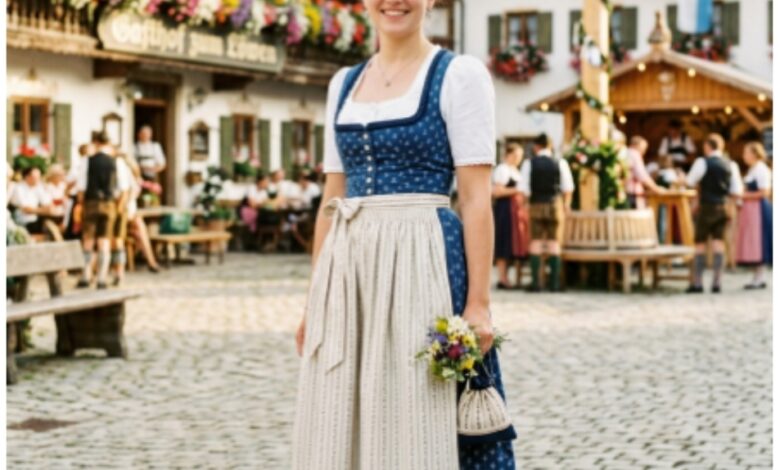
The entry point for nearly every woman is a complete festival ensemble built around a midi dirndl. Four purchases cover it: the dirndl itself in a flattering traditional color, a white Dirndlbluse blouse, cream stockings, and flat leather footwear. This ensemble handles Oktoberfest attendance, German-American festivals, themed parties, and casual Bavarian events — which for most buyers is the entire first-year calendar.
At this stage, prioritize construction over everything else. A structured bodice, genuinely gathered skirt, and separate real apron in natural-blend fabric are what distinguish an outfit that photographs authentically from a costume that disappoints. Color and detailing are secondary decisions; deep green, red, or blue all serve the first ensemble equally well.
Stage Two: Learning the Conventions
The first season of wear teaches the conventions no product listing explains. The apron bow reads left for single, right for taken, center-front for undecided, center-back for widows and servers. Braided hairstyles and flower crowns suit daytime outdoor events; sleeker styling suits evening tents. Knee-length stockings pair with midi hemlines; heels lose to flats by hour three of any real festival day.
These small fluencies matter more than additional spending. A modest ensemble worn with correct conventions reads as more authentic than an expensive one styled carelessly, and the knowledge transfers to every future outfit you assemble.
Stage Three: Occasion Expansion
Once the first ensemble proves itself, expansion follows your actual calendar rather than a checklist. Attending an evening gala or Bavarian wedding motivates a long elegant dirndl with a lace blouse. Warm-weather daytime festivals justify a mini style with contemporary accessories. Cool-October attendance adds a traditional cardigan or shawl. Women drawn to a more playful register add a women’s lederhosen look — fitted leather shorts, suspenders, checkered blouse as an alternate outfit for active festival days.
The pattern worth copying from experienced wearers: buy for confirmed occasions, not hypothetical ones. Each addition then earns immediate wear, and the wardrobe grows in exactly the directions your engagement actually runs.
Understanding the German Bavarian Costume Heritage
Behind every stage of this progression sits a genuine folk tradition worth knowing. The german bavarian costume heritage — Tracht, in the German term — developed across centuries of Alpine rural life, with the dirndl originating as practical working dress before nineteenth-century Bavarian society elevated it into celebrated regional identity. Regional variations from Miesbach, the Tegernsee valley, Berchtesgaden, and other Alpine districts each carry distinct colors, embroidery motifs, and construction details that dedicated wearers still honor today.
For a modern buyer, this heritage has one practical implication: the conventions are not arbitrary fashion rules but living tradition, which is why observing them earns visible respect at Bavarian events. It also explains the category’s quality logic — traditional construction methods exist because they produce garments that last decades, and products that shortcut them are departing from the tradition itself, not just from a style guide.
Stage Four: The Full Traditional Wardrobe
Women whose Bavarian engagement becomes a fixture — annual Munich trips, heritage community membership, German-American cultural life — eventually assemble what amounts to a full traditional wardrobe: multiple dirndl across lengths and formality levels, seasonal blouse variations, a formal configuration for weddings and ceremonies, cold-weather traditional outerwear, and accumulated jewelry and accessories with personal meaning. Some pursue specific regional configurations matching family heritage.
At this stage the wardrobe behaves like heirloom clothing. Quality dirndl construction lasts fifteen to thirty years with basic care — gentle washing for cotton pieces, proper hanging storage, cedar protection — and traditional families routinely pass pieces between generations. Purchases made carefully at stage one are often still in rotation when a wearer reaches stage four.
Buying Smart at Every Stage
Three rules keep every stage on track. First, count the separate garments: authentic outfits are independent real pieces — dirndl, blouse, apron — never printed or fused imitations. Second, match spending to confirmed use: $150 to $300 assembles a strong first ensemble, and premium tiers earn their cost only when your calendar justifies them. Third, verify sizing by measurements rather than assumed dress size; dirndl bodices fit fitted by design, and each retailer’s chart is the authority for its own garments.
Frequently Asked Questions
What should my very first purchase be?
A complete midi dirndl ensemble: dirndl, white blouse, cream stockings, flat leather shoes. It covers the entire typical first-year calendar.
How is a dirndl different from a German costume? Construction. A dirndl is real clothing in separate quality garments; costumes fuse printed elements in thin polyester and fail quickly.
Do I need to know the regional Tracht variations?
Not at the start. General Bavarian styling is fully appropriate; regional configurations matter only if you pursue specific heritage connections later.
What does the apron bow placement mean?
Left single, right taken, center-front undecided, center-back widow or server. Attendees genuinely read it.
When is a long dirndl worth buying?
When a formal occasion — evening gala, Bavarian wedding, ceremony — actually appears on your calendar.
How long does quality construction last?
Fifteen to thirty years with basic care; traditional families pass well-kept pieces between generations.