The True Cost Of A “Free” AI App: Why Flutter And React Native Save Millions In The Long Run

A free AI app can look useful in a product review. It can generate screens, connect sample APIs, and show a working workflow before the next steering meeting. For enterprise technology leaders, that speed creates a false sense of progress. The first version costs little. The second version starts the real bill.
The problem does not come from AI-assisted development. It comes from treating generated code as product architecture. Large teams need authentication, observability, accessibility, release controls, audit trails, dependency governance, and long-term maintainability. A prompt cannot own those decisions. Engineering leaders must own the system.
This is where React Native and mature cross-platform engineering matter. They give teams a shared codebase, stronger talent availability, native integration paths, and a practical way to scale mobile delivery without creating two disconnected product lines.
The Real Cost Starts When The App Meets Enterprise Standards
A free AI app fails at the same point: production readiness. The prototype may pass a founder demo, but it can lack state management, design system alignment, secure storage, offline handling, role-based access, test coverage, and release discipline.
For a VP of Engineering, this creates a familiar problem. The business sees speed, while engineering sees rework. The team must rebuild core flows, replace fragile code, document missing logic, and create regression tests after users have formed expectations.
That cleanup costs more than planned development because it comes with pressure. Leaders need to protect roadmap commitments, platform stability, app store ratings, and customer trust while untangling code that never had a clear architecture.
Why Flutter And React Native Reduce Long-Term Waste
Flutter and React Native do not remove engineering effort. They place effort where it compounds. Teams can build shared UI patterns, reuse domain logic, standardize testing, and release features across iOS and Android with less duplication.
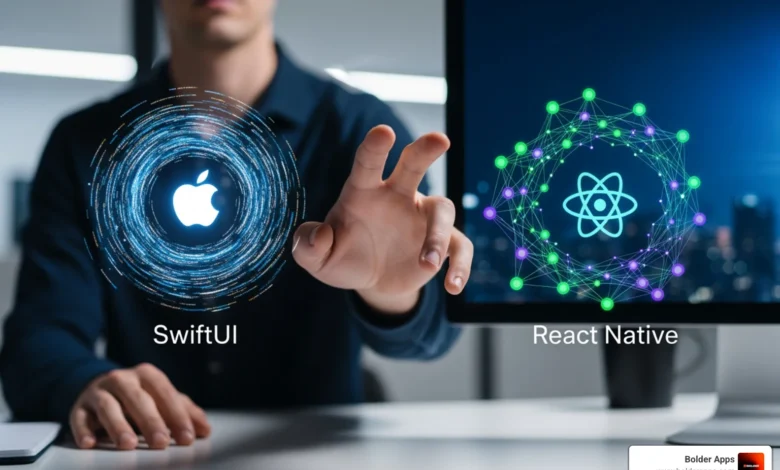
For digital platform leaders, Flutter offers control over UI consistency and performance across devices. React Native gives teams a route to combine JavaScript and TypeScript ecosystems with native modules where needed. The choice depends on enterprise context, team skills, integration depth, and product life cycle.
Both frameworks help leaders avoid the hidden cost of throwaway app code. They support product teams that need experimentation, compliance review, analytics, and ongoing feature delivery inside one maintainable mobile strategy.
The Risk Is Not AI. The Risk Is Architecture Debt
AI can assist with boilerplate, test cases, component generation, and developer research. It can help teams move faster when engineers guide them within clear boundaries. The risk starts when teams use AI output as a substitute for architecture decisions.
Architecture debt affects budget through more defects, slower releases, cloud inefficiency, security gaps, and onboarding friction. IBM placed the 2025 global average data breach cost at USD 4.44 million, which gives mobile security debt a board-level cost frame. Flexera’s 2025 cloud report found that 84 percent of respondents named cloud spend management as a cloud challenge, which makes waste inside rushed AI app backends harder to ignore.
Enterprise leaders should ask one question before funding any free AI app path: will this codebase support the roadmap after twelve months of customer feedback, compliance updates, and platform changes?
5 Cross-Platform Engineering Partners For AI App Modernization In The USA
1. GeekyAnts
GeekyAnts is an AI-Powered Digital Product Engineering & Consulting Company with experience across Flutter, React Native, web platforms, cloud, and AI-enabled product delivery. Its relevance comes from combining mobile engineering with product modernization, which matters when enterprises need to turn prototypes into governed applications.
Clutch rating: 4.8 with 115 reviews. Address: GeekyAnts Inc, 315 Montgomery Street, 9th and 10th floors, San Francisco, CA, 94104, USA. Phone: +1 845 534 6825. Email: info@geekyants.com. Website: www.geekyants.com/en-us.
2. Vention
Vention fits teams that need staff augmentation, custom software development, and delivery support across web, mobile, AI, and backend systems. Its model can suit enterprise teams that want to extend internal squads without moving full ownership outside the organization.
Clutch rating: 4.9 with 101 reviews. Address: 575 Lexington Avenue, 14th Floor, New York, NY 10022, USA. Phone: +1 718 374 5043.
3. Algoworks
Algoworks supports mobile app development, cloud application work, and enterprise platform delivery. Its profile fits buyers who need app modernization with backend, CRM, and cloud integration requirements rather than isolated UI development.
Clutch rating: 4.9 with 98 reviews. Address: Algoworks Solutions Inc, 17 S. Franklin Turnpike #2-2, Ramsey, NJ 07446, USA. Phone: +1 877 284 1028.
4. Simform
Simform works across product engineering, cloud platforms, data, AI, and mobile application development. It can suit organizations that want cross-platform app delivery connected to platform modernization and engineering capacity expansion.
Clutch rating: 4.8 with 86 reviews. Address: 111 North Orange Avenue, Suite 800, Orlando, FL 32801, USA. Phone: +1 321 237 2727.
5. Fingent
Fingent focuses on custom software, AI, cloud, web, and mobile delivery for organizations that need structured digital transformation support. Its relevance comes from enterprise software experience and a delivery profile that can support modernization beyond the mobile frontend.
Clutch rating: 4.9 with 66 reviews. Address: 235 Mamaroneck Ave, Suite 301, White Plains, NY 10605, USA. Phone: +1 914 615 9170.
How Leaders Should Decide Before Funding The Next App
The right decision does not start with framework preference. It starts with product risk. A customer-facing AI app needs clear ownership, maintainable architecture, secure integrations, measurable performance, and release governance from the first serious build.
Leaders should assess whether the app needs native device access, complex animations, enterprise SSO, offline workflows, real-time data, analytics, or regulated data handling. Those requirements decide the architecture. Flutter and React Native then become practical options inside a wider engineering strategy.
A consultation-style review can help teams compare prototype code, platform constraints, talent availability, roadmap pressure, and total ownership cost before they commit budget. That conversation can save more money than the first sprint.
Final Thoughts
Free AI app builders can help teams explore ideas, but they cannot remove the cost of product engineering. The cost shifts into refactoring, security hardening, testing, integration work, and long-term maintenance. Flutter and React Native save money when teams use them as part of a disciplined mobile architecture strategy, not as shortcuts.
For enterprise leaders, the real goal is not to build the cheapest first version. The goal is to build an application that can survive customer growth, platform change, compliance review, and continuous delivery without forcing a rebuild.