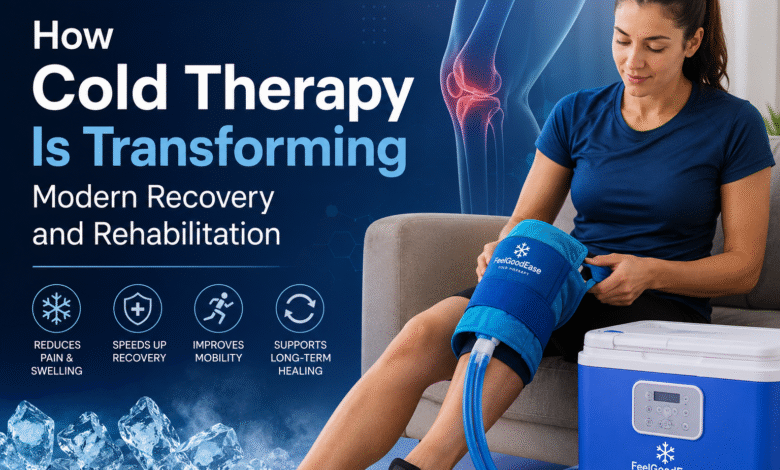
Cold therapy works but only when the protocol matches the recovery phase. Misuse doesn’t just waste time. It can slow progress.
I’ve seen a major shift in how people use cold therapy.
It’s no longer limited to clinical environments. Athletes, gym users and even casual exercisers are using ice baths regularly. At the same time, the confusion around it has grown.
One headline says cold exposure is essential. Another claims it blocks muscle growth.
Both are partially correct. The real issue isn’t the method. It’s the lack of structure.
In real recovery scenarios, I’ve seen patients delay tissue repair by continuing aggressive icing beyond the acute phase. I’ve also seen people create unnecessary stress on the body by treating cold exposure as a toughness challenge.
A 3-minute plunge at 3°C is not a better version of 10 minutes at 12°C.
It’s a completely different prescription.
That distinction matters.
This guide is built around one principle:
Cold therapy is not a habit. It is a phase-specific protocol.
The Physiology of Cold: What Actually Drives Results
Vasoconstriction and Swelling Control
Cold therapy limits swelling by reducing fluid leakage into injured tissue not by shutting down circulation.
When tissue temperature drops, blood vessels constrict. This reduces capillary permeability and slows fluid accumulation in the surrounding area.
In my experience, patients often misunderstand this. They assume cold “cuts off blood flow.”
It doesn’t.
It creates a controlled vascular response enough to limit swelling, without completely stopping perfusion.
That balance is what protects tissue in the early stage.
Metabolic Rate Reduction
Lower tissue temperature reduces cellular demand, protecting vulnerable cells after injury.
Right after trauma, oxygen supply is already compromised. If metabolic activity remains high, cells begin to break down.
Cold therapy slows that demand.
That’s why early timing matters:
- Immediate use → preserves surrounding tissue
- Delayed use → reduced effectiveness
- Overuse later → slows recovery
Cold is not just about comfort. It’s about tissue preservation.
The 48-Hour Inflammatory Window
Aggressive cold is most effective in the first 48 hours. After that, it must taper.
This is where I see the most mistakes. Patients continue icing aggressively well into the repair phase.
Here’s the clinical progression:
- 0-48 hours: Cold controls excessive inflammation
- Days 3-7: The body shifts into repair mode
- Beyond that: Overuse can suppress healing
Inflammation is not the enemy. Uncontrolled inflammation is.
Pain Reduction and Nervous System Response
Cold reduces pain by interrupting nerve signaling, not just inflammation.
This mechanism is often overlooked.
Pain reduction allows movement.
Movement accelerates recovery.
That’s why cold therapy is so effective in early rehabilitation.
Temperature Is the Dose
Different temperatures produce completely different outcomes.
- 10-15°C → Recovery and soreness management
- ~12°C → Chronic pain modulation
- <5°C → Acute injury control
In my clinical approach, I don’t prescribe “cold.” I prescribe a temperature range.
Choosing the Right Modality
The delivery method should match the injury, not personal preference.
This is where many people go wrong. They choose the most intense option instead of the most appropriate one.
Here’s how I approach it:
- Localized injury → Compression or cold packs
- Large muscle fatigue → Ice bath
- Post-surgical swelling → Controlled compression systems
In practice, precision matters more than intensity.
This is exactly why structured recovery solutions like those available through FeelGoodEase are useful. They allow consistent, repeatable application rather than guesswork.
MODALITY COMPARISON: ICE BATHS, COMPRESSION, CHAMBERS AND COLD PACKS
| Modality | Target Temp Range | Typical Duration | Cost/Access | Best For (Injury Stage) | Evidence Strength | Key Limitation |
| Ice Bath (Cold Water Immersion) | 10-15°C (recovery); <5°C (acute trauma) | 10-15 min | Low-Moderate (home setup possible) | Sub-acute repair, general recovery, acute trauma (colder range) | Moderat Strong (analgesia, DOMS); mixed for hypertrophy | Full-body cardiovascular stress requires temperature control |
| Localized Cold Compression Wrap | 10-15°C (controlled) | 15-20 min per cycle | Moderate (device-based) | Acute inflammation, post-surgical, chronic tendinopathy | Strong (localized edema + pain control) | Limited coverage setup complexity |
| Whole-Body Cryotherapy Chamber | -110°C to -140°C (nitrogen); -60°C to -80°C (electric) | 2-3 min | High (clinic access required) | Sub-acute recovery, autonomic reset, pre-season unloading | Moderate (subjective recovery); limited long-term data | Cost barrier; contraindications safety concerns |
| Topical Cold Packs (Gel/Ice) | 0-10°C (skin contact with barrier) | 10-20 min | Very low (widely available) | Acute phase (0-48 hrs), localized injuries | Strong (short-term analgesia + swelling control) | Poor temperature precision; warms quickly |
HOW TO CHOOSE BASED ON BODY COVERAGE AND PRECISION
Match the modality to tissue depth, injury size and recovery phase. Precision matters more than intensity.
I’ve seen this mistake repeatedly: people choose the most extreme option instead of the most appropriate one.
A superficial ankle sprain does not need a full-body ice bath. A deep quad strain won’t respond well to a small gel pack.
Here’s how I approach it clinically:
- Localized injury → Use compression or cold packs (better control, targeted delivery)
- Large muscle groups or systemic fatigue → Use immersion or chamber exposure
- Post-surgical swelling → Prioritize controlled compression systems
And one non-negotiable:
Cold is not a feeling. It is a number.
If you’re not measuring temperature, you’re guessing.
At minimum, I recommend:
- A waterproof thermometer for immersion setups
- A simple interval timer to control exposure windows
That alone improves outcomes significantly.
YOUR PERSONALIZED PROTOCOL: THE COLD THERAPY DECISION MATRIX
Cold therapy works best when you align three variables: injury phase, recovery goal, and available equipment.
I don’t prescribe cold randomly. I route it.
Question 1 – What Phase Are You In?
- Acute (0-48 hrs): Swelling and tissue protection phase
- Sub-Acute (Days 3-14): Repair and controlled loading phase
- Remodeling (Weeks 2-6+): Strength and tissue adaptation phase
Question 2 – What Is Your Primary Goal Today?
- Analgesia: Reduce pain quickly
- Inflammation Control: Limit swelling and fluid accumulation
- Autonomic Recovery: Support nervous system balance and fatigue reduction
Question 3 – What Equipment Do You Have Access To?
- Home tub (immersion)
- Compression wrap/system
- Cryotherapy chamber
- Basic ice or gel packs
ROUTED PROTOCOL EXAMPLES
1. Acute + Inflammation Control + Home Tub
→ Immersion at <5°C for 10 minutes, up to 2-3× daily
→ Focus: limit swelling and metabolic stress
2. Sub-Acute + Pain Relief + Compression Wrap
→ 10-15°C for 15-20 minutes, 1-2× daily
→ Focus: manage pain while allowing tissue repair
3. Remodeling Phase + Autonomic Recovery + Ice Bath
→ 10-12°C for 10-12 minutes, post-training only
→ Focus: recovery without suppressing adaptation
In my experience, most people don’t fail because cold therapy doesn’t work. They fail because they never match the protocol to the phase. That’s the difference between controlled recovery and random exposure.
Safety and Contraindications
Cold therapy is safe when controlled and risky when ignored.
Cardiovascular Risks
Cold exposure increases vascular resistance.
Avoid full immersion if you have:
- Hypertension
- Arrhythmia
- History of fainting
Always get clearance if unsure.
Neurological Risks
Conditions like:
- Raynaud’s
- Neuropathy
Reduce your ability to detect cold damage. That removes your natural safety signal.
Open Wounds and Surgery
Avoid immersion with:
- Open wounds
- Unsealed incisions
Localized application may be used cautiously.
Pre-Session Safety Check
- No chest symptoms
- No open wounds
- Hydrated
- No alcohol
If any fail → adjust the session.
Phase-Based Cold Therapy Protocols
Acute Phase (0-48 Hours)
Goal: control swelling and protect tissue
- Cold compression → 15-20 min every 2-3 hours
- Ice bath → <5°C for 10 minutes
- Elevation + hydration
Consistency matters more than intensity.
Sub-Acute Phase (Days 3-14)
Goal: support repair without blocking it
- Reduce frequency to 1-2× daily
- Increase temperature to 10-15°C
Introduce contrast therapy:
- 3 min warm
- 1 min cold
- Repeat
Remodeling Phase (Weeks 2-6+)
Goal: integrate recovery with performance
- Use cold after training
- Avoid before high-output sessions
Cold becomes supportive not primary.
Chronic Tendinopathy
Use micro-dosing, not extreme exposure
- 12°C
- 3-5 minutes
- Multiple short sessions
This protects adaptation while reducing pain.
Cold Therapy and Strength Training
The Hypertrophy Debate
Cold does not stop muscle growth but poor timing can interfere with it.
Cold reduces inflammation. Inflammation contributes to adaptation. So timing matters.
The 4-Hour Rule
Avoid cold within 4 hours before training.
Cold exposure can reduce:
- Strength output
- Motor recruitment
I’ve seen this mistake limit performance repeatedly.
Same-Day vs Next-Day Cold
- Same-day → faster recovery
- Next-day → better adaptation
Choose based on your goal.
Periodization Strategy
- Hypertrophy → minimal cold
- Performance → targeted use
- Rehab → structured use
Cold should follow your training cycle.
Nervous System Reset and Recovery
Cold therapy also affects the nervous system, not just tissue.
In chronic cases, pain becomes neurological.
Cold helps regulate that response.
Gradual Entry Protocol
- Start at 15°C
- Lower gradually
This reduces stress response.
Breathing Control (4-4-4-4)
Helps stabilize:
- Heart rate
- Nervous system response
Sleep Timing
Avoid cold within 2 hours of sleep.
Passive Rewarming
Allow natural rewarming for 10-15 minutes.
Avoid immediate heat.
Building a Clinical-Grade Home Setup
Precision at home requires structure, not expensive equipment.
Basic setup:
- Thermometer
- Ice bath
- Compression wrap
- Timer
For higher precision, systems like a cold therapy system for recovery provide controlled temperature delivery and consistent results, something standard ice setups struggle to maintain.
Ice Ratios (100L Tub)
- 15°C → 2-3 kg
- 12°C → 4-5 kg
- <5°C → 8-10 kg
Always verify the temperature.
TRACKING PROGRESS: THE 14-DAY REHABILITATION COLD LOG
WHY OBJECTIVE TRACKING PREVENTS PROTOCOL DRIFT
Without tracking, patients tend to increase intensity instead of improving precision and that’s where setbacks happen.
I’ve seen this pattern repeatedly. No log means no feedback. So people start adjusting based on feeling alone longer sessions, colder temperatures and more frequent exposure.
It feels like progress. It isn’t.
In many cases, this leads to:
- Minor cold injuries
- Delayed tissue adaptation
- Inconsistent recovery outcomes
Tracking keeps your protocol anchored to data not impulse.
DAILY VARIABLES TO RECORD
A structured log turns recovery into measurable progress instead of guesswork.
Record the following after every session:
- Date
- Injury phase (Acute / Sub-acute / Remodeling)
- Modality used (immersion, compression, pack, etc.)
- Exact temperature (°C)
- Exact duration (minutes)
- Pre-session goal tag (analgesia / inflammation / autonomic reset)
- Pain score (0–10)
- Swelling rating (low / moderate / high)
- Range of motion (ROM) measurement
- Sleep quality or training notes
This creates your personal recovery dataset.
CORRELATING DATA WITH FUNCTIONAL MILESTONES
Look for trends across days not single-session results.
I always tell patients:
If pain drops but movement doesn’t improve, something is off.
Common patterns to watch:
- Pain ↓ but ROM unchanged → masking, not recovery
- Swelling ↓ and ROM ↑ → protocol is working
- Pain fluctuates daily → inconsistent application or overloading
Progress should show up in function not just comfort.
WARNING SIGNS AND POST-SESSION RESPONSE MANAGEMENT
EXPECTED SENSATIONS VS. DANGER SIGNALS
Not all cold responses are equal. Knowing the difference prevents injury.
Normal Responses
- Numbness that resolves within 15-20 minutes
- Mild redness (erythema) after exposure
- Brief shivering during rewarming
These are expected physiological reactions.
Abnormal Responses
- Numbness lasting more than 30 minutes
- White, pale, or waxy skin
- Sharp, burning, or nerve-like pain
- Dizziness or confusion
These are red flags. Do not ignore them.
RECOGNIZING NON-FREEZING COLD INJURY AND NERVE DAMAGE
Cold injury often builds gradually through repeated borderline exposures not one extreme session.
Peripheral areas are most at risk:
- Fingers
- Toes
- Knees and elbows (in thin individuals)
If tingling turns into burning or persists into the next day:
- Stop cold therapy for at least 72 hours
- Reassess before resuming
- Seek clinical advice if symptoms persist
This is one of the most commonly overlooked risks.
CARDIOVASCULAR STRESS INDICATORS DURING IMMERSION
Your cardiovascular response is a real-time safety signal.
Watch for:
- Heart rate increase >20 bpm above resting
- Chest tightness
- Visual disturbances (aura, blurring)
- Strong urge to exit combined with confusion
I always recommend using a heart rate monitor during full immersion. It gives you objective feedback when your body is under stress.
EMERGENCY STOP AND REWARMING PROTOCOLS
If something feels wrong, end the session immediately. Do not push through.
Follow this sequence:
- Exit the water immediately
- Dry the body thoroughly
- Rewarm hands and feet first using lukewarm air or water
- Avoid direct heat on numb areas
- Monitor symptoms for up to 60 minutes
If symptoms do not normalize, seek medical evaluation.
In my experience, most complications are preventable. They happen when people ignore early signals or treat discomfort as something to push through.
Cold therapy is not a test of tolerance. It is a controlled intervention.
FREQUENTLY ASKED QUESTIONS
DOES COLD THERAPY ACTUALLY SLOW LONG-TERM HEALING?
Cold therapy does not stop healing but mistimed or excessive use can interfere with it.
From a clinical perspective, cold modulates inflammatory signaling in the early phase. That’s useful within the first 48 hours.
After that, the body shifts into repair mode.
If you continue aggressive cold exposure beyond this window, you may suppress macrophage activity and delay tissue remodeling.
Used correctly, cold supports healing. Used incorrectly, it slows it.
CAN I USE COLD THERAPY IF I HAVE RAYNAUD’S OR NEUROPATHY?
Whole-body cold exposure is generally contraindicated.
Conditions like Raynaud’s or peripheral neuropathy impair vascular and sensory responses.
If cold therapy is considered:
- It must be localized only
- Requires medical clearance
- Needs continuous visual monitoring of skin color and response
In my experience, unsupervised use in these cases carries unnecessary risk.
ARE ICE BATHS AND COLD SHOWERS INTERCHANGEABLE?
No. They serve different purposes.
Cold showers:
- Rarely maintain consistent target temperatures
- Provide uneven exposure
- Cannot be accurately measured
Ice baths:
- Allow precise temperature control
- Deliver consistent tissue-level exposure
- Can be structured into repeatable protocols
Showers are general wellness tools. Ice baths are clinical interventions.
SHOULD I COMBINE COLD THERAPY WITH NSAIDs?
Use caution. Both suppress inflammatory pathways.
Stacking cold therapy with NSAIDs can:
- Reduce necessary inflammatory signaling
- Potentially delay tissue adaptation
I advise coordinating with a physician rather than combining both without guidance especially in the early phase.
HOW DO I SCHEDULE COLD SESSIONS AROUND COMPETITION?
Match timing to performance demands.
- Before competition: Avoid cold exposure
- After competition: Cold is appropriate for recovery
- During training blocks: Follow phase-based periodization
If performance is the priority, avoid anything that reduces neuromuscular output beforehand.
CONCLUSION AND MEDICAL DISCLAIMER
TEMPERATURE AS MEDICINE: A RECAP OF PRECISION PRINCIPLES
Cold therapy is not a general wellness habit. It is a dose-dependent intervention where temperature, duration and timing determine the outcome.
I’ve worked with enough patients to see the same pattern:
The ones who treat cold as a structured protocol recover faster. The ones who treat it casually stay inconsistent. Precision matters more than intensity.
NEXT STEPS: START WITH THE SAFETY SCREEN AND DECISION MATRIX
If you’re applying this in practice:
- Run the pre-session safety checklist
- Answer the three decision matrix questions
- Start a 14-day recovery log
Begin with one controlled session. Then adjust based on response not assumptions.
MEDICAL DISCLAIMER
This content is provided for educational purposes only and does not replace professional medical advice, diagnosis, or treatment.
Always consult a qualified healthcare provider before starting any rehabilitation protocol, especially if you have underlying medical conditions or are recovering from surgery.
Last Reviewed: June 2026
Planned Review Cycle: Every 6-12 months based on updated clinical evidence
Cold therapy works. But only when you treat it like medicine.