Working with high-voltage equipment leaves absolutely no room for error. Every day, linemen, electricians, and industrial workers put themselves in hazardous environments to keep operations running smoothly. Their primary line of defense against severe injury is the protective gear they wear. Rubber insulating gloves, in particular, serve as a critical barrier between a worker and a potentially fatal electric shock.
However, protective gear is not invincible. Daily wear and tear, exposure to harsh weather conditions, and accidental snags can compromise the integrity of the rubber. Even a microscopic pinhole that goes unnoticed by the naked eye can allow electricity to pass through, putting the wearer at immense risk.
Relying on visual inspections alone is simply not enough to guarantee the safety of your workforce. Organizations must adopt rigorous maintenance schedules to ensure every piece of personal protective equipment performs exactly as intended when it matters most. By prioritizing proactive safety measures, companies can protect their most valuable assets—their people—while maintaining high levels of operational efficiency.
The physical demands placed on protective gear
Rubber insulating gear faces a barrage of daily stressors on the job site. Workers handle sharp tools, maneuver through jagged environments, and expose their equipment to various chemicals and solvents. Over time, these environmental factors cause the rubber to break down, losing its dielectric properties and physical strength.
Ozone cracking is a frequent issue. When rubber is exposed to ozone in the air, especially under tension, it can develop deep cracks. Similarly, UV damage from prolonged sun exposure dries out the material, making it brittle and susceptible to tearing. Moisture, dirt, and oil can also degrade the gloves, significantly reducing their ability to stop an electrical current.
Because many of these vulnerabilities develop slowly, workers might not realize their gear is compromised until they are actively handling live wires. This is exactly why implementing a structured, professional evaluation process is vital for any organization that prioritizes occupational safety.
The anatomy of a professional inspection
A comprehensive evaluation involves far more than a simple visual check. Professional laboratories utilize specialized equipment to test the integrity of rubber insulating materials under extreme conditions. The process begins with a thorough cleaning to remove any dirt, oil, or chemical residue that could mask physical defects or conduct electricity.
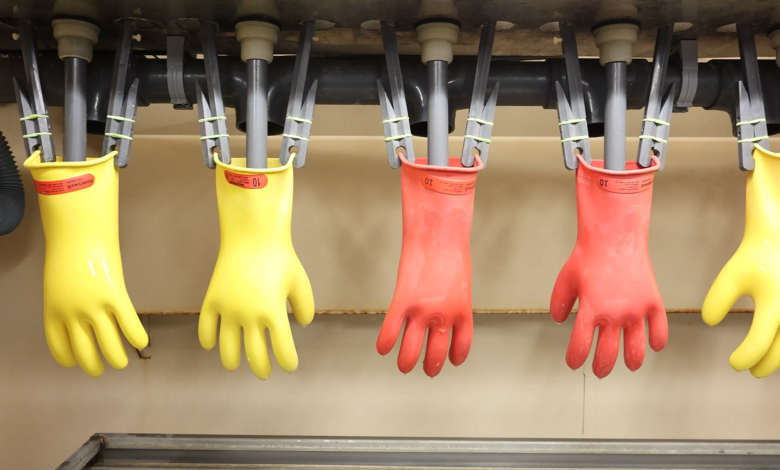
Once the gloves are spotless, experts inflate them to inspect for physical damage. Inflation stretches the rubber, making cuts, abrasions, and pinholes much easier to spot. Technicians carefully examine the entire surface, paying close attention to the fingers and crotch areas where stress is usually the highest.
The most critical phase is the dielectric test. The gloves are filled with water and submerged in a testing tank. High voltage is then applied to the water inside the glove to see if the current escapes through the rubber into the surrounding tank. If the glove successfully withstands the voltage appropriate for its specific class without any electrical breakdown, it passes the test and is deemed safe for continued use.
Meeting stringent industry standards
Regulatory bodies like the Occupational Safety and Health Administration (OSHA) and the American Society for Testing and Materials (ASTM) have established strict guidelines for protective equipment. These standards mandate that rubber insulating gear must be tested at regular intervals. Failing to comply with these regulations can result in hefty fines, legal liabilities, and, most tragically, severe injuries on the job.
Staying compliant requires a dedicated effort to track testing schedules, document results, and replace equipment that no longer meets safety requirements. For many busy organizations, managing this lifecycle internally is overwhelming and prone to administrative errors. Partnering with a reliable service provider ensures that your safety program remains compliant with the latest regulatory demands without placing an undue burden on your internal teams.
Partnering with Arbill for reliable protection
Safety is not just a checkbox; it is a continuous commitment. Arbill understands the immense responsibility organizations have to protect their workers. Our state-of-the-art testing facilities are equipped to handle the rigorous demands of ASTM and OSHA standards, ensuring your team’s protective gear is always up to the task.
When you send your protective equipment to Arbill, you receive a seamless, end-to-end service designed to minimize downtime. We carefully clean, inspect, and test each item with precision. If a piece of equipment fails, we offer rapid replacement options from our extensive inventory of high-quality safety gear, ensuring your workers are never left waiting.
Our streamlined tracking and reporting system also takes the guesswork out of compliance. We provide detailed documentation for every item tested, making it easy for safety managers to prove compliance during audits. By trusting Arbill with your equipment maintenance, you gain a dedicated partner focused entirely on keeping your workforce safe and your operations running without interruption.
Creating a culture of safety
Electrical Glove Testing is the surest way to prevent workplace accidents and keep your team working confidently. When workers know that their employer invests in top-tier safety maintenance, morale improves and productivity naturally follows. They can focus entirely on the complex tasks at hand rather than worrying about the reliability of their equipment.
Arbill is ready to help you build that culture of trust and reliability. By utilizing our comprehensive testing services, you are sending a clear message to your employees that their well-being is your highest priority. Reach out to our team of safety experts today to establish a routine testing schedule, and take the next step toward a safer, more productive work environment.