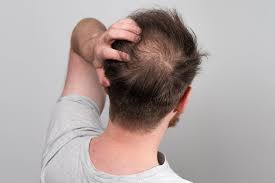
Men are very concerned with losing hair. Male Pattern Baldness is one of the most common causes. It is a gradual development that is patterned. Most men fail to recognise the early changes as the process is gradual. Learning about the early signs will enable men to detect the condition at an earlier stage before the loss of hair becomes obvious. Many people also explore options like men’s hair systems as a way to manage the visible effects.
Male pattern baldness is a result of sensitivity to Dihydrotestosterone. The effect of this hormone is on the hair follicles and makes them smaller gradually. The shrinking of follicles results in thinner follicles. With age, hair growth becomes weak and short, and this ultimately results in some sections of the scalp being seen to thin out.
Gradual Receding Hairline
One of the first symptoms of male pattern baldness is a receding hairline. The hair will start to pull away on the temples, gradually altering the natural structure of the hairline. This alteration tends to form a mild form of M over the forehead. The difference could be subtle in the beginning, and only upon comparing older photos with their present looks do many men become aware of the difference.
The recession begins at the temples most of the time, and the hair at the centre of the forehead is not lost. The temples keep on transforming backwards as time goes on. This may take several years, and this is the reason why a number of men fail to notice the initial stages.
Thinning at the Crown
The other initial symptom is on the crown of the head, where it is also referred to as the vertex. It is located at the peak of the head, and the hair grows in the form of a circle. The hair density of this area starts to reduce in the initial stages of hair loss.
The alteration is usually easily noticed by the reflection of light on the head. The scalp also becomes more visible, although the hair can still cover the part. The thinning of the crown can begin as a small patch and can slowly continue to expand as the hair follicles keep weakening.
Increased Hair Shedding
Shedding of hair is a natural part of the hair growth process. Nonetheless, men who suffer from premature hair loss can find that they lose more and more hair every day. The strands can be more common on pillows, in the shower or on hairbrushes.
This shedding occurs due to the weakened follicles shedding at an earlier stage in the growth cycle. New hair will grow in later, with the possibility of being thinner than the last one. Repeated shedding and regrowth cycles of the layer in the long run lead to apparent thinning.
Changes in Hair Texture
Another condition that alters during the early years of male pattern baldness is hair texture. Previously thick and robust hair can start to be light and soft. This is because when the follicles shrink, they form weaker strands.
This can be referred to as hair miniaturisation. Through miniaturisation, thick terminal hairs are changed to thin and shorter hairs over time. Consequently, hair will run flat and become difficult to style.
Slower Hair Growth
The other early symptom is slowed hair growth. The process of healthy hair is in a natural cycle, which involves growth, rest and shedding. The growth period in male pattern baldness is reduced.
The growth period is reduced, and therefore the length and thickness of the hair is not as much as it was previously. Another effect that can be observed by men is that hair cannot grow back as fast as before after a haircut, or that hair cannot be as dense as before.
Visible Scalp Under Bright Light
Lighting conditions tend to depict the premature thinning before it is clear in a real-life context. The strong light in the houses or bright sunlight may expose the scalp beneath the hair.
This change is observed first by many men who look at photos made in high light. The scalp will still have the hair on it, only it will be more sparse and will allow more light to reach the scalp, rendering the scalp more visible.
Genetic Influence on Hair Loss
Male pattern baldness is significant with respect to genetics. Men whose family had a history of hair loss are at increased risk of experiencing the patterns. The inherited trait has an impact on the reaction of hair follicles to hormones that control the growth of hair.
The patterns of hair loss in fathers or grandfathers tend to give information on the way the condition might develop. Although genetics does not specify the age at which a person will start experiencing some hair loss, it has a significant impact on the possibility of getting androgenetic thinning of hair.
Understanding the Progression of Hair Loss
Male pattern baldness tends to develop in recognisable phases as defined by the Norwood Scale. This scale describes the progressive development of hair loss, ranging from mild loss of the temples to extensive loss of hair on the scalp.
Early identification is one of the ways men can trace how their hairline is changing and the density. Early awareness also motivates people to seek solutions available. Others are grooming, whereas some men also research modern hair replacement formulations that rejuvenate the look of fuller hair. Other brands like TruHair offer non-surgical hair systems, which are used to give it a natural appearance.
Conclusion
Male pattern baldness is progressive, and it is hardly unexpected. The first signs are normally a receding hairline, thinning in the crown, shedding, and alteration of the hair texture. These are signs that develop gradually, and that is why they are hard to note initially.
Knowledge of these early signs will make men recognise hair changes early enough. Education about the condition will enable people to consider some appropriate grooming measures or hair replacement options prior to the time when loss of hair becomes highly pronounced.