Mentaiko: The Bold Japanese Delicacy with a Rich Culinary Story
From Korean roots to Fukuoka fame, how spicy pollock roe became a beloved part of Japanese food culture

Introduction
Mentaiko stands out for its flavor and identity. At first glance, it seems like a simple seasoned fish roe, but its role in Japanese cuisine is deeper. Known for its salty depth, delicate heat, and creamy texture, mentaiko appears in home cooking, restaurant menus, convenience foods, and regional specialties, especially in Fukuoka, where it became famous.
Although many people think of mentaiko as purely Japanese, its origins are tied to Korean culinary traditions. Over time, Japan adapted the dish, refined its seasoning, and gave it a unique place in modern food culture. Today, it is enjoyed in many forms, from plain, seasoned roe served with rice to creative dishes such as mentaiko pasta, rice balls, sandwiches, and omelets. Its appeal lies in the way it delivers a concentrated burst of umami while still feeling elegant and versatile.
This article explores what mentaiko is, where it comes from, how it is made, why it tastes the way it does, and how it became one of Japan’s most recognizable seafood delicacies.
What Is Mentaiko?
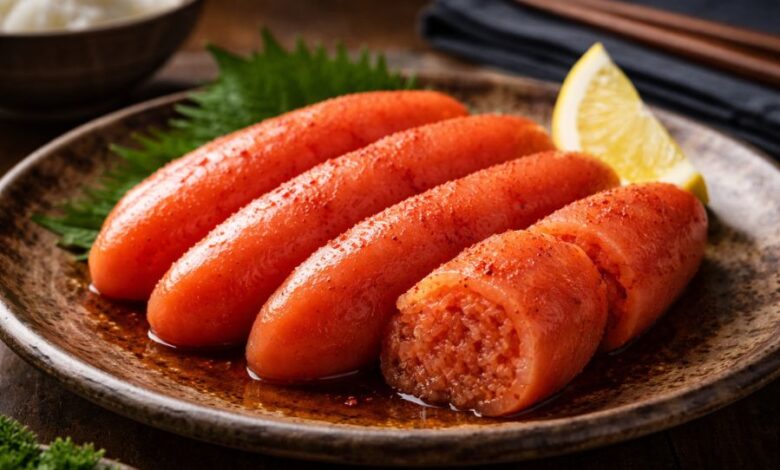
Mentaiko is the roe of Alaska pollock that has been cured in salt and marinated with chili peppers and other seasonings. In simple terms, it is spicy seasoned pollock roe. The roe sacs are usually left whole, giving the ingredient its familiar elongated shape. When eaten, the tiny eggs create a delicate pop, while the curing process gives the roe a dense, creamy consistency.
The name itself is widely associated with Japanese cuisine, but the food has a wider East Asian history. In Japan, mentaiko is especially known for combining briny seafood flavor with a mild to moderate heat. It is less about overwhelming spice and more about balance. The saltiness, umami, and chili warmth work together to create a bold yet not harsh flavor.
Many people also confuse mentaiko with tarako. While the two are closely related, they are not identical. Tarako refers to salted pollock roe, usually milder and not heavily spiced. Mentaiko, by contrast, is seasoned more assertively and often includes chili-based marinade, which gives it its signature flavor.
The Origins of Mentaiko
Korean roots behind the dish
The roots of mentaiko can be traced to Korea, where seasoned pollock roe was already part of the food culture. Korean versions of preserved roe were known for their strong flavor and their role as a side dish that paired well with rice. After World War II, these culinary traditions influenced the development of Japanese cuisine.
How mentaiko reached Japan
Mentaiko was introduced to Japan in 1949, gaining attention in Fukuoka, a city with historical and geographical ties to Korea. Local producers adapted the dish for Japanese tastes and seasoning methods, turning an imported idea into a specialty with its own character.
Why Fukuoka became famous for mentaiko
Fukuoka played a major role in making mentaiko a regional icon. The city values strong yet balanced flavors, which are a perfect fit for mentaiko. Producers standardized recipes, packaging, and presentation, helping its spread across Japan. With tourism and branding, it became closely tied to Fukuoka.
How Mentaiko Is Made
H3: Selecting the pollock roe
The process begins with Alaska pollock roe. Quality matters greatly because the final texture and appearance depend on the freshness and condition of the roe sacs. Good mentaiko has a firm outer membrane, an appealing color, and eggs that feel delicate rather than dry.
H3: Salting and curing
The roe is first cured in salt. This stage is essential because it preserves the roe and intensifies its natural flavor. Salt also helps create the dense, silky texture that makes mentaiko so distinct. The curing process can vary by producer, but careful control is important to avoid making the roe too dry or overly salty.
H3: Marinating with chili and seasonings
After curing, the roe is marinated in a mixture that often includes chili peppers and other flavoring ingredients. This stage gives mentaiko its gentle red tint and characteristic spicy edge. Some versions are mild, while others are noticeably hotter, but the spice is usually meant to enhance the seafood flavor rather than dominate it.
H4: The balance of flavor
What makes good mentaiko special is balance. It should taste savory and oceanic, yet clean. It should feel rich, yet not heavy. The spice should lift the roe’s flavor, not mask it. That balance is why mentaiko can be eaten on its own and used in many cooked dishes.
The Flavor and Texture of Mentaiko
Mentaiko is often described as salty, savory, creamy, and slightly spicy, but those words only capture part of the experience. Its flavor is deeply umami-rich, with a satisfying depth that lingers on the palate. The salt sharpens the flavor, while the chili adds warmth and brightness.
The texture is just as important as the taste. Each roe sac holds thousands of tiny eggs, which create a subtle, grainy pop when eaten. At the same time, the overall mouthfeel is smooth and almost buttery. This combination of texture and flavor is why mentaiko feels luxurious despite being a relatively simple preserved seafood product.
Because of its concentrated taste, a small amount creates a significant impact. Even a spoonful can transform plain rice, noodles, or toast into a memorable dish.
How Mentaiko Is Eaten in Japan
Mentaiko is remarkably versatile. In its most traditional form, it is served as a side dish with steamed rice. The warmth of the rice softens the roe slightly, allowing its flavor to spread beautifully. It is also popular in rice balls, where it serves as a flavorful filling.
In modern Japanese cooking, mentaiko appears in many creative forms. Mentaiko pasta is one of the best-known examples. The roe is mixed with butter, cream, or olive oil, then tossed with spaghetti to create a rich, briny, and lightly spicy dish. It also appears in bread, onigiri, omelets, sushi-style preparations, and even snack foods.
Some people enjoy mentaiko lightly grilled, which deepens its aroma and slightly changes its texture. Others prefer it raw or only gently warmed so that its creamy quality remains intact. This flexibility has helped mentaiko stay relevant in both traditional and contemporary cooking.
Why Mentaiko Remains So Popular
One reason mentaiko remains popular is that it offers a strong flavor in a compact form. Modern diners often appreciate ingredients that can quickly add complexity to a meal, and mentaiko does exactly that. It turns simple dishes into something more layered and exciting without requiring elaborate preparation.
Another reason is its connection to place and identity. In Fukuoka, mentaiko is not just food. It is part of regional pride. Visitors often buy it as a souvenir, while locals see it as a familiar and meaningful part of everyday life. Foods that carry both flavor and cultural identity tend to endure, and mentaiko is a good example.
Its popularity also reflects a broader appreciation for seafood-based delicacies in Japanese cuisine. Like other preserved or fermented foods, mentaiko demonstrates that careful preparation can bring out extraordinary flavor from a modest ingredient.
Mentaiko in Modern Food Culture
Today, mentaiko sits at the intersection of tradition and innovation. Tied to its history, it continues to find new uses. Older diners see it as a classic; younger consumers enjoy it in pasta, bakery items, or convenience-store foods.
As global interest in Japanese cuisine grows, mentaiko is attracting attention outside Japan as well. Its flavor profile fits well with contemporary tastes that value umami, spice, and rich texture. Even so, its cultural meaning remains closely connected to Japan’s culinary landscape and especially to Fukuoka’s food identity.
Conclusion
Mentaiko is more than spicy pollock roe. It carries history, regional significance, and extraordinary versatility. Originating in Korea and transformed in Japan after 1949, mentaiko became a signature Fukuoka specialty and a standout in Japanese cuisine.
Its appeal lies in contrast and balance: salty yet refined, spicy yet controlled, delicate yet intense. Served with rice or pasta, or as a modern snack, mentaiko shows how tradition, migration, and taste combine into one delicacy.
(FAQs)
What is mentaiko made of?
Mentaiko is made from the roe of Alaska pollock. The roe is cured in salt and marinated with chili peppers and other seasonings.
Is mentaiko the same as tarako?
No, they are related but not identical. Tarako is usually salted pollock roe with a milder flavor, while mentaiko is seasoned more strongly and typically includes chili.
Why is mentaiko famous in Fukuoka?
Mentaiko became strongly associated with Fukuoka after it was introduced to Japan in 1949. Producers in the city helped popularize and refine it into a well-known regional specialty.
How does mentaiko taste?
Mentaiko tastes savory, salty, umami-rich, and slightly spicy. It also has a creamy texture with a delicate pop from the tiny eggs.
How do people usually eat mentaiko?
People often eat mentaiko with rice, in rice balls, with pasta, in sandwiches, or lightly grilled. It is both a traditional side dish and a popular modern ingredient.