515 Area Code: The Complete Guide to Central Iowa’s Telephone Identity
History, Cities, Time Zone, Economic Significance, and Everything You Need to Know

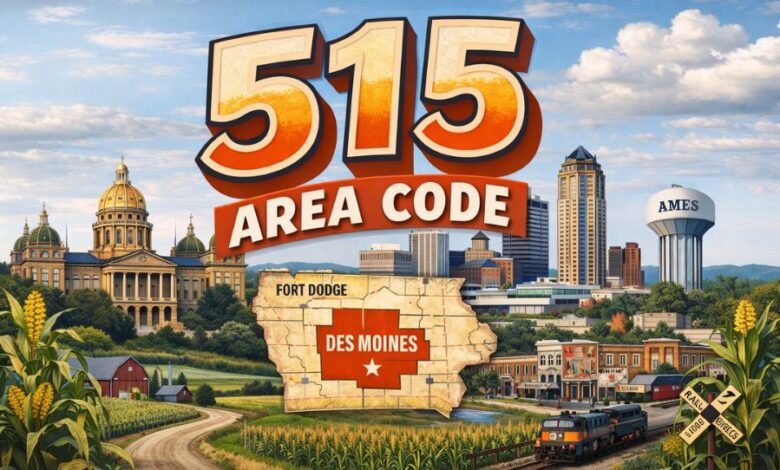
The 515 area code is one of the most recognised telephone prefixes in the state of Iowa. Serving the heart of central Iowa, this area code represents more than just a sequence of digits. It reflects the region’s identity, economy, and cultural fabric. From the capital city of Des Moines to thriving suburban communities and university towns, the 515 area code connects millions of residents and businesses through a shared telecommunications network.
Originally established in 1947 as one of the first North American area codes, 515 has evolved alongside population growth, technological development, and changes in dialling requirements. Today, it remains a significant part of Iowa’s communication infrastructure and regional branding.
Geographic Coverage of the 515 Area Code
Central Iowa’s Core Region
The 515 area code covers the central portion of Iowa. It spans more than twenty counties and serves over seventy cities and towns. This region is widely considered the economic and administrative centre of the state.
The largest and most prominent city in the 515 area code is Des Moines, which also serves as the state capital. Alongside Des Moines, other major cities include Ames, West Des Moines, Ankeny, Urbandale, and Fort Dodge. These communities form a dynamic network of residential neighbourhoods, commercial districts, and educational institutions.
Major Cities Within 515
The region’s northern part. Des Moines stands as the political and financial hub of Iowa. It houses state government offices, corporate headquarters, and cultural institutions. West Des Moines and Ankeny have experienced significant suburban growth, making them some of the fastest-growing communities in the state. Ames is widely known as the home of Iowa State University, contributing to research, innovation, and a vibrant student population. Fort Dodge adds historical and industrial depth to the region’s northern part.
Together, these cities define the 515 area code’s geographic and economic landscape.
History of the 515 Area Code
The Original North American Area Code
The 515 area code was introduced in 1947 during the initial rollout of the North American Numbering Plan. At that time, Iowa had fewer area codes, and 515 covered a much larger territory than it does today.
As telephone usage increased and new numbers were required for residential lines, mobile phones, and business services, the need for reorganisation became apparent.
The 2000 Split and the Creation of 641
In 2000, the 515 area code underwent a geographic split to create the 641 area code. This change was implemented to ensure sufficient numbering capacity for the growing demand across central and southern Iowa. After the split, 515 continued serving the more densely populated central region, while 641 covered many of the surrounding rural and southern areas.
The split allowed the telecommunications system to remain efficient while accommodating future expansion.
Ten-Digit Dialling Requirement
In October 2021, 10-digit dialling became mandatory within the 515 area code. This requirement was implemented nationwide to support the introduction of the 988 Suicide and Crisis Lifeline. Because 988 uses a three-digit dialling format, existing area codes with similar prefixes had to adopt full 10-digit dialling to prevent conflicts.
Today, all local calls within the 515 region require dialling the area code followed by the seven-digit phone number.
Time Zone and Telecommunications Details
Central Time Zone
The 515 area code is located entirely within the Central Time Zone. Residents observe Central Standard Time during the fall and winter and Central Daylight Time during daylight saving months. This time alignment supports coordination with major Midwestern cities and national business operations.
Landlines, Mobile Phones, and VoIP Services
The 515 area code serves landline connections, mobile phone numbers, and Voice over Internet Protocol services. With the growth of digital communication, new phone numbers in the region are often assigned to mobile devices and business communication platforms.
Although traditional landlines remain in use, the telecommunications environment in central Iowa has modernised significantly over the past two decades.
Economic Significance of the 515 Area Code
Financial and Insurance Hub
The 515 area code is closely associated with Iowa’s strong insurance and finance industry. Des Moines is widely recognised as a major insurance capital in the United States. Several nationally known financial institutions and insurance companies maintain headquarters or major operations in the region.
This economic concentration supports thousands of jobs and contributes to the area’s stable economic growth. The presence of corporate offices, regional banks, and investment firms strengthens the overall business ecosystem within the 515 area code.
Business Growth and Suburban Expansion
West Des Moines and Ankeny have become attractive locations for new businesses and residential developments. Corporate campuses, retail centres, and technology startups continue to expand in these areas. The growth of the 515 area code region reflects a broader trend of urban and suburban development in the Midwest.
Entrepreneurs and small businesses benefit from access to transportation networks, skilled labour, and supportive local communities.
Cultural and Educational Influence
Higher Education and Innovation
Ames, located within the 515 area code, is home to Iowa State University. The university contributes significantly to research, agricultural innovation, engineering advancements, and economic development. The presence of higher education strengthens the region’s intellectual and cultural environment.
Students, faculty, and researchers add diversity and vitality to the 515 community.
Pop Culture Recognition
The 515 area code has also gained recognition in popular culture. The heavy metal band Slipknot, formed in Des Moines, famously referenced the area code in their music. This cultural connection has helped bring national attention to central Iowa and reinforced local pride in the 515 identity.
Population Growth and Future Outlook
Number Demand and Potential Overlays
As central Iowa continues to grow, the demand for new phone numbers increases. When an area code approaches exhaustion, regulators may introduce an overlay code to provide additional numbering capacity. An overlay would allow new phone numbers to be assigned a different area code while existing numbers remain unchanged.
Even if additional codes are introduced in the future, 10-digit dialling will remain the standard practice.
Stable Infrastructure and Community Identity
Despite technological changes, the 515 area code remains a stable identifier for residents of central Iowa. Many local businesses proudly incorporate 515 into branding, marketing campaigns, and social media handles. The area code has become part of regional identity and community pride.
Conclusion
The 515 area code represents the heart of central Iowa. From its origins in 1947 to its modern role in supporting millions of calls and digital connections, it remains a cornerstone of regional identity. Serving Des Moines and surrounding communities, the 515 telephone prefix reflects economic strength, educational excellence, and cultural pride.
As Iowa continues to grow and modernise, the 515 area code will remain a symbol of communication, opportunity, and connection in the Midwest. Its history, geographic coverage, and economic importance make it far more than a simple dialling code. It is a defining feature of central Iowa’s past, present, and future.
(FAQs)
What cities are included in the 515 area code?
The 515 area code covers central Iowa cities such as Des Moines, Ames, West Des Moines, Ankeny, Urbandale, and Fort Dodge, as well as many smaller towns across more than 20 counties.
When was the 515 area code established?
The 515 area code was established in 1947 as one of the original area codes in the North American Numbering Plan.
Is 10-digit dialling required in the 515 area code?
Yes, 10-digit dialling is required for all local calls. This includes dialling the area code, then the seven-digit phone number.
What time zone is the 515 area code in?
The entire 515 region observes both Central Standard Time and Central Daylight Time, and is in the Central Time Zone.
Was the 515 area code ever split?
Yes, in 2000, the 515 area code was split to create the 641 area code, which serves parts of central and southern Iowa.
Is the 515 area code running out of numbers?
While demand for numbers has increased due to population growth and mobile phone usage, regulatory authorities closely monitor capacity. If needed, an overlay area code could be introduced in the future.