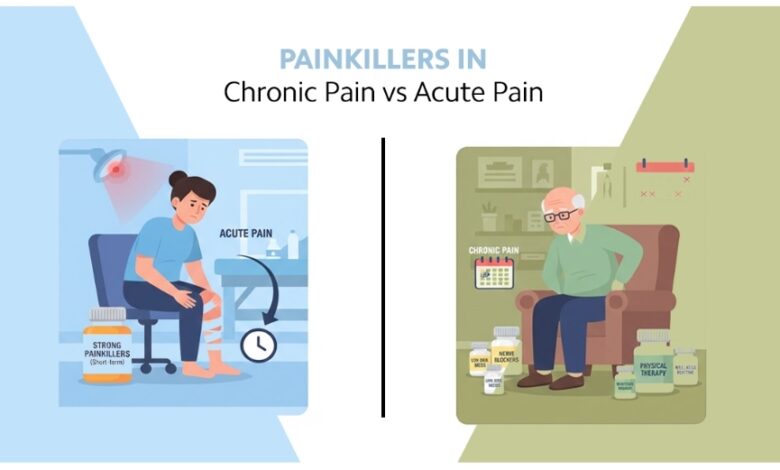
Pain is something many people in the UK live with every day. For some, it comes suddenly as a toothache or unexpected injury. For others, pain may stay for several weeks or months. Either way, pain is not something to take lightly. When pain becomes severe it starts affecting your sleep, daily work and even your mood. That’s where painkillers usually come in. But you have to understand that not all pain conditions are the same and neither are the painkillers for them. Some are meant for short-term relief. Others are used when pain becomes long-lasting. Using the wrong one without knowing about its risks can cause serious side effects. That’s why understanding why painkillers for chronic and acute pain really matters.
Difference Between Chronic & Acute Pain
There are main types of pains depending on duration; acute and chronic. They seem similar at first but there’s more you should know to understand them completely. Acute pain comes on fast. It usually has a clear or sudden cause. Think of a cut, a burn, a headache or pain after surgery. This type of pain is the body’s warning system. It tells you something is wrong. Once the injury heals, the pain fades. Acute pain is short-term by nature. It only lasts for hours, days or maybe a week or two but eventually it fades away.
Chronic pain is a different story. It lasts longer than expected. Often more than three months. Sometimes the original injury has healed, yet the pain stays. In other cases, there may not be a clear cause at all. Conditions like nerve pain, joint problems or ongoing back pain fall into this category. Chronic pain isn’t just a signal anymore. It becomes a condition on its own. Because both stay for different duration, that’s why painkillers for them are also distinct.
How Painkillers Work in Acute Pain
Acute pains can be managed by normal over the counter painkillers. The most common types are nonsteroidal anti-inflammatory drugs (NSAIDs) and acetaminophen. But in severe conditions they can be used with strong painkillers if a doctor prescribes. They work fast. That’s their purpose. They reduce the inflammation and block the pain signals to ease the discomfort of the user for the time being. The body responds well because the pain source is still clear and active. Once healing happens, the need for medication usually drops. Many people use them for a few days and then stop. That’s often enough. This short-term use is key.
Why Painkillers Behave Differently in Chronic Pain
Chronic pain doesn’t respond the same way to painkillers as acute ones. That’s because the pain system itself may have changed. Nerves can become over-sensitive. The brain can start interpreting normal signals as pain. Due to this, standard painkillers might not work. Normal analgesics doesn’t seem to offer enough pain relief and that’s where strong painkillers come in. They treat various kinds of long-term pains such as arthritis, fibromyalgia and persistent back pain etc. For neuropathic pain, specific types of painkillers such as Pregabalin 300mg are sometimes used as part of a bigger plan. These anticonvulsants work differently compared to the opioid pills (by binding to calcium channels).
The Limits of Painkillers in Long-Term Pain
No doubt, painkillers can help with chronic pain conditions but there are some limitations. First, reduced effectiveness over time is common. The body may adapt to the effects of the medicine. Second, wrong use can increase the risk of side effects. These may include dizziness, stomach problems, tiredness, mood changes and mental fog etc. Third, long-term use increases the risk of dependence and tolerance. Some people might need higher doses to feel the same effect. This doesn’t mean everyone will face these problems. If you use them correctly and within the limit, you are safe.
Safety Precautions & Awareness
The duration of use is different for both acute and chronic pains. For acute pain short-term use with the right doses is recommended. But even for chronic conditions, painkillers should not be used long-term unless prescribed by a healthcare expert. There’s no shortcut here. The right treatment always depends on the type of pain. Incorrect use leads to health problems. Mixing with other medicines or alcohol can be very risky. People suffering from on-going nerve pain can get Pregabalin for sale from a trusted online platform like Direct Online Pills. They offer genuine medicines with secure and discreet delivery all across the UK. Their prices are highly competitive and offer medicines without any prescription. Use the medicines carefully and remember your health is in your own hands.