Munira Mirza – A Journey of Influence, Ideas, and Political Excellence
From Oldham to the Heart of British Politics: The Life and Legacy of Munira Mirza

Introduction
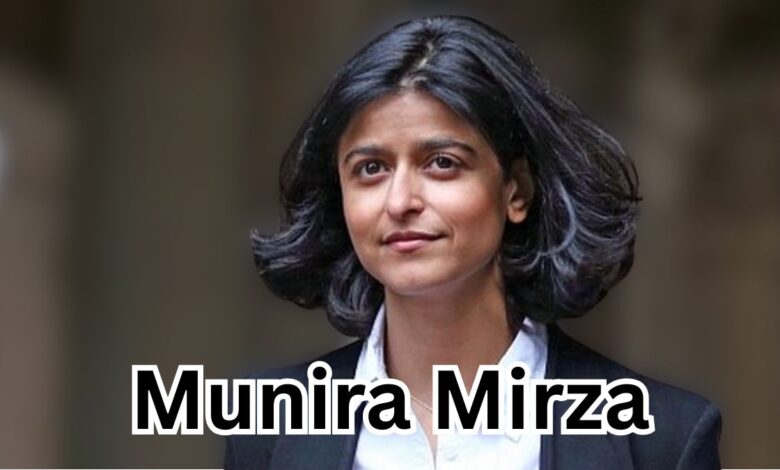
Munira Mirza is a name synonymous with influence, intellect, and strategic political insight in the United Kingdom. Rising from a modest working-class background in Oldham, Greater Manchester, she has become one of the most powerful and respected political advisers in the country. Known for her role as the Former Director of the Number 10 Policy Unit, Munira Mirza has shaped national policies, driven cultural discourse, and influenced the direction of government decision-making. Her career is not just a story of success but of determination, intellectual rigor, and resilience.
Quick Bio
| Category | Details |
|---|---|
| Full Name | Munira Mirza |
| Date of Birth | May 1978 |
| Birthplace | Oldham, Greater Manchester, England |
| Nationality | British |
| Ethnic Background | Pakistani heritage |
| Profession | Political Adviser, Policy Strategist |
| Known For | Former Director of the Number 10 Policy Unit |
| Education | University of Oxford (English Literature); University of Kent (MA & PhD in Sociology) |
| Spouse | Dougie Smith |
| Children | One son |
| Parents | Father: factory worker; Mother: Urdu teacher |
| Siblings | Three older siblings |
Early Life and Family Background
Childhood in Oldham
Born in May 1978 in Oldham, Munira Mirza grew up in a Pakistani-heritage family. Her father worked in a factory, and her mother was an Urdu teacher. This environment instilled in her the values of hard work, discipline, and cultural awareness from an early age. Surrounded by the rich traditions of her family and community, Munira developed a strong sense of social responsibility and an understanding of the complexities of cultural identity.
Education and Academic Excellence
Munira attended Breeze Hill School and later Oldham Sixth Form College, where she stood out for her academic performance. Her dedication and talent enabled her to become the only student in her year to secure admission to the University of Oxford, a testament to her determination to rise beyond her circumstances. At Oxford, she studied English Literature, honing her analytical and communication skills—tools that would become invaluable in her professional life.
She furthered her education at the University of Kent, earning both an MA in Social Research and a PhD in Sociology. Her doctoral research focused on cultural policy challenges in communities such as Tower Hamlets and Oldham, reflecting her enduring interest in social cohesion, cultural identity, and policy development.
Professional Career
Early Career in Arts and Culture
Munira Mirza began her professional journey in the cultural sector, working with the Royal Society of Arts and the Tate Gallery. These roles allowed her to explore creative policy initiatives and understand the intersection of culture, society, and governance.
She then joined Policy Exchange as Development Director from 2005 to 2007, where she contributed to research on arts, diversity, and cultural policies. Her work challenged conventional views on multiculturalism and inspired debate among policymakers and cultural leaders alike.
Rise in Political Influence
In 2008, Munira Mirza joined Boris Johnson, then Mayor of London, as Cultural Adviser. Her expertise and strategic approach led her to become Director of Arts, Culture & the Creative Industries. Her role involved shaping the cultural strategy of one of the world’s most dynamic cities, influencing public arts funding, artistic initiatives, and education programs.
By 2012, Munira had risen to the position of Deputy Mayor for Education & Culture. She oversaw educational reforms, cultural investment programs, and significant initiatives that impacted millions of London residents. Her leadership style combined intellectual rigor with practical policy implementation, earning her respect from colleagues and stakeholders.
Director of the Number 10 Policy Unit
Leadership at the Core of Government
In July 2019, Munira Mirza reached the pinnacle of her political career when she was appointed Director of the Number 10 Policy Unit. In this role, she became one of the UK Prime Minister’s closest advisers, contributing to key national policies during a critical period marked by Brexit transitions and societal challenges.
Her strategic thinking, principled approach, and analytical skills allowed her to influence government decisions on culture, education, and social cohesion. She was recognized as a fearless and intellectually independent adviser whose insights shaped the direction of the UK government.
Resignation and Principles
In February 2022, Munira Mirza resigned from her role at Number 10 following disagreements over comments made by the Prime Minister. Her decision drew widespread attention and demonstrated her commitment to integrity and principled leadership. The resignation underscored her willingness to stand by her convictions, a trait that has defined her public and professional life.
Influence and Legacy
Impact on Public Policy
Munira Mirza’s contributions extend beyond her official roles. She has played a vital role in shaping debates on education, culture, and public policy. Her work emphasizes evidence-based policymaking, critical thinking, and long-term societal impact. She has inspired a generation of policymakers, academics, and cultural leaders to approach challenges with analytical rigor and cultural sensitivity.
Cultural and Social Contributions
With a deep understanding of cultural identity and social cohesion, Munira Mirza has consistently highlighted the importance of education and cultural policies in shaping a harmonious society. Her research and advocacy on multiculturalism, arts policy, and community development have sparked dialogue, encouraged reflection, and challenged traditional narratives in British politics.
Admiration and Criticism
Like many influential figures, Munira Mirza’s ideas have drawn both praise and criticism. Supporters admire her visionary thinking, courage, and intellectual independence, while critics have questioned her ideological positions on race and multiculturalism. This combination of respect and debate underscores her significance as a public figure whose ideas stimulate meaningful conversation across Britain.
Personal Life
Marriage and Family
Munira Mirza married political adviser Dougie Smith in 2008. The couple has one son and maintains a private, grounded family life despite their public profiles. Her family has been a source of stability and support throughout her demanding career.
Influence of Upbringing
Her upbringing in a Pakistani-heritage working-class family has profoundly influenced her perspectives on education, culture, and social policy. Values such as hard work, discipline, and cultural awareness continue to shape her approach to leadership and decision-making.
Conclusion
Munira Mirza’s journey from a modest household in Oldham to the top echelons of British political advisory roles is a testament to her intellect, determination, and resilience. Her career reflects a unique combination of cultural insight, analytical thinking, and strategic influence. As a thought leader in education, culture, and policy, her contributions continue to shape debates and inspire discussions in the UK.
Her legacy demonstrates that principled leadership, intellectual rigor, and a commitment to cultural and social awareness can leave a lasting impact on society. Munira Mirza remains an influential figure whose ideas, influence, and story continue to resonate across the British political landscape.
(FAQ)
1. Who is Munira Mirza?
Munira Mirza is a British political adviser, former Director of the Number 10 Policy Unit, and an influential policy strategist known for her work in culture, education, and governance.
2. What is her educational background?
She studied English Literature at the University of Oxford and earned an MA and PhD in Sociology from the University of Kent.
3. What key government roles has she held?
Munira served as Cultural Adviser, Director of Arts, Culture & Creative Industries, Deputy Mayor for Education & Culture in London, and Director of the Number 10 Policy Unit.
4. Why is she influential in British politics?
Her influence stems from her role in shaping national policies, cultural initiatives, and educational reforms, as well as from her strategic advice to the Prime Minister.
5. Why did she resign from Number 10 Policy Unit?
She resigned in 2022 over a disagreement with the Prime Minister’s remarks, reflecting her commitment to principles and integrity.