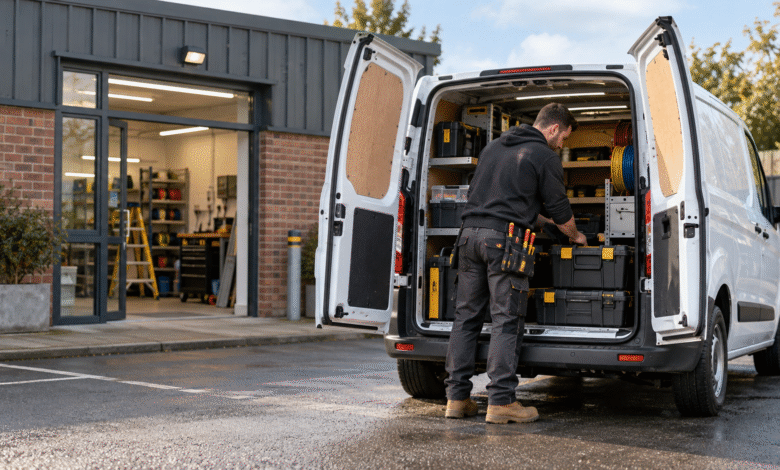
For a small business, choosing a van is rarely only about transport. It affects how quickly a team can reach customers, how safely equipment travels, how professional the company looks on arrival and how much money remains available for growth.
That is why a Ford Transit Custom for sale often appears on the shortlist. It sits in the middle of the van market: larger and more capable than a compact city van, but less intimidating than a full-size commercial vehicle. For electricians, builders, engineers, catering businesses, property-maintenance firms and delivery operators, that balance can be exactly what is needed.
The right Transit Custom is not necessarily the one with the highest specification or the lowest monthly figure. It is the one that fits the business at seven in the morning, during a busy afternoon call-out, and at the end of a long working week.
Start with the seven o’clock test.
Picture the van at the start of a normal day. The driver has tools to load, a route to follow, perhaps an apprentice travelling alongside them, and several jobs to complete before evening. That is the moment a vehicle’s usefulness becomes clear.
A small business should begin by looking at its existing routine. What is always inside the van? Which items are occasionally carried? How often does the driver need to park on narrow residential streets, reverse into a customer’s driveway or access a town-centre loading bay?
The answers shape the right body length, roof height and rear-door arrangement far more effectively than a brochure comparison.
A sole trader carrying compact tool cases may value manoeuvrability above all else. A plumbing and heating company may need room for pipework, boilers, parts stock and secure racking. An installer covering several counties may value cab comfort, safety assistance, and a layout that keeps equipment organised over long distances.
Why the Transit Custom works for so many trades
The Transit Custom has earned its popularity because it can adapt to different ways of working. A standard panel van provides a practical rear area for tools and materials, while double-cab and crew-focused versions suit businesses that regularly send more than one person to site.
That flexibility matters once a business grows beyond its first vehicle. The owner may begin by using the van personally, then later add an employee, larger equipment or a more formal stock system. A vehicle with enough usable space can make that transition smoother.
However, flexibility should not be confused with unlimited capacity. Every van has a payload limit, and added weight adds up quickly. Flooring, bulkheads, shelving, roof bars, ladders, toolboxes and fuel all reduce what remains available for cargo.
When reviewing a Swiss Vans Transit Custom, ask for the payload of that specific vehicle after accounting for its actual equipment and seating arrangement. That figure is more useful than a broad model-range claim.
The load space should solve a problem.
A van’s rear should make the working day easier. If a driver has to move three boxes to reach a commonly used item, climb into the load area for every call-out, or search for loose tools, the layout costs the business time.
The strongest fit-outs are often simple. Heavy equipment sits low and secure. Frequently used tools have a fixed position. Valuable items are protected from view. There is enough clear floor space for the unexpected item that arrives on a busy day.
Before buying a Ford Transit Custom, measure the equipment that creates the biggest challenge. This could be a ladder, a boiler, a stack of delivery crates, a carpet-cleaning machine or a set of flight cases. Measure it with the doors open and the expected racking in place, not against an empty van’s headline dimensions.
That small bit of planning can prevent an expensive mistake.
The midday test: will the driver still be comfortable?
For a business owner, cab comfort may sound like a luxury. In practice, it is a productivity issue.
A driver who spends six or seven hours a day in a van notices poor seat support, limited storage, awkward controls and weak visibility. Over time, those small frustrations can affect concentration, route efficiency and the willingness to keep the vehicle in good condition.
Look at the driving position carefully. Can you adjust the seat and steering wheel properly? Is there useful storage for paperwork, drinks, chargers and safety equipment? Are reversing cameras, parking sensors or smartphone connectivity likely to save time on the routes the driver actually covers?
A higher trim level can be worthwhile when it adds features that reduce stress or improve safety. It is less worthwhile when it only adds cosmetic extras that do not affect the business’s daily operation.
Think beyond the current contract.
Many small firms buy too cautiously because they are focused on keeping the initial cost down. Others over-specify because they hope the business will grow quickly. Both approaches can create problems.
The more sensible question is: what is likely to change over the next two or three years?
Perhaps the company expects to take on an apprentice. Perhaps it is moving from domestic work to commercial contracts, which will mean carrying more stock. Perhaps the van will begin travelling further and need a more comfortable, efficient specification.
A slightly better-suited vehicle can be cheaper than replacing an unsuitable one early. At the same time, there is no value in paying for a long-wheelbase, high-capacity van if most of its load area remains empty and it creates parking difficulties at every job.
Growth should influence the purchase, but it should not replace practical judgement.
Do not let finance dictate the wrong van.
A low monthly payment can be attractive, especially when a business is managing several costs at once. But the best finance or lease arrangement is one attached to the right vehicle.
Check the initial payment, agreement length, mileage allowance, maintenance arrangement and what happens when the term ends. If the business expects high annual mileage, underestimating it to reduce the monthly figure can become expensive later. If the company expects to add a major conversion, check how that affects the agreement, warranty and resale position.
Buying, hire purchase and leasing all have a place. A business planning to keep a fitted-out van for many years may prefer ownership. A company that wants to preserve capital and change vehicles regularly may prefer a lease. The decision should follow the business plan, not a tempting headline offer.
The four o’clock test
By late afternoon, a work van usually carries the day’s evidence: muddy boots, used materials, returns, paperwork, tools that need charging, and perhaps one more customer visit before heading home.
This is when practical details matter most. Are the doors easy to operate? Is the rear area still organised after several stops? Can the driver secure equipment quickly? Does the van feel stable, comfortable and easy to place in traffic?
A Ford Transit Custom can be an excellent small-business van because it can handle this kind of working reality without becoming unnecessarily large or complicated. The final choice should be based on how it performs across the entire day, not just how it looks on a forecourt.
Choose the version that supports better work.
The best Transit Custom for a small business is not a generic answer. It depends on the people travelling in it, the tools carried, the roads driven and the contracts the company intends to win next.
Prioritise payload, usable load space, driver comfort and realistic running costs. Then make sure the finance or purchase route supports the company’s cash flow rather than stretching it.
Get those decisions right, and the van becomes a dependable part of the business: ready for the first job of the day, capable through the busiest weeks, and useful long after the initial purchase has been forgotten.