Capital investments in manufacturing are rarely taken lightly. Before any facility commits budget to new equipment or systems, operations teams typically need a clear picture of what the return looks like, how long it takes, and what happens if the implementation underperforms. For decades, automating packaging operations sat in a category that many mid-sized manufacturers viewed as aspirational rather than immediately practical — something large consumer goods companies did, not smaller regional producers with tighter margins.
That calculation has shifted. Survey data collected across US manufacturing sectors now indicates that a significant majority of facilities that committed to packaging line changes reported measurable financial returns within a relatively short window. The 18-month threshold, once considered optimistic, is increasingly being cited as achievable — and in some cases, conservative. Understanding why that is requires looking at the operational realities driving the numbers, not just the numbers themselves.
What Packaging Line Automation Actually Changes Inside a Facility
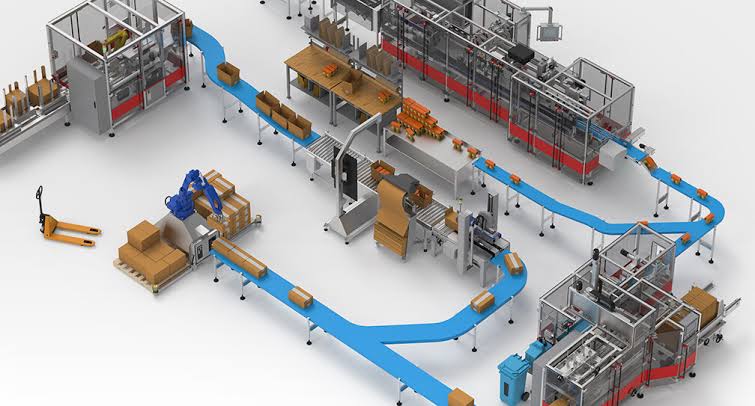
When facilities begin evaluating packaging line automation, the conversation often starts with throughput — how much more product can move per shift. But the more consequential changes tend to be less visible in the early stages. Automation affects the consistency of output, the reliability of changeovers, and the predictability of labor deployment across a production schedule. These are not marginal improvements; they reshape how a facility plans and manages daily operations.
Before automation, many packaging lines depend on operator judgment for tasks that require precise, repeatable execution — sealing temperatures, fill weights, label placement, and inspection tolerances. When those tasks are performed manually at volume, variation accumulates. That variation translates into rework, waste, and in regulated industries, compliance exposure. Automation removes the human variability from those specific points in the process without removing the human workforce from the line entirely.
The Role of Consistent Output in Cost Reduction
Consistency in packaging is a financial issue as much as a quality one. When a facility produces packaging that falls outside specification — even slightly — it triggers downstream costs that are often not tracked directly against the packaging line itself. Rework requires additional labor. Rejected units consume raw materials that were already processed. Returned product from retailers creates logistics costs and damages commercial relationships that are difficult to rebuild.
Automated systems maintain the same output parameters across an entire shift, regardless of fatigue, distraction, or staffing changes. The financial benefit of this consistency compounds over time. A facility that reduces its rework rate by even a few percentage points across hundreds of thousands of units per month is recovering a meaningful portion of material and labor cost that was previously absorbed as a normal operating loss.
Changeover Time and Its Hidden Cost
One of the less discussed contributors to ROI in packaging line automation is changeover efficiency. Facilities that run multiple SKUs across a single line spend significant time stopping, reconfiguring, and requalifying equipment between production runs. Manual changeovers require trained operators, follow documented procedures that still allow for human error, and often result in the first several units of a new run being discarded as the line stabilizes.
Automated lines with programmable recipe management can execute changeovers faster and with fewer steps requiring manual intervention. The time recovered on each changeover may appear small in isolation, but across dozens of product transitions per week, it represents meaningful additional production capacity that does not require capital expenditure to access.
Why the 18-Month ROI Window Is More Realistic Than It Appears
Skepticism about ROI timelines for capital equipment is reasonable. Manufacturers have seen enough implementation projects run over budget and behind schedule to approach vendor projections with caution. The 18-month figure, however, is not primarily driven by throughput gains on a single high-volume product. It reflects a combination of factors that emerge across the first year of stable operation.
Labor cost reallocation plays a significant role. When repetitive manual tasks on a packaging line are automated, the operators who performed those tasks do not simply become redundant — in most facilities, they are redeployed to roles that require judgment, problem-solving, or flexibility. This reallocation reduces overtime dependence, allows supervisors to handle more complex work, and often reduces the total headcount required for packaging operations without requiring layoffs. The cost savings from that reallocation begin immediately upon stable operation of the automated system.
Waste Reduction Contributes More Than Expected
Material waste in packaging operations is frequently underestimated as a cost center. Film, cartons, labels, and filling materials that are applied incorrectly or wasted during startup and changeover represent direct input costs that never make it into a finished product. For facilities running high volumes, those per-unit waste figures accumulate rapidly.
Automated systems are calibrated to apply materials within tight tolerances and to stop or flag when something falls outside those parameters — before a significant quantity of defective product is produced. This early detection capability alone prevents the kind of material loss that, when calculated across a full production year, often accounts for a measurable portion of the ROI that facilities report within their first 18 months of operation.
Downtime Patterns Change in Both Frequency and Impact
Unplanned downtime on a packaging line is one of the most disruptive events in a manufacturing operation. It stops output, affects delivery commitments, and forces supervisors to triage labor and equipment simultaneously. Manual lines are vulnerable to unplanned stops caused by operator error, inconsistent product feeding, and mechanical issues that go unnoticed until they become failures.
Modern automated systems include monitoring and diagnostic capabilities that provide earlier warning of developing issues. According to the National Institute of Standards and Technology, predictive and condition-based maintenance approaches consistently reduce unplanned downtime compared to reactive maintenance practices. When automation integrates with basic monitoring, facilities shift from responding to failures to anticipating them — a change that has measurable impact on production reliability and total annual output.
Sectors Where the Return Has Been Most Consistent
Not all manufacturing environments realize the same return from packaging automation, and acknowledging that variation is important for any honest assessment of the data. The strongest and most consistent returns have appeared in food and beverage, personal care, household products, and contract manufacturing — sectors characterized by high volume, recurring SKU complexity, and tight delivery windows with retail customers.
In food and beverage specifically, the combination of regulatory compliance requirements, allergen management, and high throughput demand creates conditions where automation pays back quickly. The cost of a labeling error or a contamination event in that sector can be substantial — fines, product recalls, and customer penalties that dwarf the capital cost of the automation that would have prevented them. When risk reduction is factored into the ROI analysis, the 18-month window becomes more understandable, even in facilities that were initially uncertain about the investment.
Contract Manufacturers Face a Different Calculation
Contract manufacturers operate under a specific set of pressures that make packaging line automation particularly valuable. They run multiple customer SKUs, often with short production runs, and they are typically held to service level agreements that leave little margin for inefficiency. Their customers expect consistent packaging quality regardless of which shift ran the product or how many changeovers occurred that week.
For a contract facility, automation is partly a competitive positioning decision. The ability to offer customers reliable, consistent output with documented quality records is something that manual operations struggle to deliver at scale. That positioning has real commercial value — it affects which contracts a facility can win, retain, and renew, which ultimately determines revenue over a multi-year horizon that extends well beyond the initial ROI calculation period.
What Facilities Often Underestimate Before Implementation
The facilities that realize returns within 18 months typically share a few characteristics beyond the technical specifications of the equipment they installed. They invested in operator training before the system went live, not after problems emerged. They defined their baseline performance metrics before installation so they could measure actual improvement against real numbers. And they treated the transition as an operational change, not simply an equipment swap.
The facilities that struggled — or that saw returns take longer than expected — often encountered challenges related to integration with upstream or downstream processes, insufficient preparation of their workforce for the new system, or unrealistic timelines for reaching stable production rates. These are process and planning failures more than technology failures, and they are generally preventable with realistic project scoping and honest internal assessment before committing to a specific system.
Understanding those conditions matters because the data on ROI timelines is not a guarantee — it is an indication of what is achievable when the implementation is properly supported. Packaging line automation delivers consistent returns in facilities that treat it as an operational investment requiring preparation, not a plug-and-play solution.
Conclusion
The 68% figure is a useful entry point into a broader conversation about what manufacturing facilities are actually experiencing when they modernize their packaging operations. The return on investment within 18 months is not the result of a single efficiency gain — it reflects the accumulated effect of reduced waste, more consistent output, improved labor utilization, fewer unplanned downtime events, and in some cases, stronger commercial positioning with customers who expect reliability.
For operations teams evaluating whether to move forward with a packaging investment, the most useful question is not whether the return is theoretically achievable, but whether their facility has the operational discipline to capture it. The data suggests that when implementations are well-planned and properly supported, the answer is yes — and within a timeframe that makes the business case straightforward to defend.