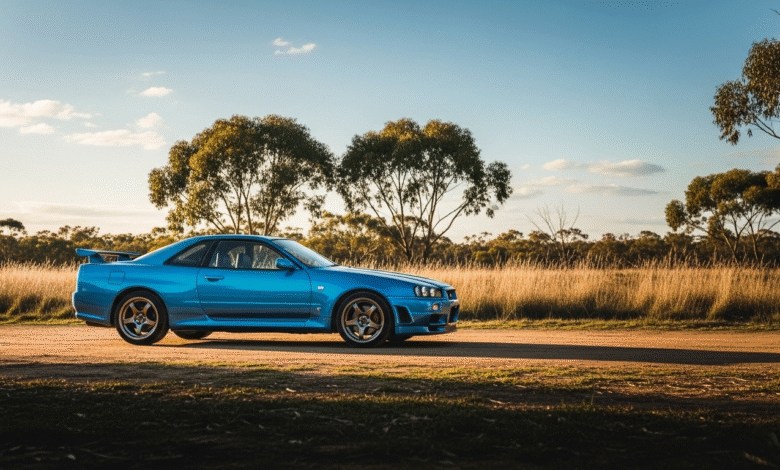
You’re scrolling through Japanese auction listings and the maths looks too good. A tidy, low-kilometre car, well kept and barely driven, for thousands less than the equivalent listing down the road. It’s a genuine pull, and plenty of Australians have done very well out of it.
Here’s the catch most first-timers miss, though. The auction price is rarely the price you actually pay. By the time a car is shipped, complied and registered, that headline figure can climb a long way.
So this guide walks through five mistakes that quietly turn a “bargain” into an expensive lesson, and how to sidestep each one before you commit.
Quick Answer
- A Japanese import’s true cost is the total landed, complied and registered figure, not the auction price, and that gap is where most budgets blow out.
- Compliance, inspection and eligibility are the three areas first-timers underestimate most.
- Customs duty is often 0% on qualifying Japanese-origin cars under the Japan–Australia Economic Partnership Agreement, but the ATO still charges 10% GST, so “no tariff” rarely means cheap.
- Not every Japanese car can be legally imported, so confirm eligibility before any money changes hands.
- If you do the homework early, importing can still make strong financial sense.
Why the Sticker Price Is the Wrong Number to Anchor On
The number on the auction sheet is a deposit on a much bigger figure, not the figure itself. What matters to your wallet is the total landed, complied and registered cost: everything it takes to get the car off the boat, through the workshop, and onto the road legally.
In other words, every mistake below is really the same mistake wearing a different hat. Each one is a hidden cost that doesn’t show up in the listing but absolutely shows up in your bank account. Importers who do this for a living will tell you the same thing, too: the buyers who get burned are almost always the ones who anchored on the auction price.
Get the full picture first, by contrast, and importing becomes a calm, calculated decision rather than a gamble.
Mistake 1: Underestimating Compliance and Inspection Costs
Compliance and inspection are separate from the purchase price, and they can add several thousand dollars before the car is road-legal. A vehicle built for the Japanese market wasn’t built to Australian standards, so it has to be brought into line first. That means compliance work, workshop fees, an asbestos clearance, and sometimes modifications to meet local rules.
None of this is optional. It’s a legal step, not a nice-to-have, and the cost varies from one vehicle to the next depending on what the car needs.
As a result, if you’ve only budgeted for the car and the shipping, you’ve very likely missed thousands. Older vehicles and anything with non-compliant components can need more work, which pushes the figure higher again. The honest way to think about it is simple: the purchase price gets the car to the dock, and compliance gets it onto the road. Both belong in your budget from day one, not as a surprise at the end.
Mistake 2: Skipping a Pre-Purchase Inspection on Auction Vehicles
A pre-purchase inspection is the cheapest insurance you can buy on an import, and skipping it is a false economy. Japanese auction grades are genuinely useful: they give you a consistent, honest read on a car’s condition, and the inspection sheets are detailed. That said, a grade is a summary, not the whole story, and it shouldn’t be the only thing you rely on.
If you’re buying sight-unseen from the other side of the world, photos and a grade sheet won’t always reveal a tired clutch, a past repair, or wear that matters once the car is yours. An independent pre-purchase inspection fills those gaps before you bid.
The trade-off favours caution, then. A modest inspection fee up front is cheap insurance against an expensive surprise after the car lands. Once it’s here, it’s here, and fixing a problem you could have spotted earlier is almost always dearer than the inspection would have been. For a purchase this size, paying a little to look closely is just good judgement.
Mistake 3: Misunderstanding RAV and SEVS Eligibility
Not every Japanese car can be legally imported, and this trips up more buyers than you’d expect. The Register of Approved Vehicles (RAV) is the federal list of vehicles approved for road registration in Australia. For many enthusiast and niche models, eligibility instead runs through the Specialist and Enthusiast Vehicle Scheme (SEVS), the pathway for low-volume cars that meet specific criteria. If a vehicle sits on neither, it can’t be complied for road use here, full stop.
The painful version of this mistake goes like this. A buyer falls for a particular model overseas, gets excited, pays a deposit, then discovers the exact variant or build date can’t be brought in. Now they’re chasing a refund or stuck with a car they can’t register.
The fix is plain, however. Confirm the exact variant, model code and build date are eligible before committing a single cent. Eligibility can hinge on small details, so “the model is allowed” isn’t enough. You want to know your specific car is allowed. Checking first costs nothing and saves a world of grief.
Mistake 4: Ignoring Total Landed Cost vs the Sale Price
Total landed cost is the sum of every line it takes to get the car registered, and it routinely tips an import into a five-figure sum on top of the auction price. The components stack up quickly, and most don’t appear in the listing at all:
| Cost component | What it covers | Typical basis |
| Purchase price | The winning auction bid | Varies by vehicle |
| Auction & agent fees | Buyer’s fee at the auction house plus agent service | Varies by vehicle |
| Domestic transport (Japan) | Moving the car to the export port | Varies by location |
| Shipping & marine insurance | Sea freight to an Australian port, plus cover in transit | Varies by route |
| Customs duty | Import tariff on the vehicle | 0% on qualifying Japanese-origin cars under JAEPA |
| GST | Goods and services tax on the taxable importation | 10% (ATO) |
| Luxury Car Tax | Applies only above the LCT threshold | 33% on the value over the threshold |
| Compliance & inspection | Workshop work, asbestos clearance, any required mods | Varies by vehicle |
| Registration | State registration and plates | Varies by state |
Import duty is one cost many people brace for but usually won’t pay. Under the Japan–Australia Economic Partnership Agreement (JAEPA), the customs duty on qualifying Japanese-origin passenger cars is 0%, so it generally drops out of the sum. Confirm the origin paperwork with your importer, but don’t budget for a tax you almost certainly won’t owe.
The 10% GST, by contrast, still applies to nearly every import. Each remaining line then looks small and manageable on its own, and that’s exactly the trap. Added together, they routinely tip the project into that five-figure sum, and a budget built around the sale price alone simply won’t stretch that far.
The way to stay in control, then, is to build a full landed-cost estimate before you fall for any particular car. Write every line down, use realistic figures, and compare that total, not the auction price, against a local used listing. Sometimes importing still wins comfortably. Sometimes the gap narrows once everything’s counted. Either way, you’ll be making the call on real numbers instead of a hopeful one.
Mistake 5: Assuming Every Import Comes With the Same Warranty
A privately imported vehicle generally won’t carry the local manufacturer warranty or the dealer-backed cover an Australian-delivered car might have. It’s easy to assume a near-new import has the same safety net as a car bought new from an Australian dealer, but usually it doesn’t.
Why does that matter? Because repairs and parts sourcing fall to you, the owner. If you’re buying a popular model, that’s rarely a drama. If you’re chasing a less common variant, by contrast, parts can take longer to arrive and cost more when they do.
So factor it in rather than hoping for the best. Think about servicing, parts availability for your specific model, and whether an aftermarket warranty makes sense for your situation. Treating cover as a real ownership cost, not a footnote, keeps the decision honest. None of this is a reason to avoid importing, though. It’s just one more number that belongs in the column before you sign.
How to Avoid All Five: Work With a Licensed Importer
Notice the thread running through every mistake: they all come down to knowing the full picture before you commit. That’s precisely what an experienced, licensed importer is built to handle. The right one checks eligibility, arranges inspections, manages compliance, and lays out a transparent landed-cost breakdown so there are no nasty surprises at the end.
A licensed Australian importer such as Carbarn, for example, manages the end-to-end process to import a car from Japan to Australia, from confirming a vehicle is eligible through to delivering it complied and ready to register. That’s the version of importing where the homework is done properly and the costs are clear from the start, rather than discovered one invoice at a time.
Closing Takeaway
Importing a car from Japan can be a smart, genuinely good-value move. Plenty of Australians end up with a better car, in better condition, for sensible money. The ones who get burned, however, almost always made the same error: they anchored on the sticker price and skipped the homework.
So do it the other way around. Confirm eligibility, inspect properly, count every cost, and understand your cover before you commit. Get those right and importing stops being a gamble. Instead, it becomes a considered decision you can feel good about long after the car’s in the driveway.