Mia Tharia: The Rise of a Fearless New Voice in British Film and Television
How a London-Born Actress and Writer Became One of the Most Talked-About Talents of Her Generation

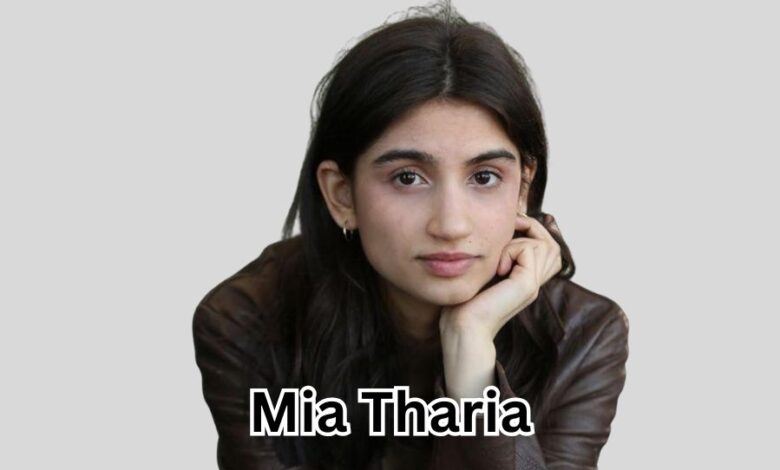
Mia Tharia is an English actress and writer who has rapidly established herself as one of the most compelling young performers to emerge from the United Kingdom in recent years. Born in May 2005, Mia Tharia represents a new generation of artists who move fluidly between television, independent film, and original writing. Her rise during 2024 and 2025 marked a decisive shift from promising newcomer to recognised industry talent, with critics and publications highlighting her emotional intelligence, screen presence, and creative ambition.
At a time when audiences are increasingly drawn to authentic and complex storytelling, Mia Tharia has stood out for her ability to inhabit psychologically rich characters. Her performances resonate because they feel lived-in rather than performed, a quality that has quickly made her a favourite among directors working in character-driven drama.
Early Life and Creative Foundations
Mia Tharia was born in London and raised in South London, an area known for its cultural diversity and strong creative communities. She attended Chestnut Grove Academy, where her interest in performance and storytelling began to take shape. Unlike many actors who enter the industry through traditional drama schools, Tharia’s foundation was built in a local youth theatre, an environment that encouraged experimentation, collaboration, and emotional honesty.
Her involvement with organisations such as Brixton Youth Theatre and the Burnt Orange Theatre Company gave her early exposure to ensemble work and socially grounded storytelling. These formative experiences helped shape her grounded acting style and her interest in narratives that explore identity, family, and psychological tension.
Breakthrough Roles and Industry Recognition
September Says and International Attention
Mia Tharia’s true breakthrough arrived with the 2024 Gothic drama September Says. In the film, she played the lead role of July, a character defined by emotional intensity and moral ambiguity. The film premiered at the Cannes Film Festival, placing Tharia in front of an international audience and signalling her arrival on the global stage.
Her performance was widely praised for its restraint and inner tension. Rather than relying on overt dramatics, Tharia conveyed complex emotional shifts through subtle expression and physical presence. This role established her as an actress capable of carrying challenging material and leading independent films.
Television Success with the BBC
In the same year, Mia Tharia appeared in the BBC series The Listeners, portraying Ashley, a sharp and volatile daughter grappling with her mother’s psychological unravelling. The role required a delicate balance of vulnerability and defiance, and Tharia’s performance brought emotional clarity to a character living under constant strain.
She had previously appeared in Phoenix Rise, a BBC series centred on misfit students returning to mainstream education. This earlier role introduced her to television audiences and demonstrated her ability to connect with younger viewers while addressing serious social themes.
Klara and the Sun and Global Visibility
A Landmark Role in 2026
Mia Tharia’s career reached a new level with her casting as Josie in Klara and the Sun, a 2026 film directed by Taika Waititi. In the story, Josie is a bright teenager suffering from a mysterious illness who forms a bond with an Artificial Friend, played by Jenna Ortega. The film explores themes of love, mortality, and artificial intelligence through an intimate human lens.
Tharia’s portrayal of Josie is central to the film’s emotional impact. She brings warmth and fragility to the role, grounding the story’s speculative elements in genuine human emotion. Acting opposite a globally recognised co-star and under an internationally acclaimed director expanded her reach and positioned her firmly within the global film conversation.
Awards, Honours, and Critical Reputation
By the age of twenty, Mia Tharia had already received significant industry recognition. In 2024, she was named a Screen International Star of Tomorrow, an honour reserved for emerging talent with clear long-term potential. The following year, she was included in Variety’s 10 Brits to Watch for 2025, further cementing her status as one of the United Kingdom’s most promising young artists.
Critics frequently highlight her ability to choose daring projects and her refusal to be boxed into predictable roles. Rather than pursuing conventional paths, Tharia has consistently aligned herself with stories that challenge audiences and explore emotional complexity.
Mia Tharia as a Writer and Playwright
Expanding Beyond Acting
In addition to her on-screen work, Mia Tharia is also an emerging writer. Her interest in writing is not a side project but a core part of her creative identity. Following a residency at the Royal Court Theatre, she wrote her first play, This Place. The work reflects her engagement with space, belonging, and personal history, themes that also surface in her acting choices.
Her involvement in writing suggests a long-term vision that extends beyond performance alone. By developing her own material, Tharia positions herself as a storyteller with agency, capable of shaping narratives rather than simply interpreting them.
Acting Style and Artistic Identity
Mia Tharia’s acting style is often described as internal, emotionally precise, and quietly powerful. She favours stillness over spectacle, allowing audiences to sense a character’s inner life without explicit explanation. This approach aligns well with contemporary independent cinema and prestige television, where subtlety and realism are increasingly valued.
Her artistic identity is also shaped by a willingness to take creative risks. Whether portraying psychologically complex teenagers or navigating speculative narratives, Tharia consistently chooses roles that demand emotional courage.
Influence and Future Potential
As a young British actress and writer, Mia Tharia represents a broader shift in the entertainment industry toward authentic voices and multidimensional storytelling. Her South London background, youth theatre roots, and dual focus on acting and writing give her a perspective that feels both grounded and forward-looking.
Looking ahead, her future appears open-ended in the best possible way. She is equally positioned to continue leading independent films, expand into international productions, and develop original work for the stage or screen.
Conclusion
Mia Tharia has emerged as one of the most exciting young talents in British film and television, not through hype alone but through consistently thoughtful work. With a strong foundation in youth theatre, a growing list of acclaimed performances, and a parallel commitment to writing, she represents a new model of the modern actor-creator. As her career continues to evolve, Mia Tharia is poised to shape not only the stories she appears in but also the future direction of contemporary British storytelling.
(FAQs)
Who is Mia Tharia?
Mia Tharia is an English actress and writer born in May 2005. She is known for her work in British television and independent film, as well as for her emerging career as a playwright.
What are Mia Tharia’s most famous roles?
She is best known for her lead role in September Says, her performance in the BBC series The Listeners, and her starring role as Josie in Klara and the Sun.
Is Mia Tharia also a writer?
Yes, Mia Tharia is an emerging playwright. She wrote her first play, This Place, following a residency at the Royal Court Theatre.
Why is Mia Tharia considered a breakout talent?
She gained widespread recognition in 2024 and 2025 following critical acclaim for her performances and industry honours, including Screen International’s Star of Tomorrow and Variety’s 10 Brits to Watch.
What makes Mia Tharia’s acting style distinctive?
Her acting is known for emotional subtlety, psychological depth, and a naturalistic presence that prioritises authenticity over exaggerated performance.