James Ker-Lindsay: A Leading Voice on Conflict, Statehood, and Southeast European Politics
A Deep Look at the Scholar Shaping Global Conversations on Conflict and Statehood

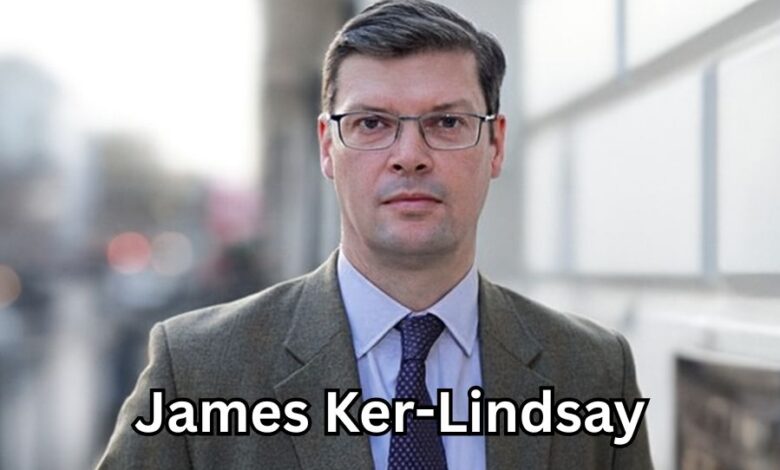
To understand modern international relations, one must consult experts who bridge academic insight with real-world policy experience. James Ker-Lindsay stands out as one of the clearest and most influential voices in this space. His work covers conflict, statehood, secession, and the complicated political dynamics of Southeast Europe. Over the past two decades, he has shaped debates in universities, governments, and global media. His research, public commentary, and policy involvement have made him a trusted figure for anyone seeking to understand why states rise, fall, or change their borders, and what these shifts mean for regional and global stability.
Academic Foundations and Research Path
The academic journey of James Ker-Lindsay began with a strong interest in how conflicts unfold and how states navigate contested identities and territorial disputes. Holding a PhD in International Conflict Analysis, he built his expertise on a solid foundation of theory, history, and field experience. What sets him apart is the balance he strikes between detailed scholarly research and an ability to translate complex geopolitical issues into language accessible to non-specialists. His career took shape through a series of significant positions at respected institutions. He served in senior roles at RUSI, one of the world’s leading defense and security think tanks, where he deepened his understanding of international security frameworks. He also held visiting research and teaching positions at Kingston University and Boston University, further expanding his academic reach. Throughout these roles, he consistently focused on the politics of Southeast Europe, analyzing how historical grievances, ethnic divisions, and geopolitical pressures affect modern statehood.
A Specialist in Southeast Europe and Secession Movements
The regions most associated with James Ker-Lindsay’s expertise include the Balkans, Greece, Turkey, and Cyprus. In these areas, questions about sovereignty, autonomy, and ethnic identity have shaped political realities for generations. His work explains these complexities with clarity, helping audiences understand why peace is fragile and why recognition or non-recognition of states has lasting global implications. Secession movements—a core part of his research—continue to influence politics worldwide. From Kosovo to Crimea to Scotland, debates about independence and international recognition often draw from the frameworks he discusses. His analysis of counter-secession strategies stands out as a unique contribution to the field, outlining how governments respond when parts of their territory seek independence. By studying these strategies across different regions, he has assisted scholars and policymakers in understanding what shapes the success or failure of secessionist movements.
Influence on Policy and International Institutions
Beyond the university environment, James Ker-Lindsay has played a meaningful role in advising governments and international bodies, including the United Nations, the Council of Europe, and the UK’s Foreign Office. These engagements reflect the practical value of his expertise. When policymakers need a clear, grounded explanation of territorial conflict or the political realities of the Balkans, he is often among the first consulted. A particularly notable moment came in 2017, when he joined the British delegation to the UN-sponsored Conference on Cyprus—an effort to resolve one of the world’s most enduring territorial disputes. His participation illustrated how his research influences diplomatic efforts. Whether advising diplomats or briefing international organizations, he bridges scholarship and practice in a way that few academics do.
Extensive Publications That Shape the Field
James Ker-Lindsay is a prolific author widely read in universities and policy circles. He has written or edited over fifteen books exploring conflict and statehood. Several titles published by Oxford University Press attest to the press’s academic weight and reach. Secession and State Creation: What Everyone Needs to Know offers a structured exploration of how new states emerge and why some breakaway territories gain recognition. The Foreign Policy of Counter-Secession examines how states resist separatist movements, providing a rare and valuable perspective for scholars and policymakers. In The Cyprus Problem: What Everyone Needs to Know, he provides a comprehensive overview of Cyprus’s unresolved conflict. Kosovo: The Path to Contested Statehood in the Balkans deeply analyzes Kosovo’s path to limited international recognition. Together, these works highlight his expertise and dedication to explaining complex political issues.
A Trusted Media Commentator and Public Educator
In addition to his academic work, James Ker-Lindsay has become a familiar voice in global media. Outlets such as the BBC, CNN, and The Guardian regularly seek his commentary on international crises, geopolitical tensions, and challenges facing Southeast Europe. His analysis is valued for its calm, fact-driven approach and clarity. In an era when global politics often feels chaotic, he provides context that cuts through confusion. His impact has grown through his YouTube channel, Prof James Ker-Lindsay, which has over 300,000 subscribers. With clear explanations, visual breakdowns, and accessible storytelling, he discusses international relations for students, professionals, and casual viewers. Many credit his channel with helping them understand topics such as territorial disputes, state recognition, and international law. On social media, especially on X (@JamesKerLindsay), he shares insights on developing conflicts and geopolitical changes. His posts often highlight nuances that headlines miss, making him a reliable guide for anyone following world events.
Teaching and Academic Engagements
Even with his media presence, James Ker-Lindsay maintains a strong connection to teaching. He holds visiting professor positions at the London School of Economics and the University of Kent, institutions known for their political science and international relations programs. He also serves as a Research Associate at the Centre for International Studies at Oxford University. Through lectures, seminars, and mentorship, he shapes the next generation of analysts, scholars, and policymakers. Students describe his teaching style as clear, engaging, and grounded in real-world experience. His decades of research and policy involvement translate into accessible lessons, making him a standout in academic circles.
The Continued Relevance of His Work
The issues studied by James Ker-Lindsay remain central to global politics. From separatist movements in Europe to territorial disputes elsewhere, the world continues to grapple with questions of sovereignty and identity. His frameworks explain why some conflicts escalate and others remain unresolved, and why certain new states receive international recognition. In a landscape marked by shifting alliances, his work brings clarity to discussions often clouded by emotion or misinformation.
Conclusion
James Ker-Lindsay has built a career defined by clarity, insight, and impact. As an academic, author, policy advisor, and public educator, he has shaped the understanding of conflict, statehood, and the political landscape of Southeast Europe. His work continues to guide research, inform diplomacy, and help global audiences make sense of fast-changing international events. Through teaching, research, and media commentary, he remains one of the most influential voices on the subjects defining modern international relations.