AI face swap technology has gone from novelty to mainstream faster than most people expected. What once looked like a fun filter is now being used in entertainment, marketing, education, and content creation. Behind the polished results is a complex system of machine learning models, computer vision, and data processing working together in real time.
For many users, the experience feels simple. Upload a face, choose a video, and get a result. But under the hood, AI face swap tools rely on years of research and multiple technical layers. Understanding how these systems actually work helps creators use them more responsibly and more effectively.
What exactly is AI face swap technology?
AI face swap technology replaces one person’s face with another while preserving expressions, movement, and lighting.
The goal is not just to paste a face on top of another but to blend it naturally into the original video or image.
This involves detecting facial structure, mapping expressions, and reconstructing frames so the swapped face looks believable. Modern systems focus heavily on realism, aiming to avoid the unnatural results that early face swap tools produced.
How does facial detection and mapping work?
The process starts with face detection.
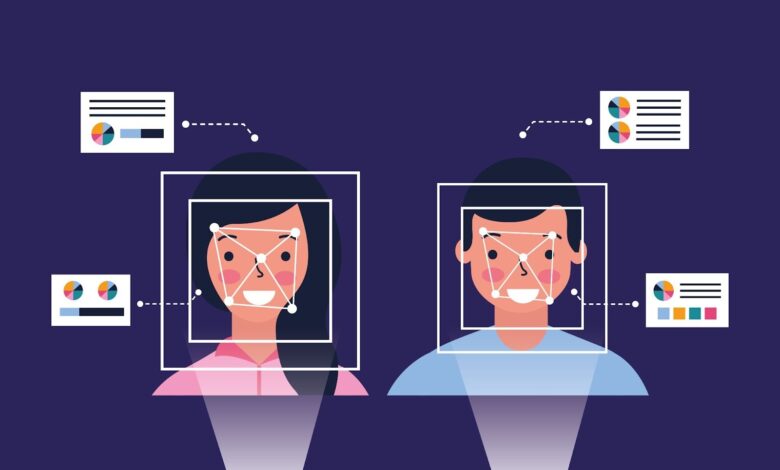
AI models scan an image or video frame to identify faces and locate key landmarks like eyes, nose, mouth, and jawline.
These landmarks create a facial map that defines:
- Shape and proportions of the face
- Position of facial features
- Orientation and angle of the head
Once mapped, the system can track how these features move from frame to frame. This tracking is essential for maintaining consistent expressions during a swap.
Why are neural networks essential for face swapping?
Neural networks allow AI to learn complex facial patterns.
Most modern face swap systems rely on deep learning models trained on millions of images.
These models learn:
- How faces change under different lighting
- How expressions alter muscle movement
- How skin texture behaves across angles
Instead of copying a face directly, the AI generates a new version that fits the target video’s context. This generation step is what separates advanced AI face swap tools from basic overlay techniques.
How does the AI learn facial expressions?
Expression transfer is one of the hardest parts.
The AI must understand how emotions like smiling, blinking, or surprise translate across different faces.
To do this, models analyze:
- Micro-movements around the eyes and mouth
- Timing of expressions during speech
- Subtle muscle shifts during motion
By learning expression patterns independently from identity, the system can apply one person’s expressions to another person’s facial structure convincingly.
What role does training data play?
Training data defines quality.
The more diverse and high-quality the data, the better the results.
AI face swap systems are trained on datasets that include:
- Different ages, skin tones, and face shapes
- Various lighting environments
- A wide range of expressions and head movements
According to research published by Stanford University, models trained on diverse facial datasets reduce visual artifacts by over 30 percent compared to limited datasets. This diversity is critical for natural-looking swaps.
How does blending and rendering happen?
Once the AI generates a new face, it must blend it into the original frame.
This is where rendering and compositing techniques come in.
The system adjusts:
- Color matching to fit skin tone and lighting
- Shadows and highlights for depth
- Edge smoothing to avoid harsh transitions
The final render ensures the swapped face feels like part of the original footage rather than an added layer.
Why does video face swapping require frame-by-frame processing?
Videos are sequences of images.
Each frame must be processed individually while maintaining continuity.
AI models track motion across frames so the face:
- Does not jitter or drift
- Matches head movement naturally
- Maintains consistent identity
This frame consistency is computationally expensive, which is why real-time face swapping only became practical in recent years with better hardware and optimized models.
How do modern tools handle speed and accuracy?
Efficiency matters.
Early face swap tools required hours of processing for short clips. Today, optimized models can process videos in minutes.
Techniques used include:
- Model compression to reduce computation
- GPU acceleration
- Selective frame processing for static scenes
Creators experimenting with tools that offer ai face swap by Viggle AI often notice how these optimizations allow smoother results without needing an advanced technical setup.
What are the biggest technical challenges?
Even with modern AI, challenges remain.
Common issues include:
- Hair occlusion and accessories
- Extreme angles or fast movement
- Low-resolution source footage
AI struggles most when facial data is partially hidden or heavily distorted. That is why controlled lighting and clear reference images still produce the best results.
How does AI prevent unnatural results?
To reduce uncanny effects, systems use multiple safeguards.
These include:
- Confidence scoring to detect unreliable frames
- Expression smoothing across sequences
- Fallback blending when predictions are uncertain
By prioritizing stability over perfection, AI models reduce visual artifacts that break immersion.
Is AI face swap technology improving over time?
Yes, and rapidly.
Model updates happen continuously as new data and techniques emerge.
Industry reports show that face swap accuracy has improved by nearly 40 percent in the last three years alone. Improvements in transformer-based vision models and multimodal learning are pushing realism even further.
What ethical safeguards exist behind the scenes?
Responsible tools incorporate consent and misuse prevention.
Many systems now include watermarking, content restrictions, and identity checks.
These measures help:
- Prevent impersonation
- Limit misuse in sensitive contexts
- Promote ethical use of the technology
As regulations evolve, these safeguards will likely become standard across platforms.
Conclusion
AI face swap technology is far more than a visual trick. It is the result of sophisticated facial mapping, deep learning, motion tracking, and rendering systems working together behind the scenes. While the user experience feels simple, the underlying process involves thousands of calculations per frame to achieve realistic results.
As models improve and ethical standards mature, AI face swap tools will continue to expand into creative and professional use cases. Understanding how the technology works helps creators make smarter choices and appreciate the complexity powering what looks like effortless transformation.