Carol Chomsky: The Quiet Scholar Behind a Lasting Legacy
A detailed look at her life, academic work, family story, and contribution to language education

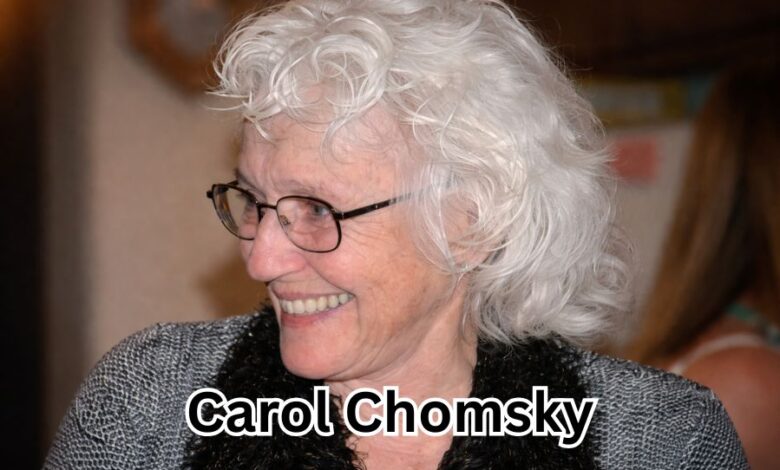
Carol Chomsky established her own influential legacy in education and linguistics, shaping the understanding of how children learn language through her research, literacy advocacy, and practical contributions. While often mentioned beside Noam Chomsky, her career stands out for its blend of intellectual depth and real-world application, especially in child language development and reading instruction.
While Carol Chomsky is often noted for her association with a renowned thinker, her most significant contribution lies in showing that language acquisition is a lifelong process. Through rigorous studies of how children acquire syntax, develop language throughout their school years, and learn through literacy and technology, she fundamentally challenged the notion that language learning ends in early childhood.
Carol Chomsky and Her Early Life
Carol Chomsky was born in 1930 and grew up in an environment that valued learning and culture. Her early connection with Noam Chomsky began in childhood, long before either of them became publicly known. They met in Philadelphia when they were young. This early bond eventually developed into a lifelong partnership: they married in 1949 and remained together for nearly six decades.
Their marriage became an important part of Carol Chomsky’s public identity, but it should not overshadow her individuality. She lived in a household that was intellectually active, politically aware, and often in the public eye. Even so, she maintained her own path as a researcher and educator. She also raised a family while pursuing a scholarship, which reflected both discipline and resilience.
Carol Chomsky’s Academic Journey
Carol Chomsky entered the academic world with seriousness and purpose. She earned her PhD in linguistics from Harvard University in 1968. This achievement alone marked her as a major thinker in a demanding field. Linguistics was expanding rapidly at the time, and questions about language acquisition, grammar, and child development were becoming central areas of scholarly debate.
Her academic work focused on children’s language acquisition, especially how school-age children continue to develop an understanding of complex sentence structures. This was an important area of study because many earlier discussions of language development concentrated mostly on very young children. Carol Chomsky helped shift attention to older children and the ongoing development of language skills during the school years.
The Acquisition of Syntax in Children from 5 to 10
Her best-known work, The Acquisition of Syntax in Children from 5 to 10, became an influential study in child linguistics. In this research, Carol Chomsky examined how children between the ages of five and ten understand increasingly complex grammatical structures. Her findings challenged the assumption that the most important language development is completed before formal schooling begins.
She showed that children continue to learn to process complex syntax well into elementary school. This insight was valuable for linguists, psychologists, educators, and curriculum designers. It suggested that schools should not assume full language maturity in young learners. Instead, teachers should recognise that grammar comprehension continues to grow over time.
Why Her Research Still Matters
Carol Chomsky’s work remains meaningful for connecting theory with classroom reality. Her research explained why some children struggle with reading comprehension despite fluency. She clarified that spoken language mastery differs from understanding complex written patterns, highlighting the need to support ongoing language growth.
Carol Chomsky as an Education Specialist
Later, Carol Chomsky focused on literacy and education. She helped children become stronger readers using methods to improve comprehension and fluency. She valued practical impact over theory, aiming to help children in schools.
One of the methods associated with her name is repeated reading, a technique that encourages children to read the same text multiple times to build confidence, fluency, and understanding. This idea has had lasting value in reading instruction. It is simple, effective, and grounded in the reality that learning often grows through repetition and familiarity.
She also explored educational technology and worked on software designed to support reading comprehension. At a time when digital learning tools were far less common than they are today, this showed considerable foresight. Carol Chomsky recognised that technology could become a meaningful partner in literacy education when used thoughtfully.
Her Personal Life and Family Role
Carol Chomsky’s personal life was closely tied to family, responsibility, and quiet strength. She and Noam Chomsky had three children: Aviva, Diane, and Harry. While Noam Chomsky became widely known for his work in linguistics and political criticism, Carol was often described as a stabilising force in family life. She was practical, organised, and capable, keeping daily life moving even under difficult circumstances.
Accounts of her life often mention her ability to manage complex schedules and solve practical problems. She was known for her groundedness and resourcefulness. That practical intelligence complemented her academic achievements and gave her a reputation for competence in both intellectual and everyday matters.
There is also a widely repeated story that she pursued her doctorate partly to make sure she could support the family if her husband faced imprisonment because of anti-war activism during the Vietnam era. Whether told as a biography or a family memory, the story captures something important about her character. She appears not only as a scholar but also as a person of foresight, courage, and responsibility.
Carol Chomsky’s Legacy in Linguistics and Literacy
Carol Chomsky’s legacy rests on the strength of her ideas and the quiet durability of her influence. She contributed to linguistics by broadening the understanding of child language development. She contributed to education by helping teachers think more carefully about how reading and comprehension develop over time. She contributed to literacy instruction by supporting practical, humane, and effective methods.
Her work stands out because it joins academic research with an educational purpose. Many scholars are remembered for theory, while many educators are remembered for practice. Carol Chomsky belongs to the smaller group of thinkers who helped connect both worlds.
She died from cancer in 2008 at 78. Even after her death, her name continues to appear in discussions of children’s syntax, reading education, and linguistics. She did not seek public attention, but her contributions remain important to those interested in language, psychology, and literacy.
Why Carol Chomsky Deserves Greater Recognition
Carol Chomsky deserves greater recognition for her scholarly and human depth. She was an accomplished linguist, an education specialist, a partner in a renowned marriage, and a mother balancing ambition with family. Her work shows how children learn language; her example reflects discipline, modesty, and strength.
In an age when public attention often favours louder names, Carol Chomsky represents a different kind of importance. She reminds us that meaningful contributions are not always accompanied by celebrity. Sometimes they take the form of careful research, useful teaching methods, and a life lived with intelligence and purpose.
Conclusion
Carol Chomsky was a remarkable figure whose life combined scholarship, practicality, and service to education. Her research changed how many people think about children’s language development, and her literacy work showed a lasting commitment to improving learning outcomes. She may be remembered in connection with a world-famous name, but her own legacy stands firmly on its own. In the history of linguistics, child language acquisition, and educational development, Carol Chomsky remains a name worthy of respect, study, and wider recognition.
(FAQs)
Who was Carol Chomsky?
Carol Chomsky was an American linguist and education specialist known for her research on children’s language acquisition and reading development. She was also the first wife of Noam Chomsky.
What was Carol Chomsky famous for?
She was best known for her study, The Acquisition of Syntax in Children from 5 to 10, which examined how school-age children continue to develop an understanding of complex grammar.
What did Carol Chomsky contribute to education?
Carol Chomsky contributed to literacy education through her work on reading comprehension, repeated reading, and educational technology designed to support young learners.
Was Carol Chomsky only known because of Noam Chomsky?
No. Although many people first heard about her through Noam Chomsky, Carol Chomsky was a respected academic in her own right with important contributions to linguistics and child education.
Why is Carol Chomsky still relevant today?
She remains relevant because her research on child language development and reading comprehension continues to help educators, linguists, and literacy specialists understand how children learn.