Commercial Metal Roof Restoration vs. Full Replacement: What US Building Owners Are Getting Wrong in 2025

When a metal roof begins showing signs of wear — minor leaks, surface corrosion, failing seams — the immediate instinct for many building owners and facilities managers is to call for a full replacement. That instinct is understandable. A roof that’s visibly deteriorating feels like a liability, and replacement carries a certain finality that feels decisive. But in practice, that decision is often premature, and it comes with costs that extend well beyond the contractor’s invoice.
Across the United States, commercial and industrial property owners are making the same error in 2025: treating restoration as a second-tier option rather than a primary one. The result is unnecessary capital expenditure, extended operational disruption, and in many cases, outcomes that are no better than what a properly executed restoration would have delivered. Understanding why this is happening — and what the decision should actually hinge on — requires a clearer look at what each path genuinely involves.
What Commercial Metal Roof Restoration Actually Involves
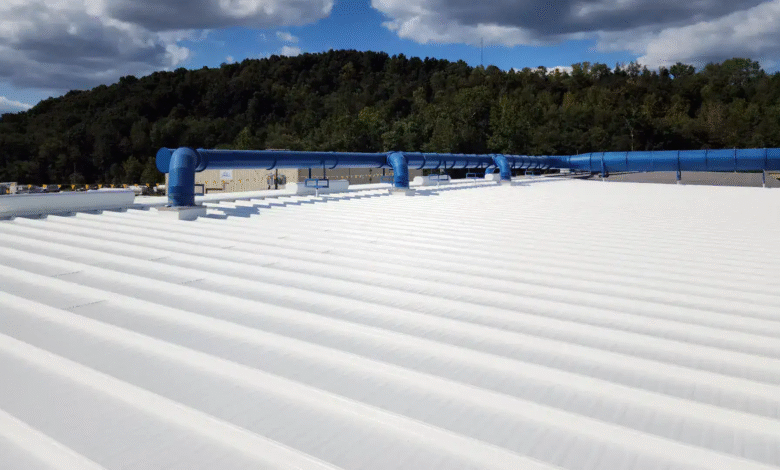
Commercial metal roof restoration is a structured process of returning a degraded metal roofing system to a functional and protective condition without removing the existing roof substrate. It typically involves cleaning, mechanical repairs to seams and fasteners, treatment of corrosion, and the application of a coating system that re-establishes the roof’s waterproofing and reflective properties. The scope varies depending on the roof’s condition, but the underlying principle is the same: address the root causes of failure rather than eliminate the entire system.
For building owners researching their options, detailed guidance on what commercial metal roof restoration entails in practice — including which conditions qualify and what the process looks like at the substrate level — is increasingly available from contractors who specialize in this work rather than defaulting to tear-off replacements.
The distinction between restoration and replacement is not simply one of cost. It is a distinction in methodology, in how the problem is defined, and in what outcome is being pursued. Restoration assumes the existing roof structure still has serviceable life and integrity. Replacement assumes it does not. The error many owners make is skipping the diagnostic step that would tell them which assumption is actually correct.
When Restoration Is the Structurally Sound Choice
Metal roofing systems, particularly standing seam and ribbed panel systems common in commercial and industrial construction, are designed with long service lives. A roof that is twenty years old and showing surface corrosion or isolated seam failures has not necessarily reached the end of its structural usefulness. The substrate may remain sound while the coating system and seam integrity have declined — two separate problems with different solutions.
In these situations, restoring the roof addresses the actual failure mechanisms rather than discarding a structurally intact system. The building avoids the disruption of a full tear-off, the waste of disposing of serviceable metal panels, and the exposure to weather and operational interruption that comes with stripping a roof down to the deck. For manufacturing facilities, warehouses, distribution centers, and similar operations, that disruption has real cost implications that rarely appear in the replacement contractor’s estimate.
The Diagnostic Step That Most Owners Skip
The decision between restoration and replacement should follow a documented assessment of the existing roof — not a visual inspection alone, but an evaluation that includes looking at the deck condition, the panel integrity, the fastener system, and the pattern and source of any leaks. Without this step, decisions are being made on incomplete information.
What this assessment typically reveals is that many commercial metal roofs in apparent decline have isolated points of failure rather than systemic ones. A concentrated area of corrosion near a rooftop penetration, a section of failed lap sealant along a ridge, or a series of backed-out fasteners are all conditions that restoration addresses directly. They are not indicators that the entire roof has failed. Treating them as such leads to spending that is not proportionate to the actual condition of the system.
Why Full Replacement Gets Chosen Too Early
Several factors push building owners toward replacement before it is warranted. The most common is that replacement is the default recommendation from contractors whose business model centers on installation work. This is not a criticism of those contractors — it reflects their specialization. But it does mean that the professional delivering the assessment has a financial interest in one outcome, and owners who rely solely on that input are working with a limited perspective.
A second factor is risk aversion framed around warranties. New roofing systems come with manufacturer warranties that feel reassuring, and owners sometimes equate a new roof with a guaranteed outcome. In practice, warranties cover specific failure conditions and are subject to installation requirements, maintenance obligations, and exclusions that vary considerably. A restored roof with a coating system applied by a qualified contractor can also carry performance warranties, and the underlying system’s warranty position is often less relevant than owners assume.
The Hidden Costs of Premature Replacement
The visible cost of roof replacement is the contractor invoice. The less visible costs include the operational impact of the work itself. Replacing a large commercial metal roof involves removing existing panels, disposing of materials, and installing a new system — a process that generates noise, dust, and potential interruption to operations below. For facilities running continuous operations, scheduling around that disruption may not be straightforward.
There is also the question of capital allocation. A full replacement on a roof that had remaining serviceable life represents capital spent ahead of necessity. That capital could have remained available for other building systems, equipment, or operational needs. When the restoration option was viable — and the assessment would have confirmed it — the replacement represents a structural overcorrection in the maintenance decision-making process.
How Procurement Practices Influence the Wrong Decision
Many facilities teams operate under procurement frameworks that route roofing issues directly to replacement contractors. The assumption embedded in these frameworks is that a roofing problem requiring significant attention is a replacement problem. That assumption was more defensible when restoration technologies were less developed than they are today. Modern coating systems, seam repair methods, and corrosion treatment products have changed what restoration can achieve on a degraded metal roof.
Updating procurement practices to include a restoration evaluation step — before replacement bids are solicited — changes the information available to decision-makers. It does not mean restoration will always be selected. In some cases, replacement is the correct answer. But making that determination after a proper assessment is structurally different from making it by default.
The Sustainability Argument That Rarely Gets Made
Commercial building owners are increasingly subject to environmental reporting requirements and sustainability expectations from tenants, investors, and insurers. The roofing decision has a role in these considerations that is often overlooked. Replacing a metal roof generates a significant volume of material waste, most of which is difficult to divert from landfill given the coatings, sealants, and mixed materials involved. The energy consumed in manufacturing new roofing materials also carries a carbon burden that restoration does not.
According to the US Environmental Protection Agency, construction and demolition materials account for a substantial portion of total solid waste generated nationally. Roofing tear-off is a meaningful contributor to that figure. For owners who are genuinely working toward sustainability targets rather than simply reporting on them, choosing restoration when it is technically appropriate is a defensible and documented step toward those goals. It is also one that often goes unmade because the sustainability framing of the roofing decision is rarely part of the conversation.
Setting a More Rational Decision Framework for 2025
The practical gap in how US building owners approach this decision is not a lack of available information — it is a lack of structured process. The roofing industry has not historically made it easy for owners to separate diagnostic services from sales services, and many owners have not pushed for that separation. The result is that replacement bias persists even when the conditions don’t support it.
A more rational approach involves three distinct steps before any major roofing commitment is made. First, commission an independent or contractor-agnostic roof assessment that documents current conditions with enough specificity to inform a decision. Second, obtain restoration and replacement options that are scoped against the same assessed conditions — not hypothetical ones. Third, evaluate both options across a comparable timeframe, accounting for the total cost of disruption, capital timing, and expected performance life under each scenario.
None of this is complicated, but it does require slowing down the decision process at the point where urgency often accelerates it. A visible roof problem creates pressure to act. That pressure is legitimate. But the decision made under that pressure does not have to be a default one.
Conclusion: The Decision Deserves More Structure Than It Usually Gets
The choice between commercial metal roof restoration and full replacement is one that affects building operations, capital planning, and long-term asset value. It is also a decision that a large number of US building owners are currently making without the information they need to make it well.
In 2025, restoration is a technically mature and financially defensible option for a broad range of commercial metal roofs. It is not always the right answer — but it deserves honest evaluation before replacement becomes the default. The owners who are getting this right are the ones who have separated the diagnostic question from the procurement question, and who are making sure that the professionals assessing their roof are positioned to recommend the answer that fits the condition, not the one that fits a particular business model.
That shift in approach — modest in effort, significant in outcome — is what separates disciplined facilities management from reactive spending. And in a year where capital pressure on commercial real estate continues to tighten, it is a distinction that matters more than it may appear at first assessment.